
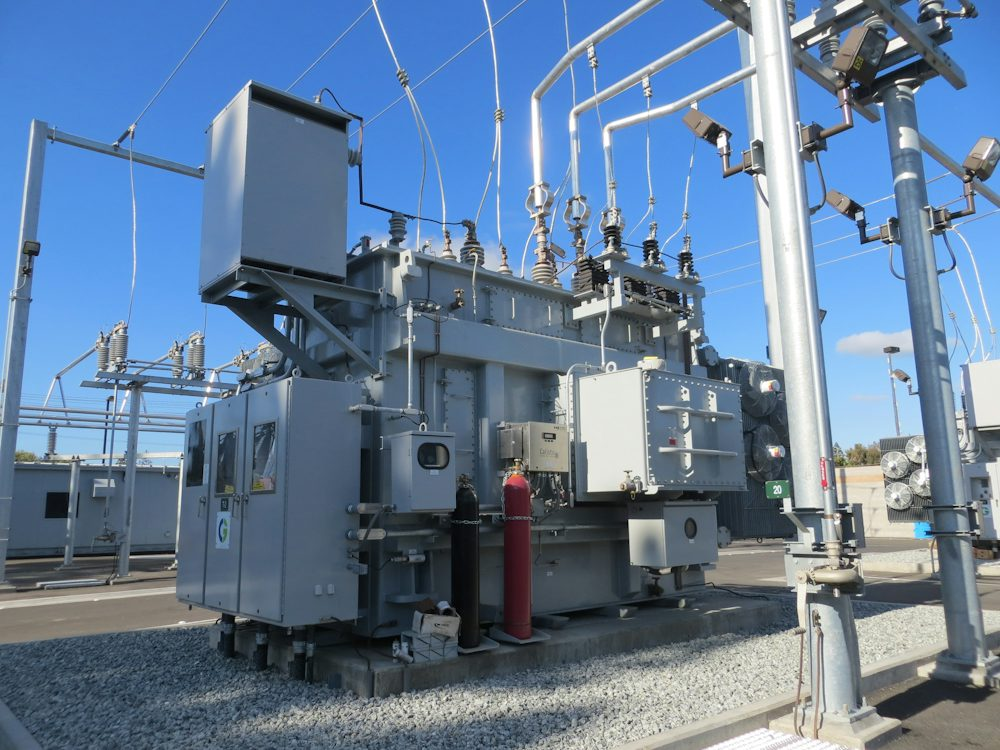
A patch of land in the Florida Panhandle that used to hold piles of coal is now holding something much cleaner. Florida Power & Light has switched on its new Lansing Smith battery storage facility in Bay County, built on the site’s old coal storage yard. The system can send out 400 megawatts of electricity for up to four hours, enough to power roughly 300,000 homes over that stretch, according to the utility.
FPL announced the project on Nov. 16, and it’s already the company’s biggest battery by the amount of energy it can store. That one fact says a lot about how fast utility-scale batteries are growing in Florida, and about what happens to land that once served fossil fuels.
From Coal Pile to Power Bank
The Lansing Smith plant has operated in Lynn Haven, in Bay County, for decades. Global Energy Monitor’s power plant tracker lists it as a multi-unit station with at least 661 megawatts of capacity, though it notes some of those older units are no longer running. FPL didn’t say in its announcement what happens to the rest of the plant going forward. What it did confirm is narrower and more concrete: the new battery system sits on ground that used to store coal for the plant, and that ground now holds rows of lithium-ion packs instead.
The numbers are specific. Lansing Smith can discharge 400 megawatts for four hours, holding 1,600 megawatt-hours of stored energy in total. FPL says the addition pushes its systemwide battery capacity to nearly 2 gigawatts. No other FPL battery facility holds more stored energy than this one.
How the Batteries Earn Their Keep
Battery storage doesn’t generate power on its own. It’s charged with electricity made elsewhere, in this case from FPL’s mix of nuclear, natural gas, and solar generation, and it discharges that stored power back to the grid when demand peaks. Charging happens when power is cheap to produce. Discharging happens when it isn’t, which lets FPL lean less on its priciest generation during the hottest or busiest hours.
Tim Oliver, FPL’s vice president of development, tied the project directly to cost and reliability:
“By incorporating cutting-edge battery storage technology into our diverse energy mix, we’re strengthening reliability, increasing resiliency and continuing our commitment to provide reliable service while helping keep bills as low as possible for our customers.”
J.T. Young, FPL’s vice president and general manager for Northwest Florida, framed it as a response to regional growth: “As Florida continues to grow, projects like Lansing Smith Battery Energy Storage System help ensure we’re prepared to meet our customers’ energy needs today and well into the future.”
Where Lansing Smith Ranks Among FPL’s Batteries
FPL has been building battery storage across the state for years, mostly paired with solar. Lansing Smith now tops the list by energy stored, narrowly ahead of a project that once held the world record.
| Facility | Location | Power Output | Energy Stored | Main Job |
|---|---|---|---|---|
| Lansing Smith | Bay County | 400 MW | 1,600 MWh | Grid flexibility for growing Northwest Florida |
| Manatee Energy Storage Center | Parrish | 409 MW | 900 MWh | Banks solar power for after dark |
| Wynwood | Miami | Not disclosed | Powers 7,000 homes for 4 hours | Backup capacity in a dense urban grid |
| Dania Beach | Dania Beach | 11.5 MW | Not disclosed | “Black start” power to restart generators after an outage |
Source: FPL’s battery storage overview, fpl.com
Other states are chasing similar scale. Texas grid battery storage hit a record 13.3 gigawatts this past summer, and the U.S. as a whole added a record amount of new storage capacity in the second quarter of this year. Florida’s additions are smaller in total but are growing from a utility that was already near the front of the pack.
Scale isn’t the only story in battery storage this year. Across the country in Washington state, Issaquah is installing a much smaller sodium-ion battery to keep one historic building running during storms. A 400-megawatt plant and a single-building backup system sit at opposite ends of the same shift away from fossil generation.
What FPL Hasn’t Said
- FPL hasn’t disclosed what Lansing Smith cost to build. In a separate 2025 regulatory filing, the company estimated an average cost of roughly $1,433 per kilowatt for a batch of 2026 battery projects, which would put a facility this size somewhere in the hundreds of millions of dollars, though that figure wasn’t tied to this specific site.
- The company hasn’t said how many construction jobs the project supported or how long building it took.
- It isn’t clear what happens to the rest of the Lansing Smith plant’s generating units, some of which Global Energy Monitor’s tracker already lists as idle.
- FPL hasn’t published a date for when the battery will start regularly discharging to the grid, only that it has been commissioned.
Who Benefits and How
The direct beneficiaries here are the roughly 12 million people FPL serves across Florida, and Northwest Florida customers in particular, where the company says growing demand is straining the grid. A single battery doesn’t lower anyone’s bill by itself. But it’s part of a bigger, already-approved plan that does have real numbers attached.
In November 2025, Florida regulators approved a four-year rate settlement covering 2026 through 2029 that funds this kind of grid and battery buildout statewide. Under that deal, most Florida customers see their typical bill rise by about $2.50 a month in 2026. Northwest Florida is the exception: the typical residential bill there is set to go from $143.60 to $141.36 in 2026, a small decrease, even as the region adds projects like Lansing Smith. Whether that holds for Northwest Florida in 2027 and beyond hasn’t been reported yet.
There’s also an angle that never shows up on a bill. For decades, that patch of ground in Bay County held coal. Now it holds batteries that burn nothing at all. Watch whether FPL names a cost for Lansing Smith once its next rate filing comes due, and whether more of its aging plants get the same kind of second life.
Sources
- Space Coast Daily: Florida Power & Light Commissions Largest Battery Energy Storage System (Nov. 16, 2026)
- The Cool Down: Florida utility turns former coal storage site into battery facility that can power 300,000 homes for 4 hours (Nov. 20, 2026)
- FPL: Battery Storage overview
- Energy-Storage.news: Florida Power & Light to spend US$3.8 billion on new BESS in 2026-2027
- T&D World: Florida Regulators Approve Four-Year Rate Agreement from Florida Power & Light Company (Nov. 24, 2025)
- Global Energy Monitor: Lansing Smith Generating Plant