
Every Saturday from May through October, Pickering Barn in Issaquah, Washington fills up with farmers market crowds. The 110-year-old building, once a one-room schoolhouse, drew more than 37,000 visitors last year across 264 separate events. Now the city wants to give that same barn a second job: staying powered when a windstorm knocks the lights out everywhere else in town.
Microgrid Knowledge reported on Nov. 4, 2026 that Issaquah is advancing plans for a solar-plus-storage microgrid at Pickering Barn, pairing a 60-kilowatt-hour sodium-ion battery with the 64.9-kilowatt rooftop solar array the city finished installing earlier this year. A write-up from MarketScale three days later independently matched the core numbers: the battery size, the solar array, and the vendor, Seattle-based Emerald Battery Labs. Neither outlet reports an installation date, and the city’s own plans are still moving through design, permitting, and procurement.
A Pickering Barn Battery Backup, Built in Phases
Issaquah isn’t bolting a battery onto the barn overnight. The city has worked through this in stages, and the battery is the next one in line:
- 2025: The city installed heat pumps at Pickering Barn, part of a broader push to cut the building’s energy use.
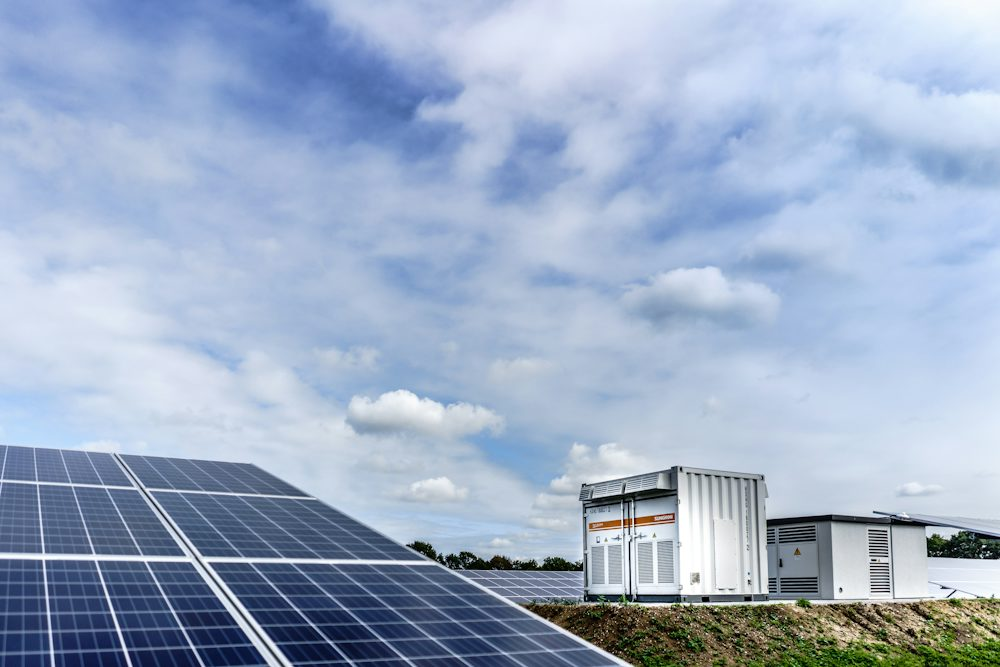
- Early 2026: Workers finished the 64.9-kilowatt rooftop solar array, identified as a priority site in the city’s own Solar + Storage Microgrid Feasibility Study.
- Next: A 60-kilowatt-hour sodium-ion battery, so the barn can disconnect from the grid, or “island,” and keep running on stored solar power during an outage.
Pickering Barn is one site in Issaquah’s Resilience Hub Initiative, which the city uses to identify public buildings that can double as emergency resources, places residents already know and trust, rather than building something new from scratch. Microgrid Knowledge’s report notes that Issaquah earned LEED Gold certification in 2023, which the city says made it the first municipality in Washington state to reach that mark.
A $671,000 grant from TransAlta Centralia Generation LLC is helping pay for the work, according to both outlets’ reporting. Neither report breaks out how that grant splits between the solar array already built and the battery still to come, so treat it as support for the project as a whole rather than a price tag on the battery alone.
Why Sodium Instead of the Usual Lithium Battery
Emerald Battery Labs is a small, University of Washington-connected startup, not an established battery manufacturer. GeekWire’s 2025 profile of the company describes it as bootstrapped, funded in part by university grants that cover student employees, and still working toward its first shippable product. Co-founder David Bell told GeekWire the team is “every day getting closer and closer to” a minimum viable product, language that points to early-stage development rather than a mature, track-tested system.
The company’s pitch for sodium-ion chemistry rests on a few claims, which GeekWire reports as the company’s own position rather than independently verified facts: sodium is cheaper and more readily available in the United States than the lithium used in conventional batteries, and sodium-ion cells tend to last longer and carry a lower fire risk. The tradeoff, by Emerald’s own account, is lower energy density, meaning a sodium battery needs to be physically larger to store the same amount of power as a lithium one. Emerald says its cells can be manufactured on existing lithium-ion production lines, and the company plans to pursue UL 1973, UL 9540, and UL 9540A certifications, the same safety standards that govern stationary battery storage generally, for the Pickering Barn system.
“We want to solve that energy density problem… we want to make the highest performing sodium-ion battery on the market,” Bell told GeekWire.
Why It Matters to You
If you live in or near Issaquah, this means one more public building that’s built to keep working when a storm takes out the grid, a place to charge a phone, stay warm, or get information face to face instead of riding out a blackout alone. It isn’t open yet, and the city hasn’t said when it will be. If the sodium-ion approach holds up at Pickering Barn, it offers smaller towns elsewhere a cheaper, lower-fire-risk way to add backup power to the public buildings people already use, without taking on the higher upfront cost of a comparable lithium-ion system.
What’s Not Locked In Yet
- No installation or completion date has been published for the battery. Only the solar array and heat pumps are finished.
- Neither Microgrid Knowledge nor MarketScale names the approving body or confirms a final council vote on the battery itself.
- Emerald Battery Labs has not shipped a commercial product yet, by its own founder’s account. Its claims about cost and fire risk are the company’s position, not an independent lab test of the Pickering Barn system specifically.
- Neither report lists which specific circuits or equipment the battery will power during an outage, beyond general language about a warming and cooling center.
- MarketScale’s account cites a projected 53.74 megawatt-hours a year of solar production and more than $6,000 a year in savings; Microgrid Knowledge’s report does not include those figures, so they come from one outlet rather than two independent ones.
None of that means the project is shaky, early-stage plans for public infrastructure routinely leave these details for later. It does mean the honest answer, right now, is “planned,” not “built.”
Other towns are reaching similar backup-power decisions with more conventional batteries. Central Georgia EMC recently started offering members a whole-home lithium battery for $95, and a donated solar-and-battery system now keeps a rural New Mexico community center’s Wi-Fi running during outages. Issaquah’s bet on an unproven chemistry, rather than an off-the-shelf lithium system, is the detail that sets this one apart.
Sources
- Microgrid Knowledge: Washington City Advances Solar-Plus-Storage Microgrid at Community Resilience Hub (Nov. 4, 2026)
- MarketScale: Issaquah Plans a 60 kWh Sodium-Ion Battery for Its Emergency Barn (Nov. 7, 2026)
- GeekWire: Seattle Startup Bets on Sodium Batteries as Cheaper, Safer Alternative to Lithium (2025)