
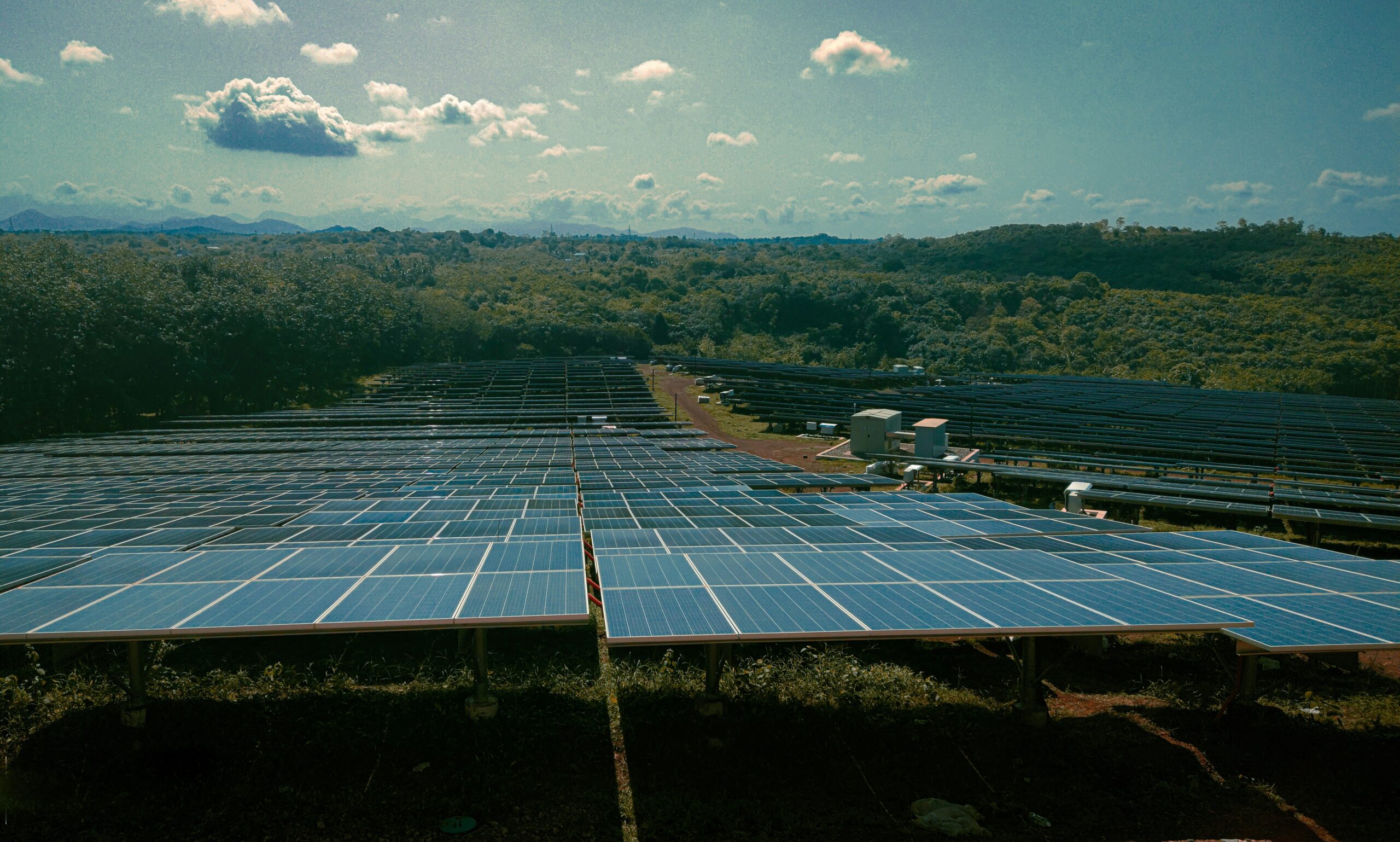
Comoros President Azali Assoumani inaugurated three solar plants with battery storage in early September 2026. The Abu Dhabi Fund for Development (ADFD) financed them, according to the fund’s own announcement. Abu Dhabi Future Energy Company (Masdar) built them, and Global South Utilities (GSU) operates them.
The ADFD says the plants have about 20 megawatts (MW) of solar capacity and serve about 17,500 households. That is a developer-reported estimate. Independent figures on outages or bills were not part of the announcement.
What was built
The plants sit on the three main islands. ADFD lists the capacity as 12.86 MW on Grande Comore, 4.05 MW on Anjouan and 3.1 MW on Mohéli. The project also includes 16 megawatt-hours (MWh) of battery storage with 8 MW of output on Grande Comore and Anjouan, and about 30 kilometers of 20 kV overhead lines.
ADFD puts the financing at about AED 84.4 million, which is roughly US$23 million at the dirham’s fixed exchange rate to the dollar. The plants should produce about 33.75 gigawatt-hours (GWh) of electricity a year and avoid about 20,900 tonnes of carbon dioxide a year, according to ADFD. Both are expected annual values, not measured results from a year of operation.
Works well, and where to be careful
| Works well | Be careful |
|---|---|
| Capacity on all three main islands: 12.86 MW, 4.05 MW and 3.1 MW (ADFD) | Mohéli has solar but no listed battery storage, so battery benefits apply to Grande Comore and Anjouan |
| 16 MWh of batteries lets the plants shift some midday solar power into the evening | The 17,500-household figure is an estimate from the financier and developer, with no independent count |
| About 33.75 GWh a year is roughly 13.3% of 2024 demand and 22.5% of 2024 generation (SolarQuarter’s calculation) | That is about a fifth of 2024 generation at best, so diesel still supplies most electricity |
| About 20,900 tonnes of carbon dioxide avoided a year (ADFD) | This is a projection from expected output, not a measurement |
The case for the project is the starting point. SolarQuarter reports that imported diesel supplied about 91% of the Comoros’ energy mix in 2024. Electricity demand was 254 GWh, but actual generation was 150 GWh, and the country had about 3,000 power outages that year.
So the verdict: a real dent in diesel dependence, not a cure. Outages and fuel costs will not end, and the sources do not support the idea that these plants end blackouts.
Why It Matters to You
For people on Grande Comore, Anjouan and Mohéli, the plants are now inaugurated, and the developers say they serve about 17,500 households. The practical benefit would be less reliance on imported diesel and some solar power available in the evening where batteries are installed. Whether homes see fewer outages or lower bills isn’t established, since independent figures on both were not part of the announcement.
Quick answers
Who paid for the plants? The Abu Dhabi Fund for Development financed them, about AED 84.4 million according to its announcement. Masdar built them and Global South Utilities operates them.
Will this end blackouts in the Comoros? Not by itself. The plants should supply roughly a fifth of 2024 generation, and the country had about 3,000 outages in 2024. Results will depend on how the grid performs over time.
How much carbon dioxide will it avoid? ADFD estimates about 20,900 tonnes a year. That is a projection from expected output, not a measured result.
Sources
- Abu Dhabi Fund for Development: Comoros inaugurates UAE-financed solar plants (Sep 6, 2026)
- SolarQuarter: UAE-Backed 20 MW Solar Projects Inaugurated Across Comoros Islands (Sep 7, 2026)