
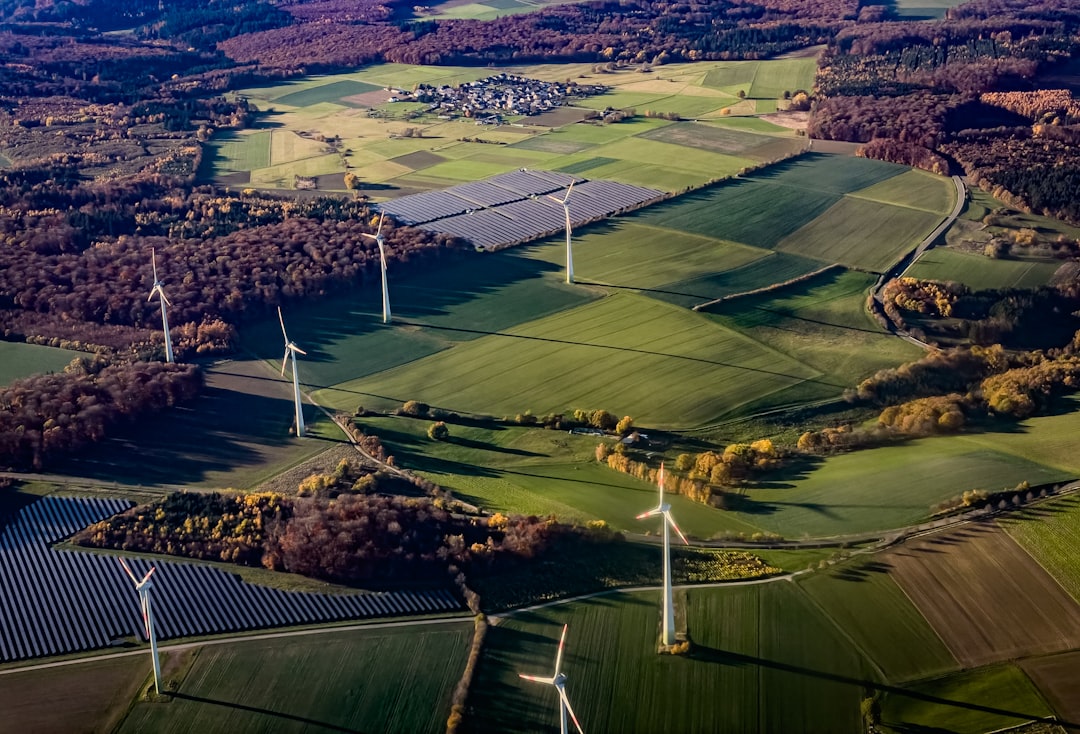
Three renewable energy projects broke ground this month in Wisconsin, and none of them are distant promises. Crews are pouring concrete and running cable right now in Walworth, Rock, Iowa, and Grant counties. When the work wraps up, the projects will generate enough power for about 100,000 Wisconsin homes and create hundreds of good-paying union jobs. That’s the real story behind this Wisconsin renewable energy jobs push: it isn’t just about megawatts. It’s about paychecks and steadier power for families across the state.
We Energies, working with developer Invenergy, launched construction on three separate sites this month. The Darien Battery Storage facility in Walworth County will store 75 megawatts of power. The Dawn Harvest Solar and Battery Park in Rock County pairs 150 megawatts of solar generation with 50 megawatts of battery storage. And the Badger Hollow Wind Energy Center spans Iowa and Grant counties with 110 megawatts of wind capacity.
Together, the three sites add up to a serious upgrade for the state’s power supply, without a single new fossil fuel plant.
Wisconsin Renewable Energy Jobs Reach Small Towns
Construction alone will employ hundreds of workers. We Energies president Mike Hooper says the roles are “good-paying, union-first” positions, the kind that keep money circulating in small Wisconsin towns instead of flowing out of state.
Local electricians, equipment operators, and contractors get steady work for months. Once the sites are running, they still need long-term maintenance staff. That adds permanent positions to rural tax bases that don’t see this kind of investment very often.
A Steadier Grid When Families Need It Most
Battery storage is the quiet hero of this build-out. Solar panels and wind turbines only generate power when the sun shines or the wind blows. Batteries bank that energy and release it during peak demand, the exact moments when air conditioners run hardest on a 95-degree afternoon and the grid strains the most.
That reliability matters most for older residents and lower-income households. Picture Deb, a retiree living alone in Rock County, who already budgets carefully around a Wisconsin electric bill that averages $205 a month statewide. She can’t easily absorb a summer blackout or a spike in emergency utility costs on top of that. A grid backed by battery storage holds steady when people like her need it to, instead of forcing a choice between running the air conditioner and paying next month’s bill.
There’s a cleaner-air payoff too. Every megawatt-hour that comes from solar, wind, or stored renewable power is a megawatt-hour that doesn’t come from burning natural gas during a peak-demand scramble. Less fossil fuel burned during those high-stress grid moments means less pollution drifting over nearby communities. That’s a real, breathable difference for the families who live closest to power plants.
A Pattern Showing Up Across the Country
We Energies already runs or has in the pipeline more than 3,000 megawatts of solar and wind power, plus 600 megawatts of battery storage. This latest round continues that build-out, and it fits a pattern showing up nationwide: diversify the grid, put people to work locally, and keep the lights on without leaning so hard on fossil fuel plants during the hardest days of the year.
Other recent projects tell the same story. Beacon Fen Solar Farm will power 130,000 homes once it’s online, and Revolution Wind’s offshore turbines are built to serve 350,000 homes. Wisconsin’s new build-out adds another concrete example to the list: clean energy that pays local wages, steadies the grid on the hottest days, and cuts pollution for the neighborhoods nearby.