
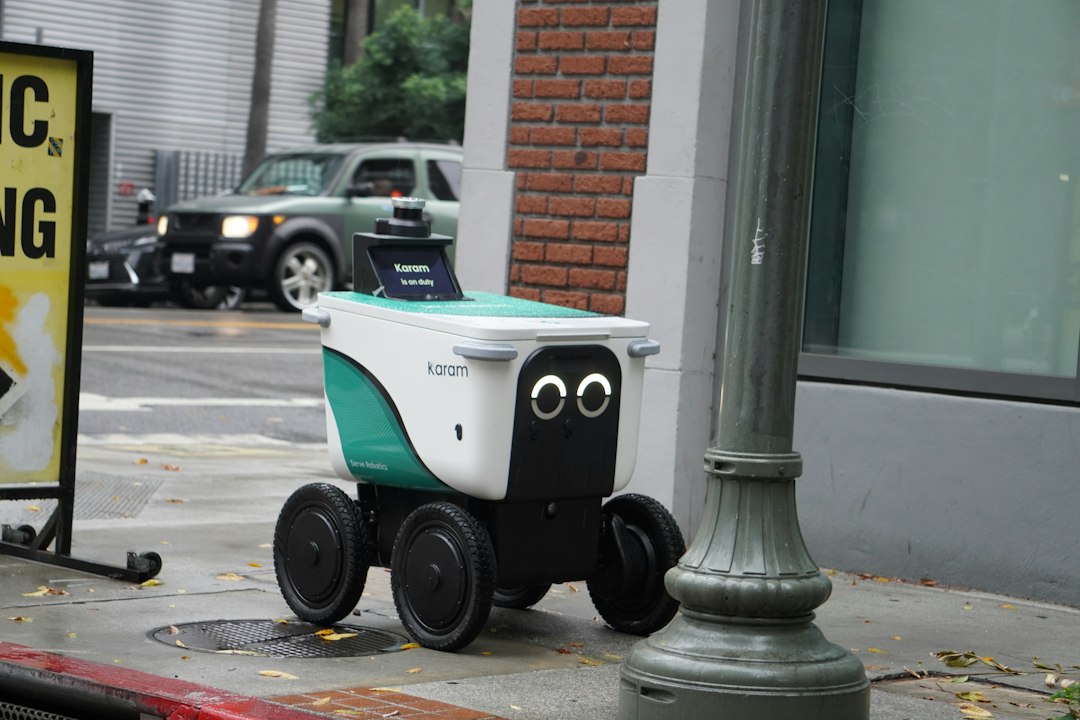
A college student waiting on a grocery order in Hoboken’s First Ward didn’t hear a car idle outside her building this week. She heard a soft electric whir instead. A knee-high robot rolled up to the curb, stopped, and waited for her to grab her bag. No driver circled the block looking for parking. No engine sat running at the curb while a delivery app pinged for directions. That robot was one of the first stops in Hoboken’s new delivery robot pilot, and it’s already changing how a small slice of the city gets fed.
That’s the small, ordinary moment the city of Hoboken is now testing at scale. On September 3, the city launched a 12-month Delivery Robot Pilot Program with two companies, Coco Robotics and Avride, each running ten low-speed electric robots through DoorDash, Uber Eats, Grubhub, and Wonder. The devices top out at 6 mph and average closer to 2, rolling along sidewalks and bike lanes in a defined First Ward zone.
Who actually gains from robots on the sidewalk
Delivery robots sound like a novelty until you think about who relies on delivery in the first place: parents home alone with young kids, older residents who find grocery runs harder than they used to, people managing an injury, and anyone working long hours who just needs dinner to show up. For these residents, a robot that shows up reliably, cheaply, and without adding another car to the block is a genuine convenience, not a gimmick.
There’s a second group that benefits just as directly: everyone else on the street. Hoboken is a famously tight city, and double-parked delivery vehicles are a routine source of backed-up traffic and blocked bike lanes. Mayor Emily Jabbour’s administration built the pilot specifically to cut down on that congestion, alongside the emissions that come from cars idling curbside while a driver runs an order to the door. Fewer short car trips for a bag of groceries means less exhaust on residential blocks where kids walk to school.
Safety built into the delivery robot pilot, not bolted on
The city didn’t just hand out robots and hope for the best. Each device carries lidar, ultrasonic sensors, cameras, and GPS, and is programmed to yield to pedestrians and reroute around obstacles rather than push through. Parks are off-limits entirely, robots come off the street overnight, and Coco’s fleet stays under continuous remote human supervision. Cameras automatically blur faces and license plates, addressing a privacy concern that’s dogged sidewalk robots in other cities. “We are putting in responsible guardrails before the delivery robot pilot launches,” said Councilman Paul Presinzano, and those guardrails are what make this deployment worth watching rather than worrying about.
A small pilot with a bigger pattern behind it
Hoboken’s robots are part of a broader shift already changing how goods and people move without a human behind the wheel. Just this month, Tesla’s Cybercab robotaxis started carrying paying riders in Austin, and Kodiak’s driverless trucks cleared a major safety milestone on long-haul freight routes. Delivery robots are the smallest, slowest piece of that puzzle, but they’re also the version most people will encounter first, rolling past them on the way to the train station rather than carrying them down the highway.
If the First Ward pilot holds up over its 12 months, city officials have said they’ll consider expanding it to other neighborhoods. For a resident who just wants a hot meal to arrive without circling traffic or a missed delivery window, that expansion can’t come soon enough.