
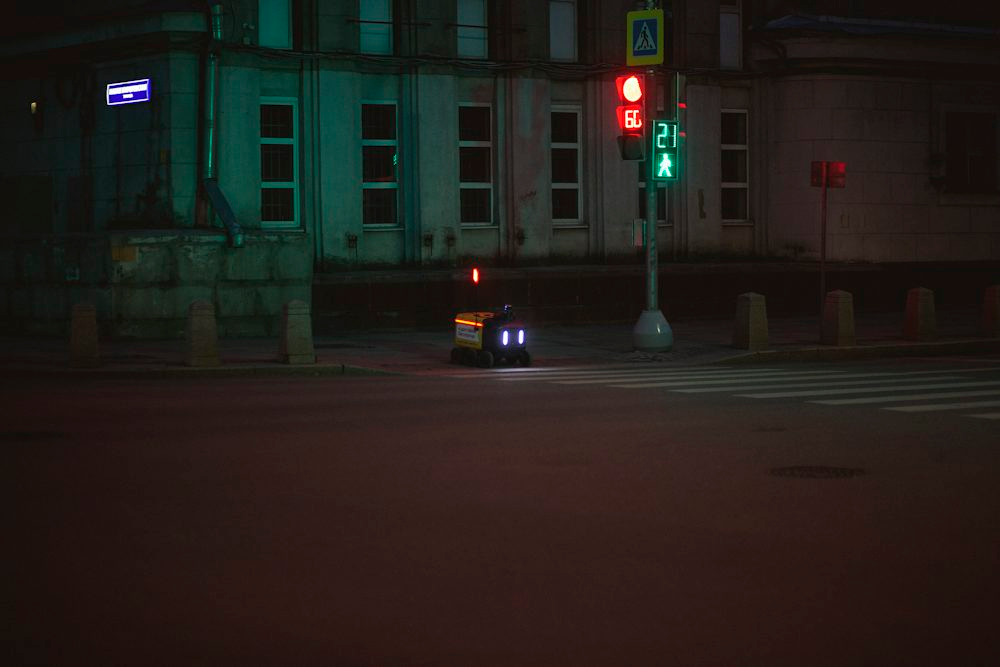
“By piloting Dot in rain and snow in Salt Lake City, we’re building the safety case and operational knowledge needed to expand this technology responsibly, not just to more cities, but to more days of the year when people need it most.”
That’s Ashu Rege, DoorDash’s vice president of autonomy, explaining why the company picked Salt Lake City for its newest test. Starting this fall, DoorDash has been running its sidewalk delivery robot, Dot, through streets, bike lanes and sidewalks in six Salt Lake City neighborhoods, training the machine to handle weather it has never faced on the job before: rain, snow and ice. The city’s transportation department confirmed the pilot in an October 13 posting, and the robots cannot make a single paid delivery to a customer yet.
What the Salt Lake City Delivery Robot Pilot Actually Covers
Dot normally works only in good weather. It’s a four-wheeled, zero-emission robot DoorDash built in-house to carry food and retail orders over short distances, and until now the company has kept it parked during storms. The Salt Lake City test is where that changes.
The city is allowing up to eight Dot robots in a first phase covering downtown and six surrounding areas: Central City, Central Ninth, Ballpark, Liberty Wells, East Central and the lower Avenues. In bike lanes, the robots are designed to travel between 12 and 18 miles per hour, yield to cyclists and pedestrians, and wait behind riders at stoplights instead of squeezing past them.
Here’s the quick version of what’s confirmed so far:
| Detail | What’s confirmed | Source |
|---|---|---|
| Robots allowed | Up to 8 Dot units in the test area | Salt Lake City Transportation, Oct. 13, 2026 |
| Where they travel | Street shoulders, sidewalks and painted bike lanes in 6 neighborhoods plus downtown; no trails or bike paths | Salt Lake City Transportation, Oct. 13, 2026 |
| Bike lane speed | 12 to 18 mph, yielding to cyclists and pedestrians | Salt Lake City Transportation, Oct. 13, 2026 |
| Customer deliveries | Not permitted during this test phase | Salt Lake City Transportation; KUTV, Nov. 11, 2026 |
| Battery and emissions | Runs about 6 hours per charge; zero tailpipe emissions | FOX 13 Salt Lake City, Nov. 11, 2026 |
Why Rain and Snow Have Kept Robots Parked
Sidewalk robots like Dot read the world through cameras, radar and other sensors, the same basic toolkit self-driving cars rely on. Rain blurs camera lenses. Snow covers the curb cuts and lane markings a robot uses to find its path. Ice changes how its wheels grip the ground. Any one of those problems can turn a routine delivery into a stuck robot, which is likely why DoorDash has avoided bad weather until now.
Utah’s climate makes Salt Lake City a fitting proving ground. The city gets measurable snow most winters, so a robot that can handle conditions here gives DoorDash real data instead of a guess about how the technology holds up once summer ends. Building that safety case first, then deciding whether to expand, is the entire point of the test, according to Rege’s comments.
The Rules Salt Lake City Attached to the Test
Utah state law lets personal delivery devices like Dot use the public right of way, and that leaves cities with limited room to simply say no. Salt Lake City used what room it has to set its own conditions instead.
A DoorDash employee has to monitor every robot operating in the city, according to the transportation department’s posted rules. A Dot cannot stop in a bike lane, cannot sit on a sidewalk narrower than 3 feet, and cannot block a building entrance, fire hydrant or bike rack. DoorDash must send the city a monthly report covering feedback and complaints, and has to report any collision immediately. None of that guarantees the test goes smoothly, but it gives the city a paper trail if it doesn’t.
Salt Lake City isn’t the first city to spell out rules this specific for a sidewalk robot. Hoboken’s 12-month delivery robot pilot laid out a similarly detailed rulebook, down to which streets its robots could use, before a single device hit the sidewalk.
Why It Matters to You
If you live in one of the test neighborhoods, this pilot doesn’t change your dinner tonight: Dot still can’t bring you anything. But the idea behind it is worth watching. Robot delivery that only works on sunny days is a novelty. Robot delivery that works through a Utah winter is a tool that could matter to someone stuck at home during a storm, including older adults and people with disabilities who already lean on delivery apps more than most.
There’s a second group this could help, and it’s easy to overlook: the human couriers who currently have to drive or bike through that same ice and snow to get food to your door. A short-range robot that can handle bad weather on routine orders is one less trip a person has to make on slick streets. None of that is guaranteed yet. It depends on whether Dot actually performs as hoped once the snow starts, and whether DoorDash decides the results are good enough to expand beyond a handful of robots and neighborhoods.
Open Questions Before Dot Gets to Your Door
- When it starts. Neither DoorDash nor the city has released a start date for the cold-weather testing, according to FOX 13’s reporting.
- How it performs. No results from the weather test have been published yet, and public records reviewed by KUTV didn’t pin down an exact start date for the pilot either.
- When customers get to use it. DoorDash hasn’t said when, or whether, Dot might graduate from testing to real deliveries in Salt Lake City.
- Accessibility features. Nothing in the city’s posting or DoorDash’s comments addresses anything built specifically for riders or households with disabilities, beyond the general benefit of not having to go out in bad weather.
If you live in Central City, Central Ninth, Ballpark, Liberty Wells, East Central or the lower Avenues, keep an eye out this winter. Whether Dot handles Salt Lake City’s snow or struggles with it will likely decide if robot delivery becomes a year-round option here, or stays a fair-weather idea that never leaves the pilot stage.
Sources
- Salt Lake City Transportation: DoorDash Personal Delivery Devices (Oct. 13, 2026)
- FOX 13 Salt Lake City: DoorDash to test weather-resilient robot delivery system in Salt Lake City (Nov. 11, 2026)
- KUTV: DoorDash robot testing covered downtown Salt Lake, nearby neighborhoods (Nov. 11, 2026)