
Can a drone prepare a cotton field for harvest as well as a tractor-pulled sprayer? Auburn University’s precision agriculture team says its trials point to yes, with some conditions. The details come from a Nov. 16, 2026 column in Farm Press by Auburn specialist Simer Virk.
What is verified: Auburn ran trials over several years comparing spray drones with a ground sprayer. What is not verified: the full data. The column gives directions, not tables of numbers, so treat this as a signal rather than a final answer.
What Auburn Tested on Cotton Defoliation Drones
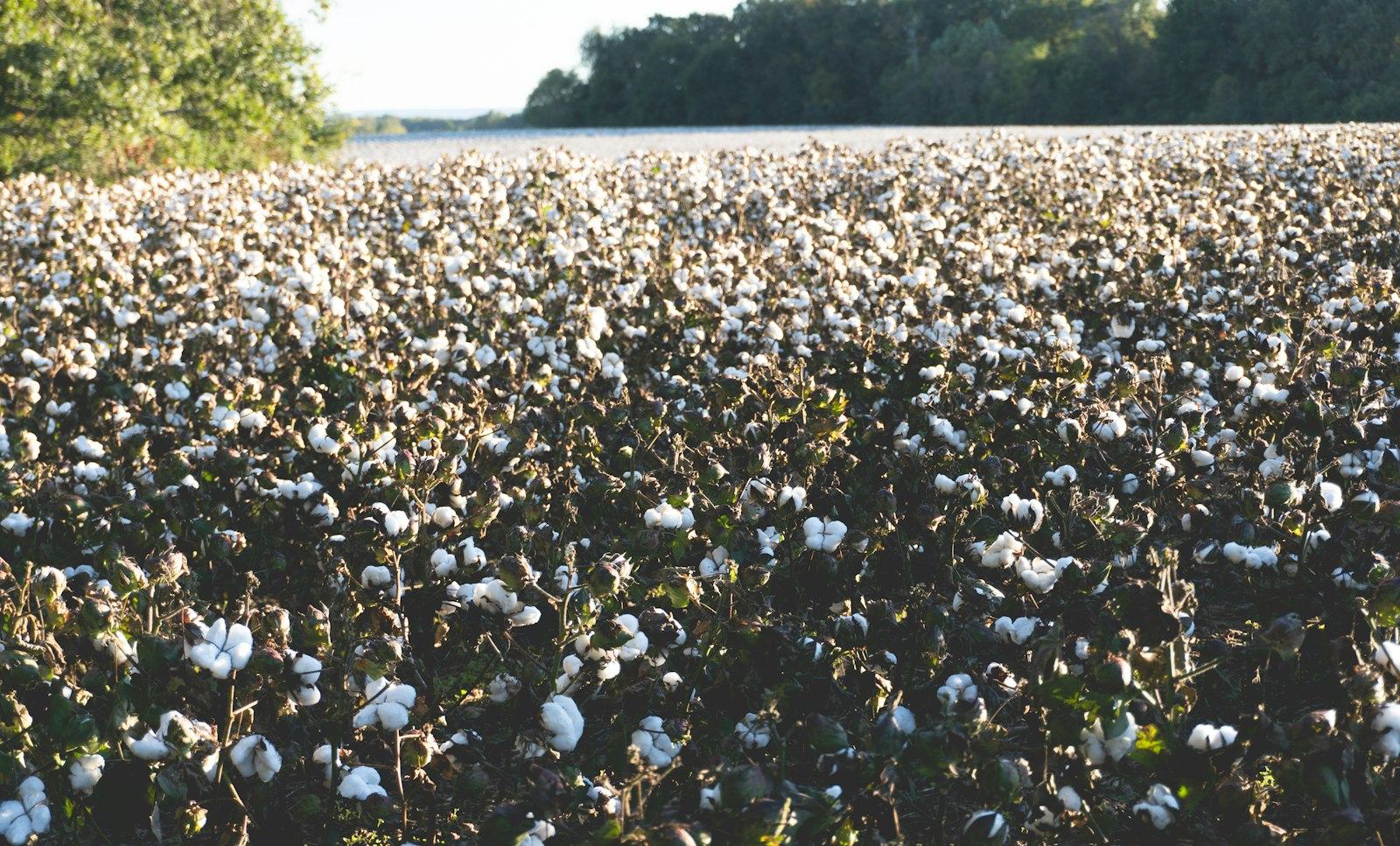
Before cotton is picked, growers spray a defoliant. It is a chemical mix that makes the plant drop its leaves, so the picker is not clogged with green material. Timing and coverage matter, because missed spots can mean leaves, regrowth and unopened bolls at harvest.
According to Virk, the Auburn Precision Ag team used a three-way mix of Folex, Ethephon and Thidiazuron. Drones applied it at 3 and 5 gallons per acre. A ground sprayer applied it at 10 gallons per acre. The plots were large, replicated blocks within the fields each year. Drone news site DroneXL, which reported on the work the same day, counts four site-years of data. Farm Press confirms the four site-years.
What the Drone and Ground Rig Results Showed
Coverage favored the ground rig. Virk reports the drone covered less of the plant at every canopy position. He ties that to the ground sprayer’s higher volume and closer boom, and notes the drone’s spray swath was more variable. At 5 gallons per acre, drone coverage improved, especially in the upper canopy.
Yet the crop outcomes were close. Virk reports similar defoliation, desiccation (drying of the plant), regrowth and open bolls between drone and ground in all years. In only one of the four site-years did the drone show higher desiccation. Lint yield and fiber quality were also similar, with no fiber difference.
His takeaway, in his words, is that drones are “another valid tool for applying cotton defoliants.”
Practical Advice From the Auburn Specialist
Virk suggests adding 1 to 2 gallons per acre to the drone rate to improve coverage. In some cases he also suggests flying slower with larger droplets. He advises growers to calibrate the drone, check its actual output, follow label volumes and droplet sizes, and fly only in good weather.
Alabama’s Extension guide shows why volume is a live question. That 2020 guide, last modified in 2026, says harvest aids should go on at no less than 15 gallons per acre by ground and 5 gallons per acre by air. It does not mention drones. The Auburn drone rate of 3 gallons sits below that “by air” figure, and the 5 gallon rate matches it.
| Application | Gallons per acre | Source |
|---|---|---|
| Auburn drone, low rate | 3 | Farm Press, Nov. 16, 2026 |
| Auburn drone, higher rate | 5 | Farm Press, Nov. 16, 2026 |
| Auburn ground sprayer | 10 | Farm Press, Nov. 16, 2026 |
| Alabama guide minimum, by ground | 15 | Alabama Extension (ACES), 2020 guide |
| Alabama guide minimum, by air | 5 | Alabama Extension (ACES), 2020 guide |
Source: Farm Press and Alabama Cooperative Extension System, as cited above.
Limits and Open Questions
This is a university research team’s account of its own trials, not a peer-reviewed paper. The column reports no coverage percentages, yields, locations or plot counts. It does not name the drone, and it gives no costs. A conference abstract linked by DroneXL did not load for us, so we have not relied on it. Results from one team’s fields may not hold in other soils, weather or varieties.
Coverage was lower with drones, and Virk says so plainly. A grower who skips calibration could land on the wrong side of that gap. Rules also differ by product label and by state, so check yours before swapping equipment.
Why It Matters to You
For cotton farmers, a drone could be a second option when wet ground keeps heavy rigs out of the field, though the column does not test that. For shoppers, nothing changes soon: the study reports no price effect, and cotton prices depend on far more than sprayers. On water, the drone rates use less carrier water per acre, but the column does not measure environmental impact. This is research, not yet a verified standard practice.
Watch for the full Auburn data. The question to ask any drone operator is simple: what gallons per acre will you fly, and how will you show me the coverage?
Sources
- Farm Press, “Did the drone defoliate cotton as well as a ground rig?” by Simer Virk, Nov. 16, 2026: farmprogress.com
- DroneXL, “Auburn Spray Drones Defoliated Cotton Like A Ground Rig On Less Water,” Nov. 16, 2026: dronexl.co
- Alabama Cooperative Extension System, “Application of Cotton Defoliation Aids in Alabama,” published Sept. 18, 2020, last modified 2026: aces.edu
- CANVAS 2026 program page for Auburn’s abstract, dated Nov. 3, 2026 (abstract text did not load): scisoc.confex.com