
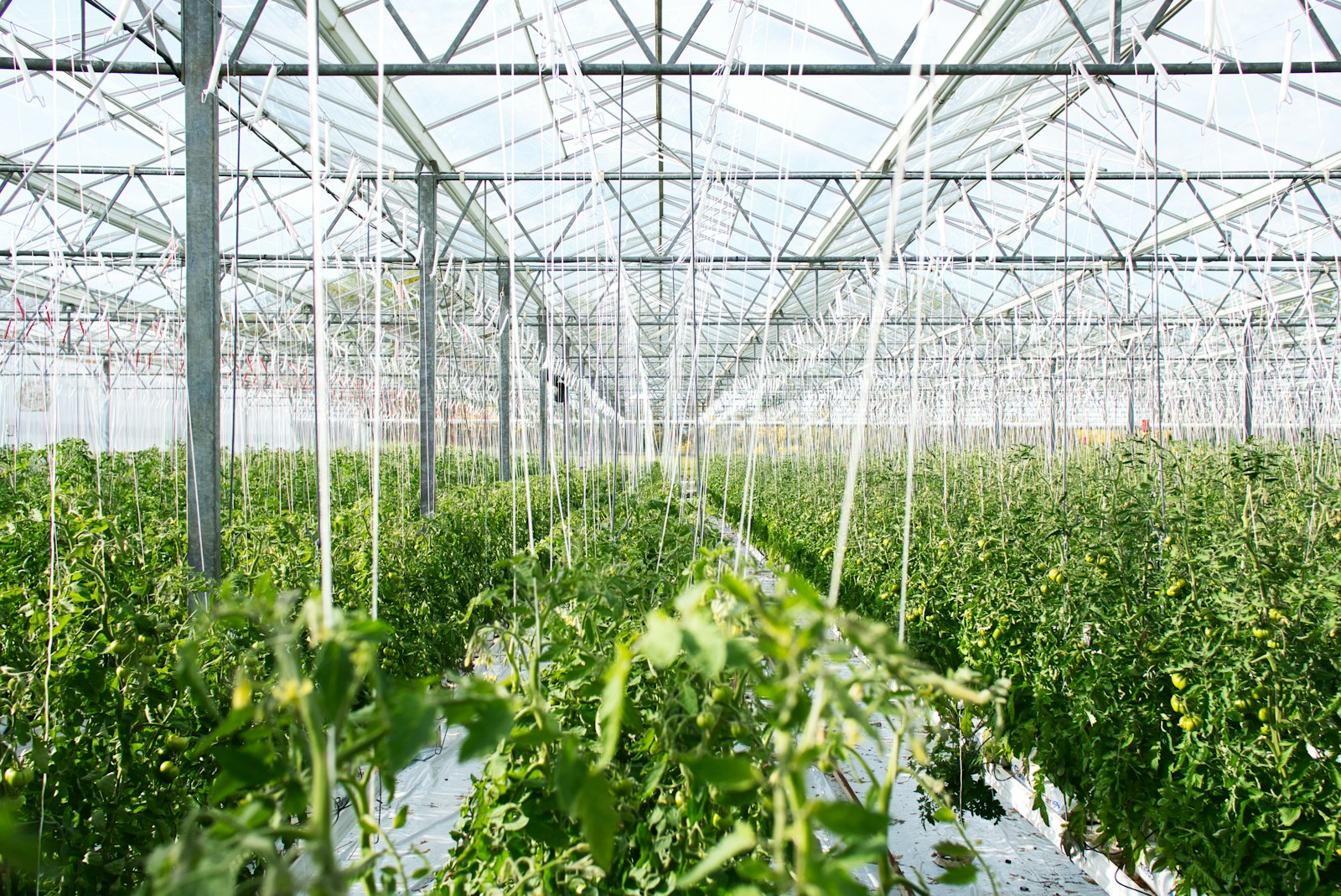
Eighty cameras hang over a six-hectare tomato greenhouse in Ruthven, Ontario. Loesen Farms says that since April 2026 they have replaced the routine walk-through that workers once did to check plants for pests and disease. That job is called greenhouse pest scouting, and people usually do it row by row, often with a hand lens. What is verified: a trade-press feature and a news summary both describe the farm’s setup, and both come from the vendor’s account. What is not verified: any measured savings.
Eighty Cameras Over Six Hectares
The software is called Croptimus. It is made by Fermata, a company based in Tel Aviv. According to FloralDaily (11 November 2026), Loesen installed the 80 cameras in September 2025. Global Agriculture (19 November 2026) puts that at about one camera for every 750 square meters of crop.
By April 2026 the farm had phased out its routine scouting rotation. Before that, Global Agriculture says, scouting happened once or twice a week. Grower Kylar Reynolds told FloralDaily: “We saw strong alignment between our scouts’ observations and Croptimus detections.” That suggests people and software were compared for a time. Neither article gives the numbers.
How AI Helps With Greenhouse Pest Scouting
Croptimus uses computer vision, which means software that reads images. Fermata says it flags more than 20 kinds of plant problems. FloralDaily names whiteflies, spider mites, thrips, powdery mildew and mirid bugs. A 2025 HortiDaily interview says the cameras are off-the-shelf security cameras linked to the internet.
The company frames this as a tool for growers, not a replacement. Fermata’s Valeria Kogan said in 2025: “We’re not here to replace IPM managers. We’re giving them real, objective data to make better decisions.” IPM, short for integrated pest management, is the plan growers use to control pests with fewer chemicals.
One example comes from Ridge Farms in Leamington, Ontario. HortiDaily reports the system flagged adult whiteflies early, so the grower delayed releasing helpful insects for weeks. Fermata’s product page says a five-week hold avoided about 16,250 euros in premature spraying. That is one case, reported by the seller.
The Vendor’s Numbers, Side by Side
Fermata’s product page lists three headline results. The page says results vary by crop, conditions, camera coverage and how fast a team responds. It does not describe how the figures were measured.
| Claim | Figure | Status |
|---|---|---|
| Lower crop loss | 30% | Vendor claim, no method given |
| Less routine scouting | 50% | Vendor claim, no method given |
| Lower treatment costs | 25% | Vendor claim, no method given |
Source: Fermata, Croptimus product page (undated, copyright 2026).
Notice the gap. Loesen reports dropping routine scouting, which is more than the 50% cut on the product page. A 2025 The Packer interview has Kogan saying case studies showed “up to 50%” less human involvement in scouting. None of the articles explains the difference.
What Is Still Unproven
This is one greenhouse, described by the company selling the system. Global Agriculture says outright that the account is Fermata’s own. The articles give no controlled comparison, no detection accuracy and no price or subscription cost. They give no figures for labor or pesticide use, though the vendor argues both fall.
The class count also shifts between vendor materials: more than 20, 24 and “more than 25” all appear. We could not find independent testing. It is also unclear whether anyone still checks plants by eye, or what happened to the scouts’ work. Fermata says it has run at more than 60 sites in more than 10 countries since 2020, but it publishes no site-by-site results.
What to watch next: whether a grower or university publishes misses as well as hits. A camera that spots a pest is useful. A camera that misses one is the number buyers need. For a related greenhouse robot story, see our look at Biobest’s Polly pollination robot.
Why It Matters to You
- Farmers: if the claims hold, scouting hours could shift to treating problems and harvesting, but the price is not public.
- Farm workers: the sources do not say what scouts do now. Ask that before judging the tradeoff.
- Grocery prices and food safety: no evidence yet that this changes either.
- Water and the environment: earlier detection could mean less blanket spraying, but that is a vendor argument, not a measured result.
- On farms today? Yes, at Loesen and other sites per the vendor, but without independent results.
Sources
- FloralDaily, “From routine manual scouting to autonomous day-to-day crop monitoring,” 11 November 2026.
- Global Agriculture, “AI Cameras Let Ontario Greenhouse Fully Retire Manual Pest Scouting,” 19 November 2026.
- Fermata, Croptimus product page, undated (copyright 2026).
- HortiDaily, “AI-powered scouting flags pests before outbreaks, cuts labor costs,” 26 June 2025.
- The Packer, “How AI is transforming greenhouse, field growing,” 17 March 2025.