
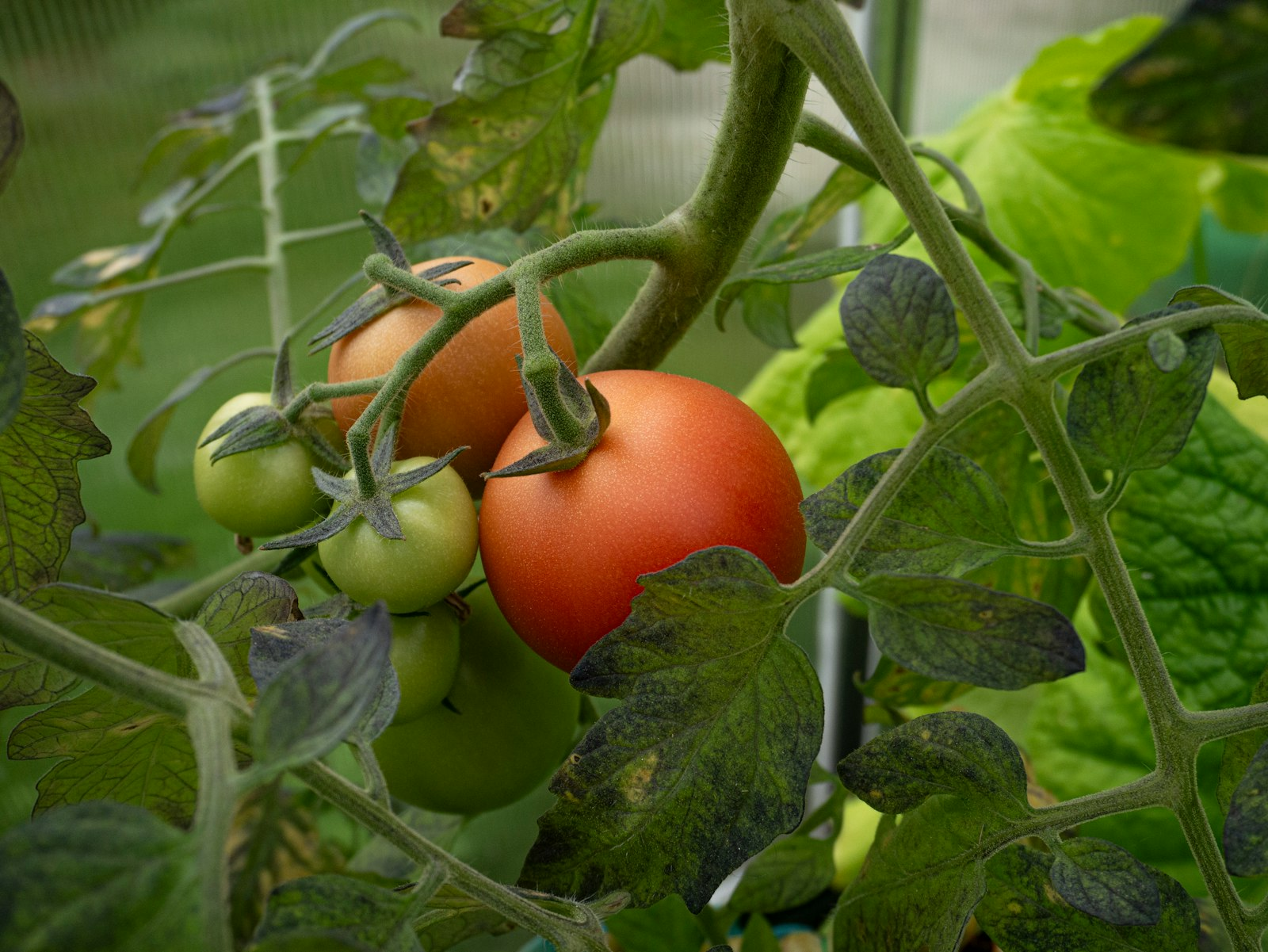
Who pollinates a greenhouse tomato? In most commercial greenhouses, the answer is a rented colony of bumblebees. On October 27, 2026, Biobest, a Belgian supplier of biological pest control and pollination products, announced a different option: a tomato pollination robot called Polly, developed with the Israeli firm Arugga AI Farming. The launch, the lease and purchase terms, and the company’s claims are verified against Biobest’s own page. The performance numbers are the company’s, and no outside party has checked them in anything we could open.
How Polly Works
Polly uses cameras and image recognition to find tomato flowers that are ready for pollination. It then fires a short, controlled burst of air at each one to release pollen. Global Agriculture reports that the burst mimics the vibration of a bumblebee, with no physical contact and no chemical treatment.
The new part is the base. Biobest says Polly now comes with a fully autonomous base. A grower places the robot in the first row at the start of the day, and it pollinates through the day without further intervention. The company also says one robot is now enough to cover one hectare, which is about 2.5 acres. Hortidaily notes that operating speed was increased but gives no speed figure.
This is not a brand-new machine. Biobest and Arugga describe five years of joint development and testing in commercial greenhouses in Europe and North America. Global Agriculture adds that earlier Polly versions are already in commercial greenhouses.
What the Numbers Do and Do Not Show
Jorden van de Walle, Biobest’s product manager for pollination, says trials have consistently shown yield gains of 2 to 6 percent. Global Agriculture adds that the comparison is with bumblebee pollination alone. He also says a gain of just 1.5 percent is usually enough to earn a positive return.
These are company figures. None of the pages we opened gives the number of trials, the farms, the tomato varieties, how long the trials ran, or how the control plants were handled. Hortidaily quotes only Biobest staff. No grower or outside researcher is named.
Growers can lease Polly for 12 months, with warranty, maintenance, technical support and replacement parts included. They can also buy it outright with a five-year warranty, then extend the warranty or switch to a remote support package. Global Agriculture reports that Biobest has not disclosed prices under either option. Without a price, the 1.5 percent payback claim cannot be tested by a reader.
Where Bumblebees Struggle and Polly Fits
Biobest says short winter days, low light, supplementary LED lighting and energy-saving thermal screens can reduce bumblebee efficiency. It adds that summer temperatures above 35°C can hurt bee activity and pollination. Those are the gaps Polly is meant to fill.
The company does not pitch Polly as a full replacement. Hortidaily says it is designed to work alongside bumblebees, and also as an option for tomato systems that do not use them. Global Agriculture says it is designed to help growers avoid synthetic plant hormone sprays in weak bee periods. That is Biobest’s framing, not an independent finding.
What Is Still Unproven
The announcement covers tomatoes only. It gives no count of robots in use, no speed measurement, no failure cases, and no mention of regulatory review. The yield and coverage claims rest on the company’s word.
Compare that with how a university describes a different farm robot. NC State researchers are pairing a drone with a self-driving ground robot to replant only the empty gaps in cotton rows. The university calls the robot a prototype and reports no field results yet. Polly is further along, since it is on offer now. But “on sale” and “independently measured” are not the same thing.
Crews matter here too. None of the sources says how Polly changes the work of greenhouse staff. Another recent story on this site asks the same question about a different machine: Robust AI’s Carter warehouse robot, which also rests mostly on company material.
Why It Matters to You
- Farmers: greenhouse tomato growers get another tool for weeks when bees underperform, if the claimed gains hold on their own farm and the price works.
- Grocery prices: no source links Polly to shelf prices, and the yield gains are company-reported.
- Food safety and environment: Biobest describes the method as contact-free and chemical-free. No independent safety or environmental data was published.
- On farms today: it is available to lease or buy now, and earlier versions are in commercial greenhouses. How many is not stated.
What to watch next: a named grower, a published trial design, and a price. Any one of them would tell readers more than the headline numbers do.
Sources
- Biobest, “Meet Polly, the answer to your pollination challenges”, October 27, 2026
- Hortidaily, Biobest introduces pollination robot Polly, October 27, 2026
- Global Agriculture, Biobest launches fully autonomous Polly robot for tomato pollination, November 16, 2026
- NC State News, “On the Ground and In the Air”, November 5, 2026