
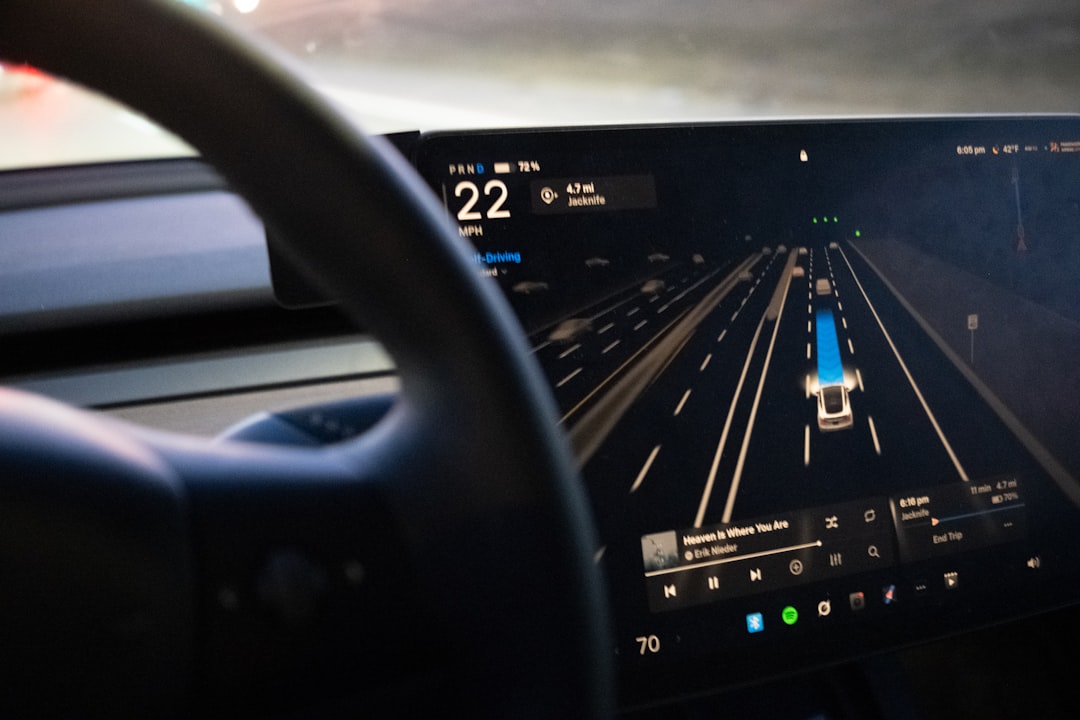
What does it actually take to trust a car with no one behind the wheel? Beijing just gave a concrete answer: the software has to crash less often than a person would, full stop, before it gets to carry passengers at scale. China’s Ministry of Industry and Information Technology released a national roadmap this week setting a firm self-driving safety standard that autonomous vehicles must clear before they roll out widely on highways, city expressways, and eventually neighborhood streets, according to the plan reported by AsiaOne.
That single requirement matters more than it sounds. China records tens of thousands of road deaths every year, and most trace back to ordinary human mistakes: a glance at a phone, a brake pressed too late, a turn misjudged in traffic. A government mandate that self-driving systems must outperform that baseline, not just match it, sets a floor that commuters, delivery drivers, and pedestrians all stand to benefit from.
China’s Self-Driving Safety Standard Sets the Bar High
Under the roadmap, autonomous vehicles must demonstrate measurably better safety records than human drivers before regulators sign off on large-scale rollout. Officials also tightened rules around software updates and manufacturing oversight, so a company can’t quietly change how its cars behave on the road without scrutiny. For a family riding in the back seat, or a cyclist sharing the same lane, that oversight turns a vague promise into an enforceable bar the technology actually has to clear.
Buses and Robotaxis Could Reach People Transit Doesn’t
The plan doesn’t stop at private cars. It calls for trials of autonomous buses and robotaxis, plus upgrades that let vehicles, roads, and cloud systems share information in real time. That combination could matter most for people who don’t have many transportation options today: workers in cities where bus routes end early, older residents who no longer drive, and commuters priced out of owning a second car. Similar bets are already paying off elsewhere. In Spain, Madrid’s new robotaxi permit just cleared the way for safer, driverless rides in a major European capital, and in Tennessee, Waymo made robotaxi rides far easier to book for residents who used to wait out rideshare surges during rush hour.
Why a Roadmap on Paper Could Still Change Daily Commutes
National strategies can feel abstract, but this one comes with teeth. Automakers chasing a share of a market with well over a billion potential riders now have a clear incentive to hit the safety bar early instead of just talking about it. When manufacturers race to meet a standard like this, the safety gains tend to travel: better obstacle detection, faster reaction times, and more cautious decision-making around pedestrians end up in vehicles that reach customers well beyond China’s borders. A driver in Ohio or a commuter in Nairobi can benefit from the same sensor and software improvements, even without ever sitting in a Chinese-made car.
None of this means driverless vehicles are suddenly everywhere or that every risk has vanished. Regulators still have to enforce the standard once cars are on real roads, not just write it into a plan. But when a government tells an entire industry that “safer than a human” is the minimum, not the marketing pitch, that pressure tends to trickle down into real safety gains for whoever ends up in the passenger seat, or standing at the crosswalk next to one.