
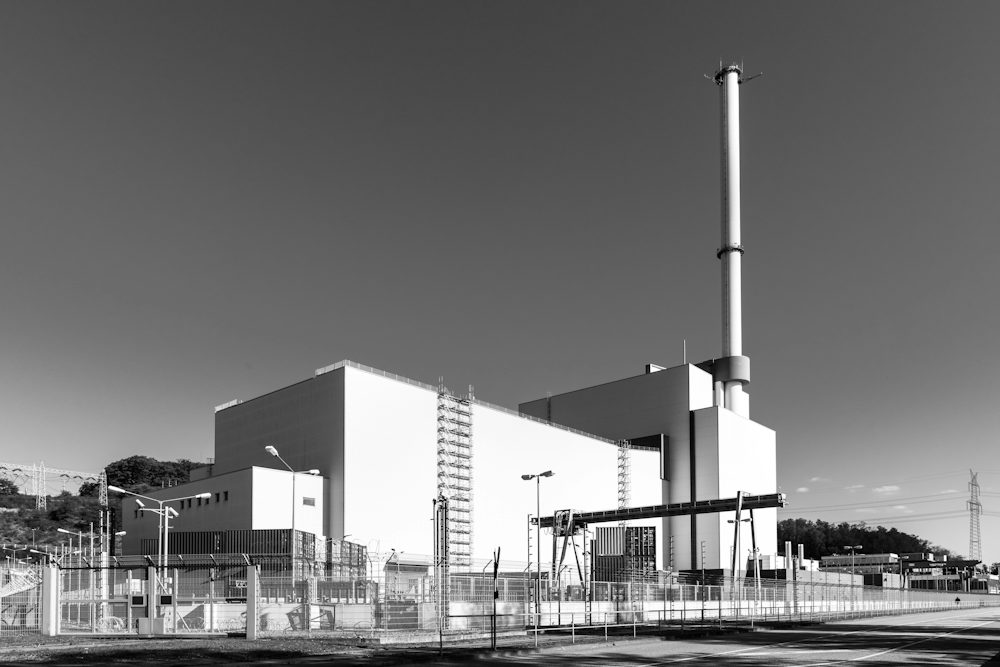
Thirty to thirty-five years. That’s how much extra service life Bruce Power says one Unit 5 refurbishment outage buys a nuclear reactor, and on November 1, 2026, the utility took Unit 5 offline to start one. Bruce Power confirmed the work in a press release the following day, and World Nuclear News reported the same details on November 3. What’s verified: a fourth Candu reactor at the Bruce site, on the shore of Lake Huron in Ontario, is now mid-refurbishment. What’s still open: when it comes back online, and what the work costs specifically.
- Bruce Power took Unit 5 offline on Nov. 1, 2026, to begin a Major Component Replacement (MCR) outage at its plant near Kincardine, Ontario.
- MCR swaps out a reactor’s steam generators, pressure tubes, calandria tubes and feeder tubes. Bruce Power says the work adds 30 to 35 years of operating life.
- Unit 5 is the fourth of six MCR projects in Bruce Power’s roughly $13 billion plan to renew Units 3 through 8. Two of the earlier three have already returned to service, both ahead of schedule.
- No completion date or unit-specific cost has been announced for Unit 5 yet.
What the Unit 5 Refurbishment Actually Replaces
A Major Component Replacement doesn’t mean building a new reactor. It means gutting the parts that wear out inside one that’s already standing. Bruce Power’s eight Candu units use a design built around hundreds of individual fuel channels rather than one big pressure vessel, the way most American reactors work. Each channel runs through a calandria tube and a pressure tube, fed by its own feeder tube, and all of it eventually gets replaced along with the steam generators that turn reactor heat into steam for the turbines.
That’s the whole point of MCR. Swap those components out, and a reactor built in the 1980s can keep running into the 2060s instead of getting decommissioned. It’s slower and messier than pouring a new foundation, but it’s also dramatically cheaper than building a reactor from scratch, which is why Ontario is leaning on this approach to keep roughly a third of its grid’s generation running for another three decades.
The Robots Are Getting Better at This
Here’s the part that actually counts as progress, not just maintenance: Bruce Power keeps getting faster at it. Unit 3’s rebuild was the first anywhere to use robotics on a reactor face, and it paid off. The unit returned to service this past June, more than seven months ahead of schedule, and that early finish sent about $150 million back to Ontario ratepayers through the province’s electricity system operator. Unit 6, the very first MCR in this program, wrapped up in 2023 ahead of schedule and under budget too, returning $52 million.
Bruce Power says its methods “improve with each outage,” and Unit 4’s rebuild, still underway, is reportedly setting records of its own.
Think about what that means in practice. The same crews, working through the same sequence of swaps on reactor after reactor, are shaving months off each successive project. That’s not a press release claim about a shiny new reactor concept. It’s an old industrial process getting measurably more efficient the more times a team repeats it, on reactors most of us assumed were just going to run out the clock and shut down.
Six Reactors, One Refurbishment at a Time
- Units 1 and 2 went through an earlier refurbishment and have been back in service since 2012. Ontario is now weighing a second MCR for both.
- Unit 6 was the first MCR in the current program, running from 2020 to 2023. It finished early and under budget, handing $52 million back to ratepayers.
- Unit 3 finished its MCR this year, over seven months ahead of schedule, using robotics on the reactor face for the first time anywhere. That early finish returned roughly $150 million through the IESO.
- Unit 4 is still mid-rebuild. Bruce Power says it’s tracking well, though no return-to-service date has been published.
- Unit 5 just started its MCR on Nov. 1, 2026. No finish date yet.
- Units 7 and 8 haven’t started. They’re scheduled for 2028 and 2030.
Where the Evidence Stops
- Bruce Power hasn’t given a completion date for Unit 5’s outage, only that it began Nov. 1.
- The roughly $13 billion figure covers the whole six-reactor program. Neither Bruce Power nor World Nuclear News broke out a cost specific to Unit 5.
- The 30-to-35-year life extension, the 22,000 jobs, and the roughly $4 billion in annual economic benefit are Bruce Power’s own figures. Nothing in the coverage cites an independent audit of those numbers.
- This outage just started days before this was written. Nobody outside Bruce Power’s own statements has yet weighed in on whether it’s tracking to beat Unit 3’s pace, or falling behind it.
- Ontario’s second-MCR plan for Units 1 and 2 is still just something the province is “evaluating,” not a funded project.
Why It Matters to You
If you don’t live in Ontario, this story’s effect on your life is close to zero. If you do, it’s one of the more direct nuclear stories we cover. When these outages finish early, the savings aren’t theoretical. Bruce Power says the Unit 3 and Unit 6 projects alone have already returned roughly $200 million combined to ratepayers through the province’s electricity system, money that shows up as lower costs on the grid rather than a check in anyone’s mailbox, but real savings all the same. Add in the 22,000 direct and indirect jobs the company says the broader program supports each year, most of them in the trades, and this becomes an economic story for Bruce County and the surrounding region, not just a utility press release.
There’s a second, less direct benefit too. Ontario gets a large chunk of its electricity from these eight reactors. Keeping them running for another 30-plus years each means the province doesn’t need to rush into building new capacity or lean harder on gas plants to fill the gap. It’s a similar logic to what we’ve seen with utility-backed uprate deals at existing US reactors: stretching the life of a plant you already have is usually faster and cheaper than starting over. None of this is guaranteed on any specific timeline. It depends on Unit 5’s outage actually going as planned, the same bet every MCR project has made so far.
If Unit 5 beats Unit 3’s early finish, Bruce Power will have proven something more valuable than one rebuilt reactor: that refurbishing a 1980s nuclear plant, like any skilled trade, gets faster the more times a crew actually does it.
What We Still Don’t Know About Unit 5 Specifically
When will Unit 5 return to service?
Bruce Power hasn’t said. Unit 6 took about three and a half years; Unit 3 finished faster than that. Where Unit 5 lands on that range isn’t known yet.
Does this outage need new regulatory approval?
No new approval was reported for this specific start date. Ontario’s electricity system operator, the IESO, approved the Unit 5 MCR project back in 2025, and Canada’s nuclear regulator oversees construction and safety throughout.
Sources
- Bruce Power: Bruce Power’s Unit 5 Major Component Replacement outage begins (press release, Nov. 2, 2026)
- World Nuclear News: Bruce Unit 5 refurbishment begins (Nov. 3, 2026)