
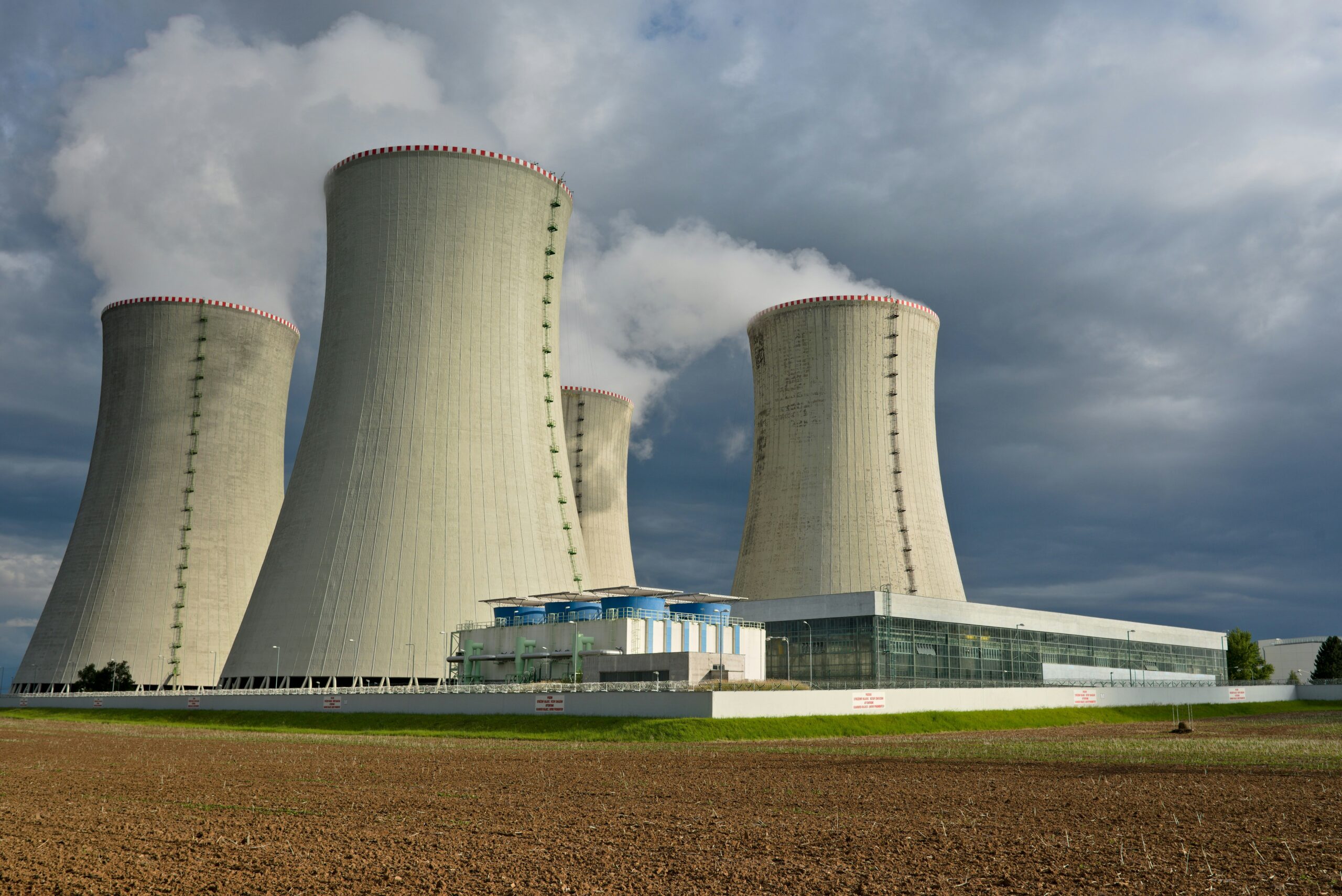
One hundred and forty-four times since 1977, the Nuclear Regulatory Commission has let an existing reactor squeeze out more power without anyone building a new one. Together, those projects have added over 8,000 extra megawatts nationwide, roughly equal to seven brand-new reactors the size of Georgia’s Vogtle units. Calvert Cliffs, on Maryland’s Chesapeake Bay, just became the latest plant in line for one of these power uprates.
On September 30, Constellation Energy and Amazon announced a 20-year power agreement. It adds roughly 190 megawatts across Calvert Cliffs’ two reactors, pushing the plant from 1,790 megawatts to 1,980, with the power arriving between 2030 and 2032. Amazon’s deal backs more than $3 billion in site investment. Calvert Cliffs already supplies about 40 percent of Maryland’s electricity and 80 percent of its clean power, so this is the state’s main clean energy source getting bigger.
Picture Priya, a hospice nurse who works night shifts ten minutes from the plant in Lusby, Maryland. She has read the same headlines everyone near a nuclear plant reads, about AI data centers straining grids and pushing bills higher elsewhere. This deal runs the other direction. Amazon is covering most of that $3 billion, and the power it is buying is new capacity, not capacity pulled from her neighborhood.
What Actually Changes Inside the Calvert Cliffs Power Uprate
Power uprates are not all the same size. The NRC sorts them into three tiers.
- Measurement uncertainty recapture: under 2% more power, from better flow instruments
- Stretch uprates: 2 to 7% more power, mostly recalibrated instrumentation
- Extended uprates: up to 20% more power, requiring new turbines or generators
A 190-megawatt jump on a 1,790-megawatt plant works out to about 10.6 percent, landing this upgrade in the top tier. Crews will replace heavy equipment, not just adjust a dial. Visualizing Energy breaks down the full history of US uprates since 1977.
Twenty More Years on the Calendar
The uprate is not the only thing changing. Constellation also plans to relicense both reactors for another 20 years beyond their current authorization, pushing operation well into the 2050s. That is the detail Priya actually cares about. The plant is not just getting bigger. It is planning to still be running when her own kids are raising kids of their own.
Compare that to starting from zero. A record-setting VVER-1200 reactor in China needed roughly five years from groundbreaking to first power, and American projects have taken far longer. An uprate skips that wait, since the reactor and containment are already built.
Why This Saves Real Money and Real Time
Here is the back-of-envelope math. New nuclear capacity built from scratch has run around $15 million per megawatt on recent US projects. This Calvert Cliffs power uprate works out closer to $4 million per megawatt, delivered years sooner. That gap is why utilities increasingly favor uprates over new construction, the same logic behind Palisades’ plan to add 680 megawatts by reusing an existing switchyard instead of building new power lines.
“This long-term agreement with Constellation sustains the continued operation and expansion of Maryland’s largest source of carbon-free energy and supports hundreds of jobs,” said Kerry Person, an Amazon Web Services vice president.
Those jobs matter too. Calvert Cliffs already employs more than 800 people, and a project this size adds years of construction and engineering work on top of that.
If a 50-year-old reactor near you quietly asked regulators to run harder and longer instead of winding down, would you even hear about it? Or would you just notice your electric bill held flat while everyone else’s AI-driven demand pushed theirs up?