
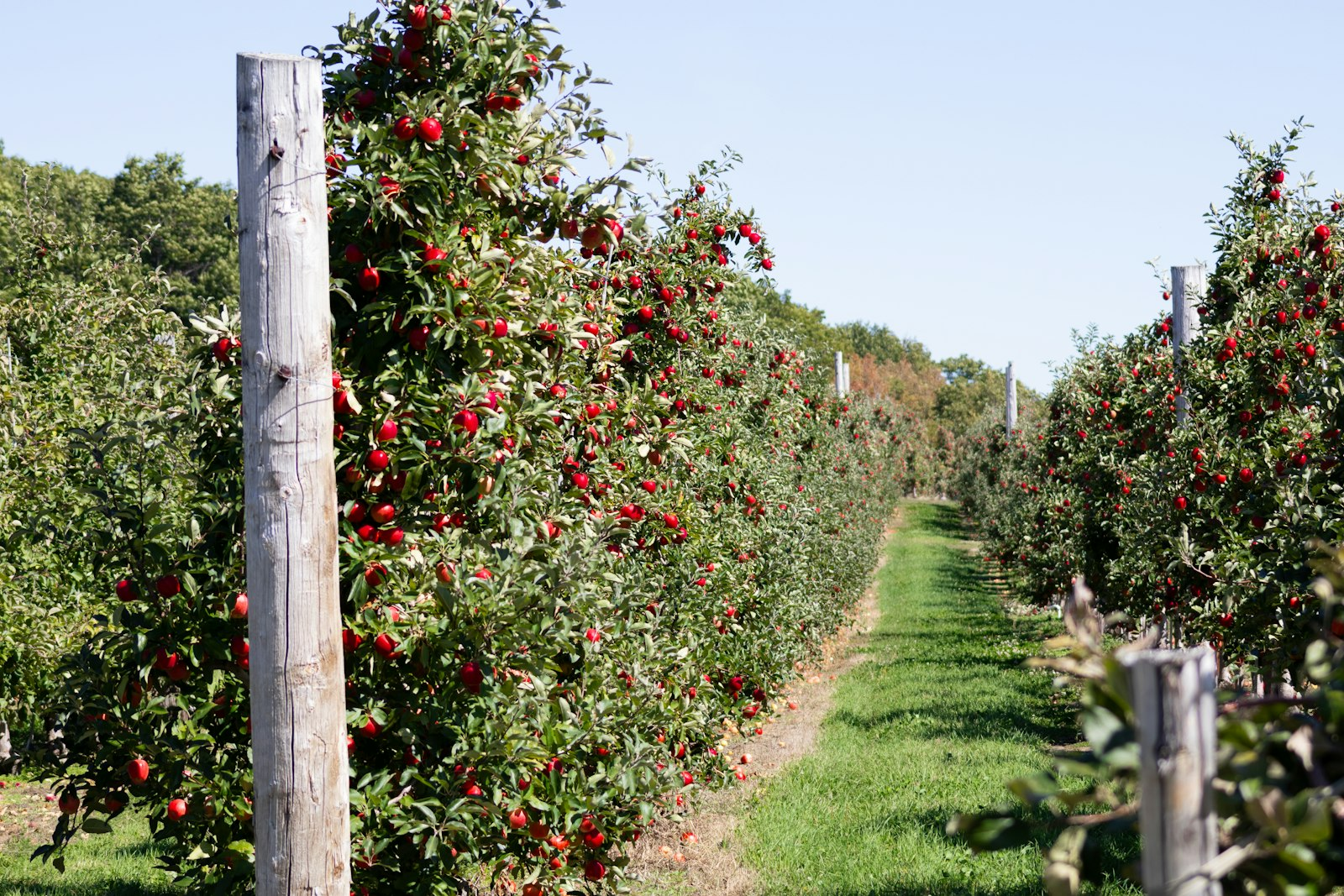
Cornell AgriTech cut the ribbon on a new Center for Agricultural Robotics at its Geneva, New York, campus on Thursday, Nov. 19, according to local station WHAM. The stated aim is robots that can pick fruit, prune trees and remove weeds on New York farms. What is verified so far is the opening and that goal. No source I opened shows a finished robot working a commercial field, a budget for this center, or a deployment date.
What Opened in Geneva
WHAM reports that the center “will focus on using artificial intelligence and automation for crop production.” It lists three jobs: picking fruit, pruning trees and removing weeds. The station says the center’s goal is to build robots that can be distributed to farms across New York state. A photo caption says robotic technology was on display at the ribbon cutting, but the story does not name any machine or maker.
New York’s agriculture commissioner, Richard Ball, spoke at the event. He said farmers have moved a long way from older ways of protecting crops, such as cultivation and spraying, and that machinery can now adapt to field needs from software. That is a general remark about farm tech. It is not a result from this center.
The station’s full report is short. It gives no dollar figures, partners or timeline.
The Research Team Behind the Robots
The center’s name links to the Cornell Ag Robotics Lab, led by professor Manoj Karkee. The lab page says it works on AI, automation and robotics for farming. Its listed focus areas include multi-purpose robots for fruit crops, soft robotic arms for harvesting and thinning, camera and LiDAR monitoring of pests and nutrients, and small modular robots for weeding and hauling. The page names no products and carries no date or funding details.
A separate local report from September points to related work. FingerLakes1 reported that a four-year, $7.5 million USDA Specialty Crop Research Initiative grant would create a Center of Excellence for Orchard Robotics at Cornell, with Karkee leading. Washington State University’s Matthew Whiting co-leads. Cornell Cooperative Extension fruit specialist Mario Miranda Sazo handles outreach to New York growers. Apples are the focus. The team is chasing one machine that could prune in winter, pollinate and thin in spring, weed between rows and harvest in fall.
The sources I read do not say whether that grant-funded center and the Geneva center are the same effort. I am treating them as related, not identical.
Why Orchards Want Help
The pressure is labor. Gilbert Plath, technology director at Washington Fruit and Produce Co., told FingerLakes1 that labor was about 45% of the company’s costs 15 years ago and now tops 60%. That is one grower’s figure, not an industry average. The same report cites Cornell as saying apples add about $21 billion a year to the U.S. economy, and says New York ranks second to Washington in apple production.
Orchard work is hard to automate, a point also clear in our look at a pollination robot for greenhouse tomatoes, which works in a far tidier setting. A robot must tell leaves from stems, branches, wires and fruit, then decide where it can safely move. For thinning, it must also choose which small fruit to remove so the rest grow to market size.
What Nobody Has Shown Yet
Almost everything in the coverage is a plan. The grant project “aims” to build robots. No report I opened includes field trials, prototype specs, harvest speeds or damage rates. Karkee’s view that neural networks have sharply improved how robots read images is his assessment, not a measured result.
Cost is the other open question. The FingerLakes1 report itself calls commercial viability a central challenge, since growers may not pay for a machine that works only at harvest. Equipment also has to be priced so growers can justify it. Small farms, which cannot spread a robot’s cost across many acres, may be last in line.
Nor does any source describe how workers will be involved. Karkee’s lab lists human-robot interaction as a research area, which is a start, not an answer.
Why It Matters to You
Farmers: this is research, not a product you can buy. Watch for field trials on working orchards and prices. Grocery prices: nothing here will change what apples cost this year, though labor is a large share of orchard costs. Food safety and the environment: the sources say nothing on either. Workers: the stated aim is robots for farms, and the coverage does not explain what happens to seasonal jobs.
A closing question worth asking: when this center shows a robot, will it publish how many apples it picked, how many it bruised, and what it cost?
Sources
- WHAM (13wham.com), “Cornell AgriTech cuts ribbon on Center for Agricultural Robotics in Geneva,” Nov. 19, 2026.
- Cornell Ag Robotics Lab, agrobotics.cals.cornell.edu, undated page.
- FingerLakes1, “Cornell project aims to bring multipurpose robots to U.S. orchards,” Sept. 3, 2026.
- WHAM, report on Cornell AgriTech’s Tech Farm II opening, Nov. 5, 2025 (read for context, not used for claims above).
I could not open a FreshPlaza article on the same grant, so nothing in this post relies on it.