
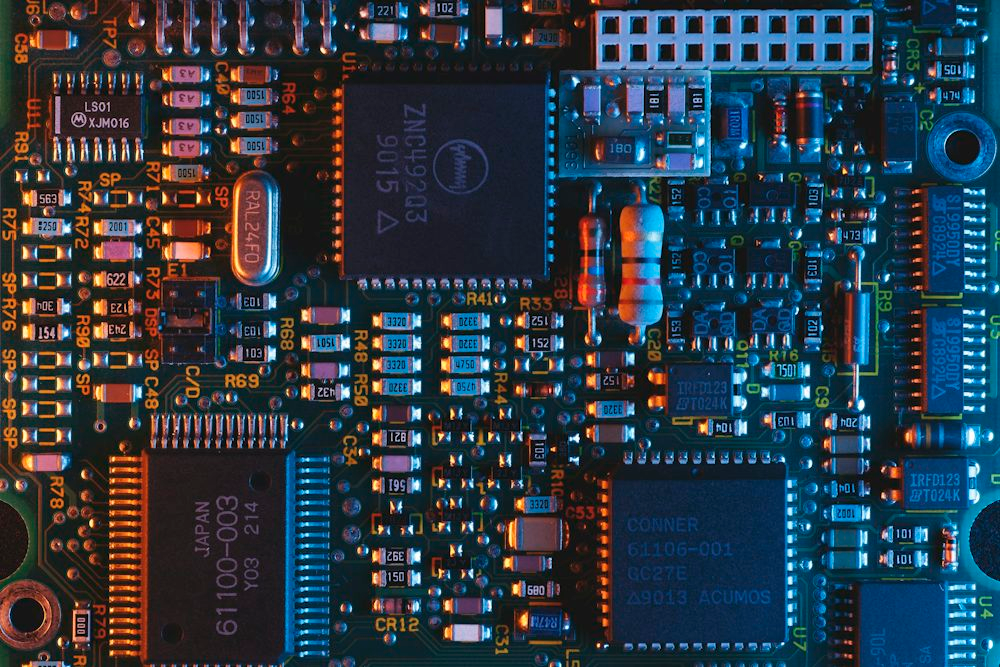
Picture a quantum processor about the size of a large index card, built on the same kind of factory line that already stamps out ordinary computer chips by the millions. That’s the pitch behind the iQPU, a new trapped-ion quantum chip from Universal Quantum, a UK company. The Quantum Insider’s company database lists Universal Quantum at 11 to 50 employees. The company announced the chip on November 3, 2026, saying it packs more than 400 square millimeters of active compute area onto a single piece of silicon, big enough, Universal Quantum claims, to be the largest trapped-ion compute surface built so far.
That size figure is the only hard number Universal Quantum has published. Qubit counts, error rates and coherence times are missing from the announcement, and the company doesn’t say outright whether a finished iQPU has completed testing. Here’s what the release actually says, what independent coverage adds, and what’s still just a claim.
What’s Actually New Inside the iQPU
Universal Quantum’s pitch is less about one flashy number and more about how the chip gets made and wired together. Four design choices stand out:
- A bigger compute surface. The chip’s active area tops 400 square millimeters, which the company calls its largest trapped-ion chip to date. Universal Quantum hasn’t said how many ion-trapping zones fit on that surface, or how many qubits each one holds.
- Ions that move, not sit still. The chip uses a Quantum Charge-Coupled Device, or QCCD, architecture. Instead of wiring every qubit to one fixed spot, it shuttles trapped ions across the chip so any two can interact. That flexibility is meant to avoid redesigning the whole chip every time the qubit count grows.
- Control electronics built into the chip itself. Universal Quantum folds signal-generating electronics directly onto the chip, cutting down on the external lasers, wiring and cooling gear that normally multiply as a quantum computer scales up. The company calls this the “wiring problem,” and it’s a real bottleneck other trapped-ion efforts run into as they add qubits.
- A way to link multiple chips together. Universal Quantum’s own interconnect technology, called UQConnect, is meant to join several iQPUs so they act as one larger machine, instead of forcing every qubit onto a single chip.
The whole thing is fabricated on a commercial 200-millimeter semiconductor line, using standard chipmaking tools rather than a bespoke lab process. That’s the detail Universal Quantum leans on hardest. If the claim holds up, these chips could eventually be built at the volume and cost ordinary computer chips enjoy. Right now they’re handmade one at a time in a university cleanroom.
Not every company racing toward scale is using ions at all. IQM, for instance, is chasing the same goal with superconducting qubits wired onto a single chip, and reported clearing its own entanglement bar by a slim 0.016 margin earlier this month. Different atoms, same underlying fight: prove a design can grow without falling apart.
An Old Contract Meets a New Chip
Universal Quantum’s press release leans on a relationship with the German Aerospace Center, or DLR, that isn’t new at all. Back in November 2022, a Universal Quantum subsidiary signed a 67 million euro contract with the German government to build two scalable quantum computers. The goal was exploring applications like space mission planning, climate modeling and materials design, as The Quantum Insider reported at the time. Four years later, the iQPU is the chip Universal Quantum says will go inside the systems it’s “currently building” for that same DLR deal.
Universal Quantum’s own release doesn’t say when those DLR systems are due. It doesn’t split out how much of the 67 million euros applies to this specific hardware, and it names no delivery date. The chip announcement and the four-year-old contract get told as one story this week, but only half of that story is actually new.
Who Benefits and How
Nothing here lands in anyone’s hands today. There’s no app, no cloud account, no product a small business or a curious student can sign up for. The iQPU is a component for computers still being built for a small number of government and research customers.
The nearest beneficiaries are scientists, not consumers. DLR researchers are meant to use the finished systems to model climate patterns, plan space missions and design new materials. That work could eventually feed into things ordinary people notice, like sharper weather forecasts or new battery chemistries, but only after years of further development.
The more indirect case Universal Quantum is making is about cost. Trapped-ion chips have traditionally been built by hand in custom lab processes. If one really can come off a standard 200-millimeter chip line instead, that opens a path toward cheaper quantum hardware over time. Ordinary computer chips got cheap because factories stamp them out by the millions, not because engineers assemble them one by one. McKinsey’s 2026 Quantum Technology Monitor, cited in Universal Quantum’s own release, projects the broader quantum industry could generate $60 billion to $100 billion in annual revenue by 2035. That’s an industry-wide forecast, not a promise about this specific chip, and McKinsey isn’t an independent party checking Universal Quantum’s claims.
What the Announcement Leaves Out
- No qubit count. Universal Quantum hasn’t said how many qubits an iQPU actually holds or runs reliably.
- No performance numbers. Error rates, gate fidelities and coherence times, the figures that would show whether the chip actually works well, aren’t in the release.
- No named foundry. “A commercial 200mm semiconductor line” doesn’t say which one, or whether Universal Quantum owns it or rents time from someone else.
- Unverified test status. Quantum Zeitgeist’s coverage states that systems integrating the iQPU are “currently receiving testing,” but that line isn’t in Universal Quantum’s own release, and neither outlet reports a result from that testing.
- Superlatives without a yardstick. “World’s largest trapped-ion compute surface” and “world record” interconnect technology are Universal Quantum’s own words. Neither claim is measured against a named competitor’s chip.
- No independent technical review. Coverage so far, including The Quantum Insider’s writeup, largely reproduces the company’s own press release rather than adding outside analysis or a competing expert’s take.
Universal Quantum has made confident claims before. In 2024, the company announced what it called the first commercial ASIC chip for trapped-ion quantum computing. The pattern repeats: a specific, sometimes measurable engineering step, wrapped in language that reaches further than the numbers sitting in front of it.
Watch what ships next, not what gets announced next. The question worth tracking isn’t the size of this chip. It’s whether a working DLR system, with a real qubit count attached to it, shows up before this decade is out.
Sources
- Universal Quantum: Universal Quantum Launches the iQPU (Nov. 3, 2026)
- Quantum Zeitgeist: Universal Quantum Launches iQPU, a Chip for Scaling Quantum Computers (Nov. 3, 2026)
- The Quantum Insider: Universal Quantum Combines Ion Trap, Controls and Modular Links in New Chip (Nov. 3, 2026)
- The Quantum Insider: Universal Quantum Subsidiary Wins €67 Million German Contract (Nov. 2, 2022)