
Oak Ridge National Laboratory switched on a new quantum error-correction platform on November 5, 2026, built jointly with IBM and AMD, and IBM’s research chief summed up why it exists: “The question is no longer if error correction will work on quantum hardware,” said Jay Gambetta, an IBM Fellow and director of IBM Research. “Today, the question is how to accelerate and optimize error correction to build systems that scientists can use to tackle meaningful problems.”
That’s the thinking behind the new setup, which the Department of Energy’s Quantum Science Center at Oak Ridge National Laboratory built jointly with IBM and AMD. The three organizations connected IBM’s newest quantum processor to one of Oak Ridge’s supercomputers, building what they call a co-design platform for quantum error correction. The idea is to let researchers test different ways of catching and fixing quantum mistakes on the same hardware, side by side, instead of guessing which approach will actually scale.
This is infrastructure news, not a new scientific result. Nobody published a record fidelity number or a faster error-correction code this week. What launched is a shared testbed, and the three partners say what gets learned on it could shape IBM’s path toward a genuinely fault-tolerant quantum computer.
Inside the New Quantum Error-Correction Platform
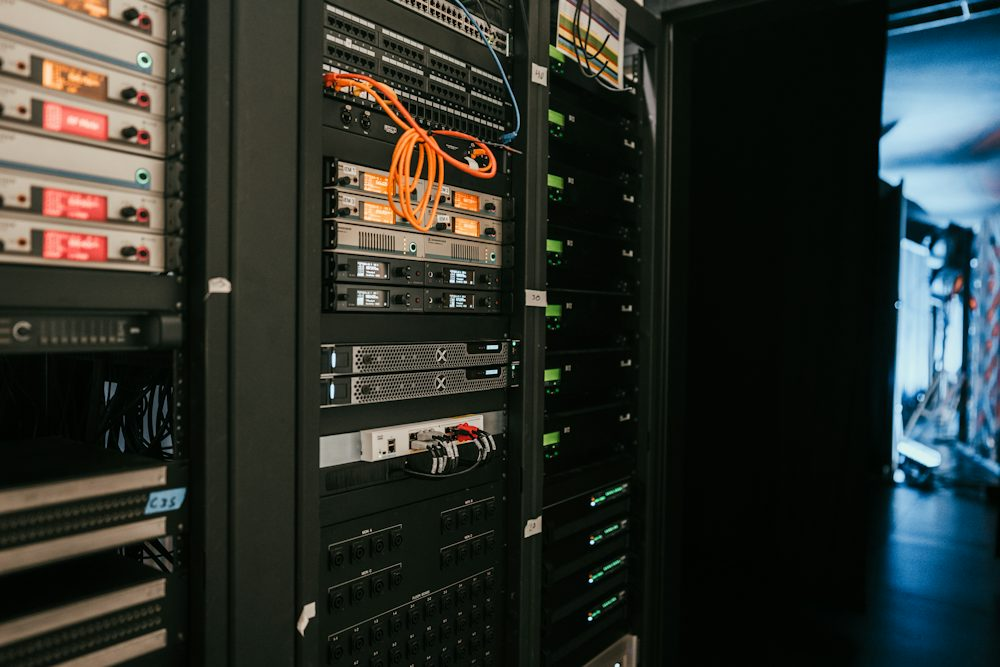
The setup pairs two systems that don’t normally sit this close together, physically or administratively. Here’s what each side brings:
- The quantum side: IBM Quantum Nighthawk, IBM’s newest and most powerful processor at 120 qubits, built with square-lattice connectivity and real-time pulse control.
- The classical side: ORNL’s Umbra high-performance computing system, running on AMD Instinct MI355X GPUs and 5th Generation AMD EPYC CPUs.
- The bridge between them: IBM’s Quantum System API, which gives researchers pulse-level access. That means they can measure qubits mid-calculation, set the exact timing of the signals that shield qubits from noise, and work with raw measurement data instead of a cleaned-up summary.
- The bigger picture: the platform is set to connect with the Oak Ridge Leadership Computing Facility, folding quantum hardware into a broader scientific-computing pipeline rather than running it as a standalone box in a separate room.
Travis Humble, director of the Quantum Science Center, framed the point of having all that hardware co-located in one place:
“With Umbra, we will now test new ideas, evaluate approaches at scale, and build the foundation for more reliable quantum computers.”
Neither IBM’s nor ORNL’s announcement says where the IBM quantum hardware physically sits. IBM’s release carries a Poughkeepsie, New York dateline, and ORNL describes a ribbon-cutting at IBM’s own quantum facility, so the two systems may not even share a building yet, let alone a room. That’s a detail worth knowing before picturing a single lab with both machines bolted together.
The Roughly 230-Fold Gap This Oak Ridge Platform Is Built to Close
Here’s the number that explains why this platform exists. The Department of Energy’s Quantum Genesis Mission, through a program called the Q Competition, is targeting 100 logical qubits running 100,000 “hard operations” by late 2028. A logical qubit is a cluster of ordinary, error-prone physical qubits wired together so the group behaves like one much more reliable qubit. A hard operation is roughly a demanding calculation step that logical qubit needs to survive without a mistake slipping through.
IBM’s own benchmark, tracked publicly on what the company calls its Quantum Advantage Tracker, currently sits at 70 logical qubits running 438 hard operations. Getting from 438 to 100,000 is close to a 230-fold jump. That’s not a tweak. It’s the kind of gap that usually needs new codes, better decoders, and a lot of classical computing muscle working alongside the quantum hardware, which is exactly what this platform is built to throw at the problem. The partners list five specific approaches researchers will test on it:
- Concatenated codes, which layer error correction on top of itself for sturdier protection.
- Space-time codes, a newer family of error-correction schemes.
- Algorithm-aware decoders, software that reads error signals and decides corrections in real time.
- Hardware-aware circuit optimization and compilation, tailoring circuits specifically for how Nighthawk behaves.
- Software orchestration, the plumbing that ties the quantum runs to the GPU-based classical compute sitting next to them.
None of this is starting from zero. A year ago, IBM and AMD showed off an algorithm that decodes quantum errors efficiently on AMD chips. The two companies also separately use AMD GPUs to speed up a different quantum-chemistry technique called sample-based quantum diagonalization. Oak Ridge has its own recent win in adjacent territory: its LuGo algorithm cut the gate count for a fluid-dynamics quantum circuit by 95 percent earlier this fall. This platform is meant to be the place where results like that get stress-tested against real error correction at scale, instead of staying one-off demonstrations.
Who Benefits and How
Be clear about who gets to touch this thing first. The partners say DOE researchers will be able to use the platform “on day one,” which in practice means scientists already working inside the Quantum Science Center and its partner institutions, not outside academics, startups, or the public. Neither release mentions a waitlist, an application process, or a date when access might widen.
- Direct beneficiaries, right now: Oak Ridge researchers and their collaborators studying materials science, nuclear engineering, and chemistry problems that already lean on ORNL’s supercomputers.
- Indirect beneficiaries, down the line: anyone who’d eventually gain from a working fault-tolerant quantum computer. IBM says results here may inform the path to Starling, its planned first fault-tolerant machine, and that could eventually touch drug discovery, new battery or solar materials, and logistics problems too complex for today’s computers.
- What’s not available yet: a product, a cloud sign-up, or a timeline for either. This is lab infrastructure for testing ideas, not a service anyone can book time on.
That gap between “a national lab just built something” and “this changes your life” is wide right now, and it’s worth saying so plainly instead of dressing it up.
What We Don’t Know Yet
- No performance numbers have come out of the platform itself. Everything measurable in this story, the 70 logical qubits, the 438 hard operations, predates this announcement.
- No funding figures appear in either release. There’s no budget, grant amount, or DOE dollar figure tied to building or running this platform.
- No outside access policy exists yet for university researchers beyond the Quantum Science Center, let alone the public.
- Same-day coverage from SiliconANGLE and The Quantum Insider added no independent analyst commentary. Both largely echoed the joint press release.
- There’s no stated date for when the first result produced on this platform will become public.
Scaling a quantum computer has never been one breakthrough away. It’s hundreds of small, grinding infrastructure decisions like this one, made years before any headline result comes out of them. Watch IBM’s Quantum Advantage Tracker over the next year or two. If a new entry shows up with a logical-qubit count well past 70, this platform probably helped. If the tracker stays quiet, that 230-fold gap isn’t closing on schedule, whatever the press releases said.
Sources
- IBM Newsroom: Oak Ridge National Lab, IBM, and AMD Launch New Co-Design Platform for Quantum Error Correction (Nov. 5, 2026)
- Oak Ridge National Laboratory: ORNL, IBM and AMD Launch New Co-Design Platform for Quantum Error Correction (Nov. 5, 2026)
- SiliconANGLE: IBM, AMD and Oak Ridge Join Forces to Launch Quantum Computing Error-Correction Platform (Nov. 5, 2026)
- The Quantum Insider: Oak Ridge National Laboratory, IBM and AMD Launch New Co-Design Platform for Quantum Error Correction (Nov. 5, 2026)