
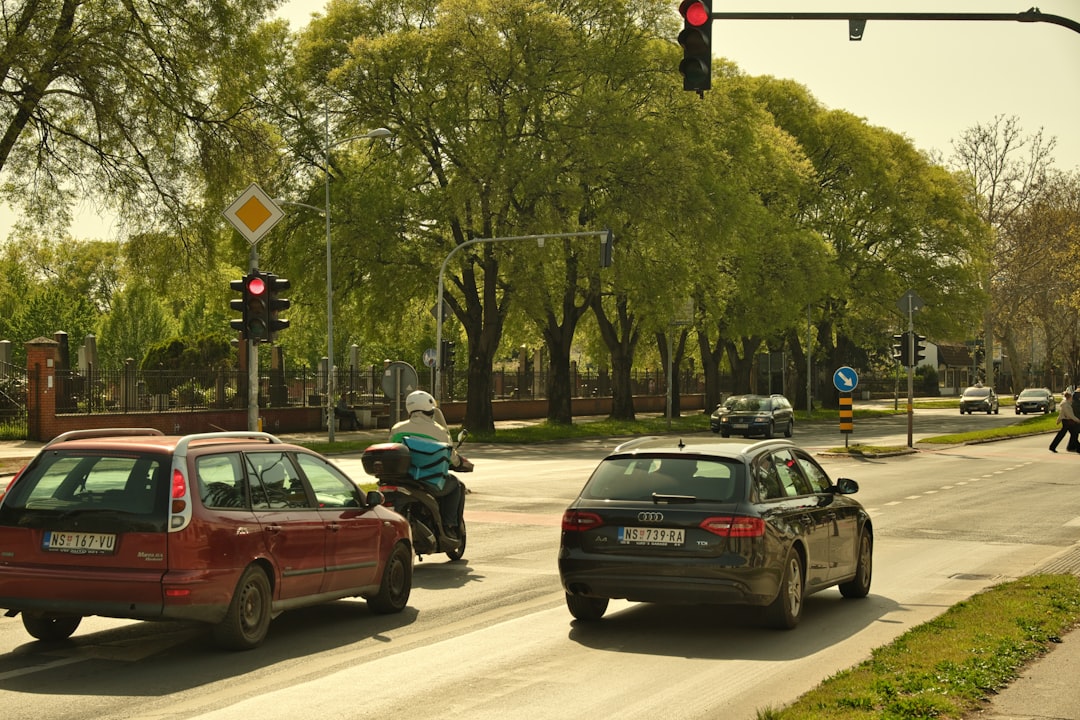
Drivers in Albuquerque and Portland are noticing something different at a few intersections this month. Stick to the speed limit, and the light turns green almost the instant you arrive. Speed up, and you sit at red longer. Cities are testing what they call rest-in-red traffic signals. Early results show streets are getting safer, and it isn’t costing residents a cent in new fines or taxes.
How Rest-in-Red Traffic Signals Work
Standard signals cycle on a fixed timer, whether or not a car is waiting. Rest-in-red signals flip that model. They sit on red by default and only turn green when a sensor detects an approaching vehicle. Albuquerque and Portland took the idea further by adding speed sensors. Drive at or under the limit, and the signal switches to green early. Speed toward the intersection, and the light holds red longer, slowing you down before you get there.
Fewer Crashes, Quieter Neighborhood Streets
The numbers back up the idea. On Portland’s Southeast Powell Boulevard, average speeds at one tested intersection dropped from 39 mph to the posted 30 mph limit almost overnight. Portland signal manager Peter Koonce calls the setup a “virtual speed bump.” There are no cones and no construction crew, just a signal that responds to how a driver actually behaves. A 2023 North Carolina study found a 43% drop in total crashes on roads that ran rest-in-red signals around the clock. Albuquerque installed the same approach on Lead and Coal avenues. The city now reports a sharp drop in crashes and injuries along that stretch, according to the Santa Fe New Mexican.
That pattern fits a bigger trend. Cities are finding that sensor-driven infrastructure cuts road injuries in measurable ways, not just in theory. It echoes what Waymo’s self-driving safety data has shown with a different kind of road-safety technology: fewer crashes and fewer injuries once sensors take some of the guesswork out of driving.
Why It Matters for People Who Just Want to Get Home Safely
For families who live along these corridors, the change means fewer late-night engine roars from drivers racing empty streets. It also means fewer calls to 911 after a crash. Marisol, a nurse who works night shifts two blocks from one of the tested intersections, used to lie awake listening to cars gun it down the empty street outside her window; she says the corridor has gone quiet enough now that she actually sleeps. Albuquerque’s director of municipal development, Jennifer Turner, put it plainly: come speed through her city’s test corridor, and “you will learn that if you are speeding, you stop.”
The approach protects tight city budgets, too. Rest-in-red doesn’t require new speed cameras, extra police patrols, or expensive construction. Crews simply reprogram signals the city already owns. That mirrors how Phoenix’s AI-timed traffic signals cut commute times using equipment already in the ground. Smarter software, not bigger budgets, is changing daily commutes in cities across the country.
Oregon State University researchers are still studying long-term results in Portland. More cities, including Boulder and Long Beach, are testing similar setups. For residents crossing these streets today, the message is already clear: obey the speed limit, and the technology works in your favor.