
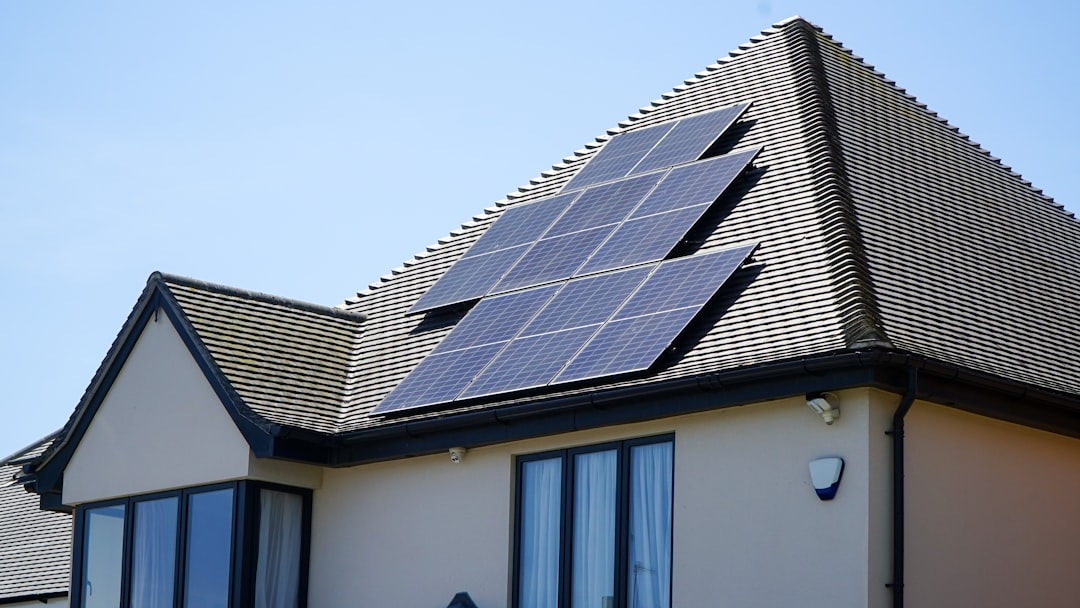
Beacon of Hope, a food pantry, thrift store, and laundromat in Marshall, North Carolina, now runs a solar microgrid. Hurricane Helene hit western North Carolina in September 2024. Two years later, the pantry has rooftop solar and batteries that can keep its key equipment running when the grid goes down.
- Cost: about $100,000 for the project, and the pantry paid nothing (Canary Media)
- Availability: installed at one pantry; the state program is limited to Helene-affected counties
- Works with: internet, lighting, and heating, cooling, and refrigeration in the food distribution area
- Status: installed; one day of backup is a design estimate
What went on the roof
Canary Media reports 56 rooftop panels, installed by Rhino Renewables, and three batteries. WFAE reports about 68 kilowatt-hours of battery storage, which it says would power the building for at least one day without sunlight. A staff member told WFAE it can back up “the whole store, essentially, with all the freezers and coolers.” For anyone new to the term, a microgrid is a local set of power sources and storage that can run a building when the main grid is down.
Who paid
The pantry’s director said the $100,000 project cost the pantry nothing. It was paid through North Carolina’s $5 million state microgrid grant program, which the state Department of Environmental Quality (DEQ) announced in 2025. Canary Media says that program is funded through the bipartisan infrastructure law. BuildUS, a philanthropic foundation, also contributed. Invest Appalachia provided a bridge loan to cover the gap until federal rebates arrive. Canary Media says nonprofits can claim rebates for 30% of solar costs, but payment can take over a year. Federal solar incentive rules have been changing, so any group planning a similar project should confirm current eligibility.
The wider program
DEQ’s June 12, 2026, release says the program will fund up to 24 permanent microgrids in six Helene-affected counties and two mobile trailer units. The first five sites are East Asheville Library, Beacon of Hope, Buladean Community Center, Bill’s Creek Community Center, and Burnsville Fire Department. The five permanent sites listed total about $752,413. The mobile units are expected in March 2027. The nonprofit Footprint Project builds the mobile units and had built nearly 50 solar microgrids in western North Carolina as of an October 2024 Canary Media report.
Why It Matters to You
If you rely on a food pantry in western North Carolina, a microgrid like this is meant to keep the freezers, coolers, and lights on after a storm knocks out the grid, so food isn’t lost when families need it most. Demand at the pantry has risen about 50% since last summer, according to its director. The installation is finished, but no source describes an outage since, so its real-world performance is untested. Other communities would need their own funding, and the state program covers only Helene-affected counties.
Open questions
- Canary Media says the system cuts the pantry’s electric bill by at least 25%, about $5,600 a year. WFAE says bills can run up to about $1,200 a month, and 25% of that is $3,600 a year, so the $5,600 figure doesn’t match. Treat the savings as unconfirmed until the pantry publishes a measured bill.
- Families served differ by report: about 1,700 a month (Canary Media) versus about 1,600 a week (WFAE).
- How long the system lasts depends on what is running and how much sun is available.
- In 2024 Footprint’s operations director said turning off a generator 12 hours a day could cut fuel costs about in half. That is his estimate, and Canary Media did not verify it.
Frequently Asked Questions
Did the pantry pay for the system?
No. The state program and partners covered it.
How long can it run without the grid?
About a day without sunlight, according to WFAE, at 68 kWh of storage.
Can my food bank or fire department get one?
The DEQ program is limited to Helene-affected counties and site selection continues through 2026. Elsewhere, ask your state energy office about microgrid or resilience grants.
Sources
- Canary Media: North Carolina food bank microgrid (Oct 1, 2026)
- WFAE: A food pantry goes off-grid as solar power for disaster resiliency spreads through WNC (Sep 30, 2026)
- NC DEQ: DEQ and partners demonstrate mobile microgrid initiative in western NC (Jun 12, 2026)
- Canary Media: How solar microgrids are bringing power (and quiet) to North Carolina (Oct 28, 2024)