
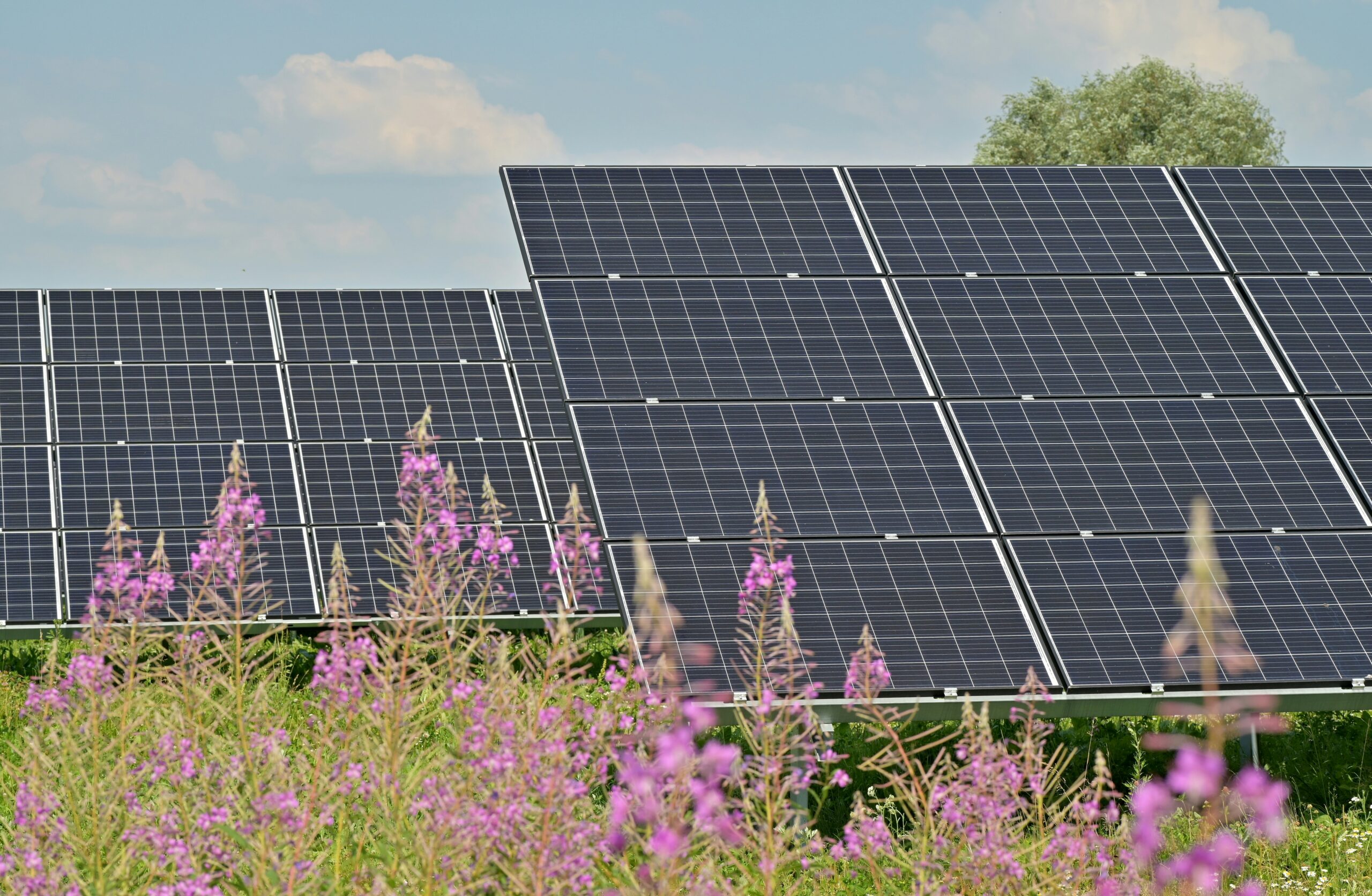
Tom Gray ran the tiny village of Monroeville, Ohio for years before he retired. He still showed up the day crews switched on Monroeville’s new floating solar array, 9,222 panels bobbing on the same reservoir that fills residents’ kitchen taps. For a town of 1,300 people, that is not a small moment.
Monroeville’s floating solar array now ranks among the largest of its kind in the country. It proves something simple. A small town does not have to choose between clean power and the land its neighbors farm.
Monroeville’s Floating Solar Array Powers 720 Homes in a Town of 500
The new array covers 12 acres of the village reservoir and generates 6 megawatts. D3Energy expects it to produce more than 7,500 megawatt-hours a year, enough for roughly 720 homes. Monroeville only has about 500 households. Add in a smaller ground-mounted system the village built back in 2017, and Monroeville now generates about 13 times more solar power per resident than the rest of Ohio.
That surplus matters during a heat wave or an ice storm, when demand spikes and every extra local megawatt helps keep the lights on for the family down the street.
The Farmland It Didn’t Take
Picture a corn and soybean grower on the edge of town, the kind who leases out spare acres to make ends meet in a tough year. Ground-mounted panels producing the same output would have eaten up about 30 acres of land like that. Instead, the panels sit on 12 acres of water that was already doing one job: holding the village’s drinking supply. Now it does two.
Stetson Tchividjian, D3Energy’s managing director, put it simply.
“Solar needs space, and in farm country there’s no such thing as spare ground. Monroeville had water sitting right there doing one job. Now it does two.”
That trade-off shows up across Ohio, where roughly a third of the state’s 88 counties have restricted big ground-mounted solar since 2021. A Minnesota project that lets new farmers grow crops under solar panels tackles the same land squeeze differently. Floating arrays just skip the fight over farmland.
Who Pays, and Who Actually Saves
Here is the part that matters most for the average household. Monroeville didn’t spend village funds on this. Gardner Capital owns the floating panels and sells the power back to the village on a long-term contract. Monroeville locks in a price for years and skips the maintenance bill. No village crew has to patch a broken panel at 2 a.m.
That model has already paid off nearby. A similar floating array on a reservoir in Lima, Ohio should save that city almost $10 million over its lifetime, including roughly $200,000 in year one alone. I’ll be straight with you: savings like that don’t automatically show up as a lower number on your bill. A city council can just as easily patch a road budget with the money or delay a rate hike instead of cutting checks to residents. Delaying a rate hike still keeps real money in your pocket, even if you never see the receipt.
- 6 megawatts of new capacity, powering roughly 720 homes worth of electricity
- 12 acres of reservoir used instead of an estimated 30 acres of farmland
- Zero upfront cost to the village, paid off through a long-term power contract
If you live in a small town, raise this at your next city council meeting. Ask whether your utility has looked at a reservoir, a quarry, or any patch of water nobody is farming anyway. Monroeville just proved the answer can be yes, and that 1,300 people can out-produce almost anywhere else in the state per capita. Tom Gray got to watch that happen before he even finished cleaning out his desk.