
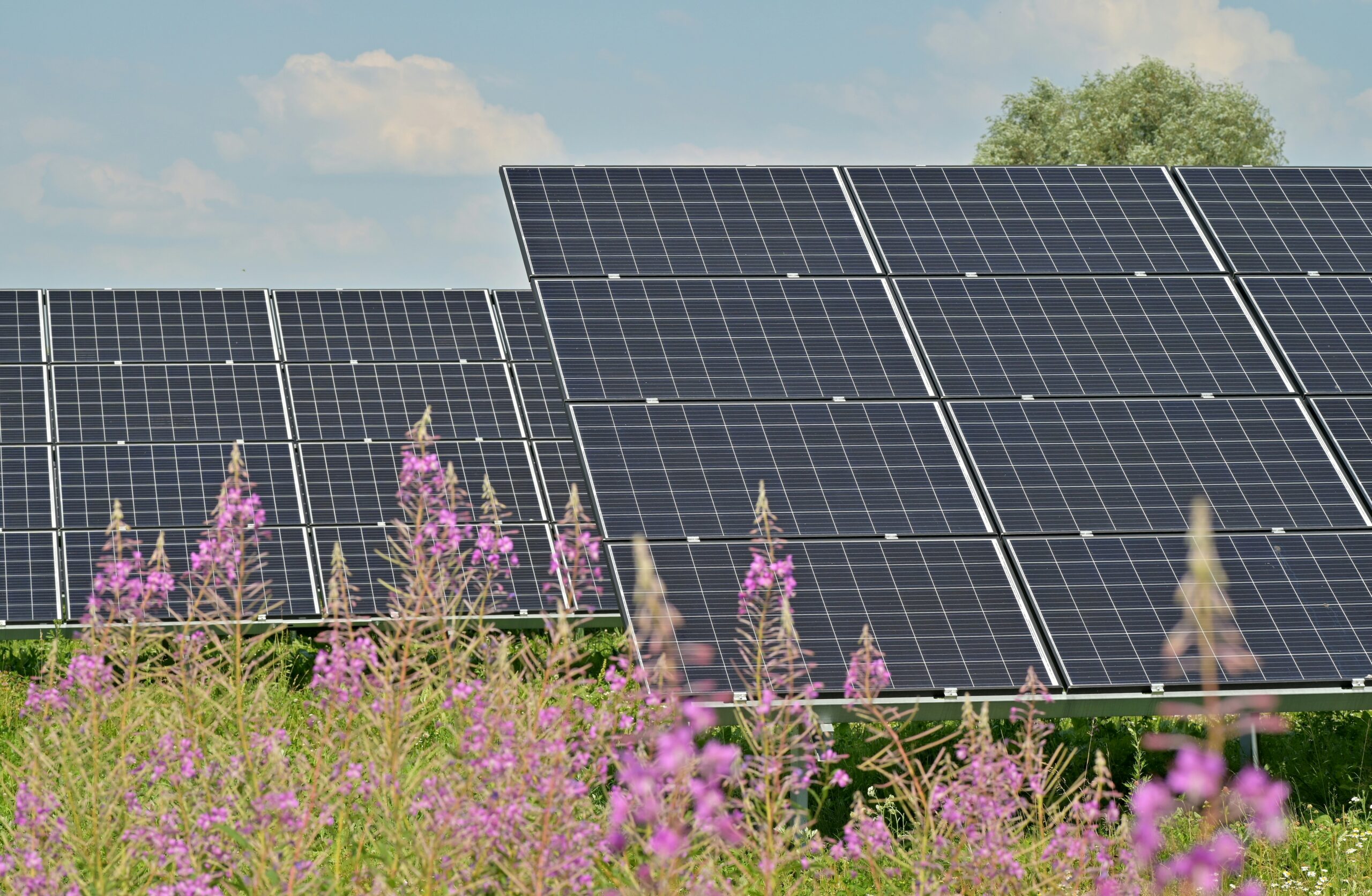
Picture Winifred Sylvah on a September morning, kneeling between rows of solar panels outside Big Lake, Minnesota, checking on okra and bitter balls, a West African eggplant she grew up eating in Sierra Leone. A retired bank employee of more than 30 years, she now leases about an acre and a half inside a 1-megawatt solar array. Last season alone, she pulled roughly 140 pounds of cucumbers off it. That is agrivoltaics farmland access working exactly as intended. Land that used to sit empty under solar panels is now growing food, and it is opening a door for farmers who would otherwise never get one.
Farmland Access Was the Real Barrier
Farmland near the Twin Cities can run tens of thousands of dollars an acre. Even a bare rental plot comes with nothing: no fencing, no water line, no cooler. That cost keeps many would-be farmers out, especially immigrants and other new growers with little savings to risk.
The Big Lake project, run by nonprofit The Food Group with solar developer U.S. Solar and Conexus Energy, flips that math. Sylvah and two other farmers signed 10-year leases in a project that began as a 2023 pilot and turned permanent this year. The land comes with irrigation and a walk-in cooler already built, plus fencing that protects the solar equipment and happens to keep deer out of the crops. Skipping those costs can save a new farmer several thousand dollars before a single seed goes in the ground.
What Grows Here Feeds the Community Too
Sylvah sells through a Community Supported Agriculture subscription and to school districts in Albertville and Buffalo. Families who buy in get fresh produce. Crops like bitter balls and sweet potato greens, hard to find at a typical grocery store, are landing in local school cafeterias. For families whose grocery budgets do not stretch to specialty markets, that is practical access to food that matters to them.
Overhead, the same panels generate enough electricity to power roughly 150 to 200 average homes for a year. That cuts the emissions a fossil fuel plant would otherwise produce. One and a half acres does double duty: food for people, power for the grid.
Iowa State University’s Ajay Nair studies agrivoltaic crop yields, and he says the produce holds up against standard farming.
“Any grower can commercially grow their produce within an agrivoltaic system.”
Why This Model Is Spreading
Minnesota is not stopping at vegetables. At the University of Minnesota-Morris, researchers are testing whether cattle can graze safely under raised panels; early results show the cows run cooler in the shade. Other sites nearby are trying sheep, honeybees, even grain for beer, according to the University of Minnesota Extension. The Great Plains Institute’s case study on Big Lake treats it as a model other developers are now studying.
U.S. Solar’s Peter Schmitt puts the goal plainly: power barns and tractors off the same land, and get fresh food to communities that lack easy access to it now. It is the same logic behind a Minnesota tribe’s own solar project, and the reason solar savings are already covering school lunch debt in rural Washington: clean energy paying for things communities actually need.
None of this fixes every barrier a new farmer faces. But it removes one of the biggest ones, without taking farmland away from farming. If you live near a community solar project, ask the developer or your local extension office whether farming underneath is on the table. A few years ago, almost nobody asked. Now, from Big Lake to Morris, farmers like Sylvah are proving the answer can be yes.