
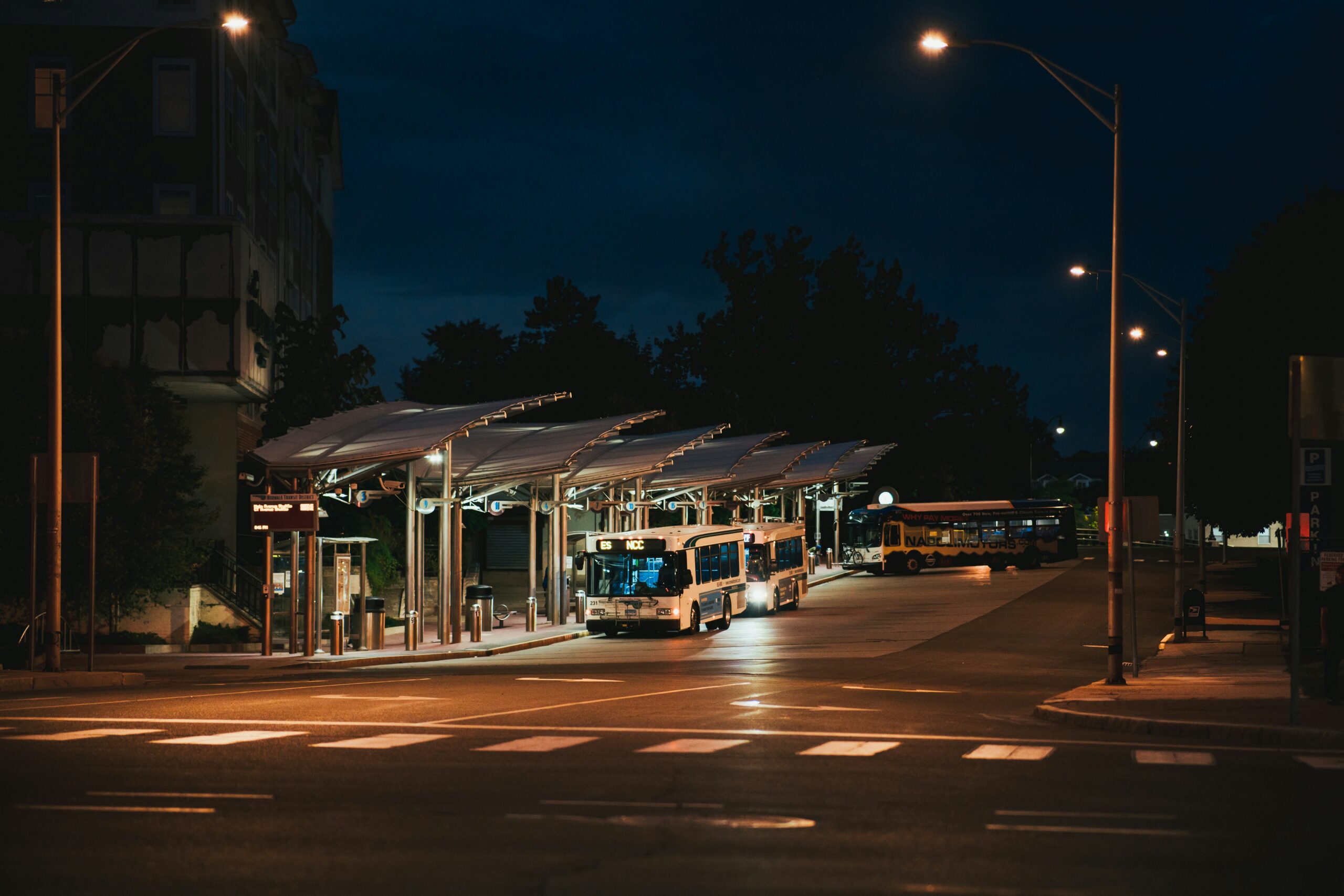
This week, Las Vegas bus rapid transit service opened along Maryland Parkway. The new RED LINE route started carrying passengers on August 23, and it already changes the daily commute for thousands of residents, students, hospital workers, and travelers heading to Harry Reid International Airport.
Las Vegas Bus Rapid Transit Cuts Commute Times by 20%
The Regional Transportation Commission of Southern Nevada built the $378 million line along a 7.3-mile stretch connecting downtown Las Vegas, the medical district, UNLV, and the airport. Dedicated bus lanes and traffic signals that give buses priority over cars cut travel time by roughly 20% compared with the old Route 109 service.
Buses now run every 12 minutes during the day, seven days a week. Riders no longer need to memorize a schedule or guess when the next bus will show up. That reliability matters most for people who depend on the bus to get to work or school on time.
Who Actually Benefits Along the Corridor
The corridor is home to 63,000 residents and 109,000 jobs. Hospital staff heading into the medical district save real time on every shift. Students commuting to UNLV skip the daily hunt for parking. Travelers flying in and out of Harry Reid International Airport can now reach downtown directly, without a rental car or an expensive rideshare fare.
Fifteen new hydrogen fuel-cell buses run the route, so none of those extra trips add tailpipe pollution to neighborhood air. That’s a real gain for families who live along a corridor that used to see nothing but diesel exhaust from standard buses.
Las Vegas isn’t the only place using technology to shrink commutes this year. Phoenix’s new AI-controlled traffic signals are already trimming commute times by nearly a third for drivers across that city. Not every fix requires new buses or new lanes. Sometimes smarter software running on existing infrastructure gets people home faster.
Safer Sidewalks and Shade Come With the Upgrade
The project reshaped the street itself, not just the bus schedule. Crews widened sidewalks from 5 feet to 10 feet in most spots, added protected bike lanes, and planted shade trees down the median and along both sides of the road.
RTC Deputy CEO Andrew Kjellman said the trees were planted “not only on both sides of the roadway, but down the center of the median as well,” specifically to address the extreme heat that keeps many residents off the sidewalks in summer. Pedestrians and cyclists get safer, cooler routes, whether or not they ever step on a bus.
Federal grants, local funding, and sales tax revenue covered the project, including $149.9 million from a Federal Transit Administration Capital Investment Grant. Spreading the cost across federal and local sources keeps the burden off local taxpayers alone.
Ridership sits near 9,000 riders a day right now, still recovering from construction. Planners expect that number to climb to 13,000 daily riders by 2040 as more residents discover the faster, more frequent service. For similar transit gains in the same city, Nevada’s robotaxi expansion is also giving Las Vegas residents safer, cheaper ways to get around without owning a car.
For a resident deciding whether to drive or ride down Maryland Parkway, the RED LINE removes the biggest excuse to skip the bus: waiting around. A ride every 12 minutes, a faster trip, a cooler sidewalk, and a bike lane that doesn’t share space with cars change the math for daily trips across one of the busiest corridors in the city.
Read more about the project from Smart Cities Dive.