
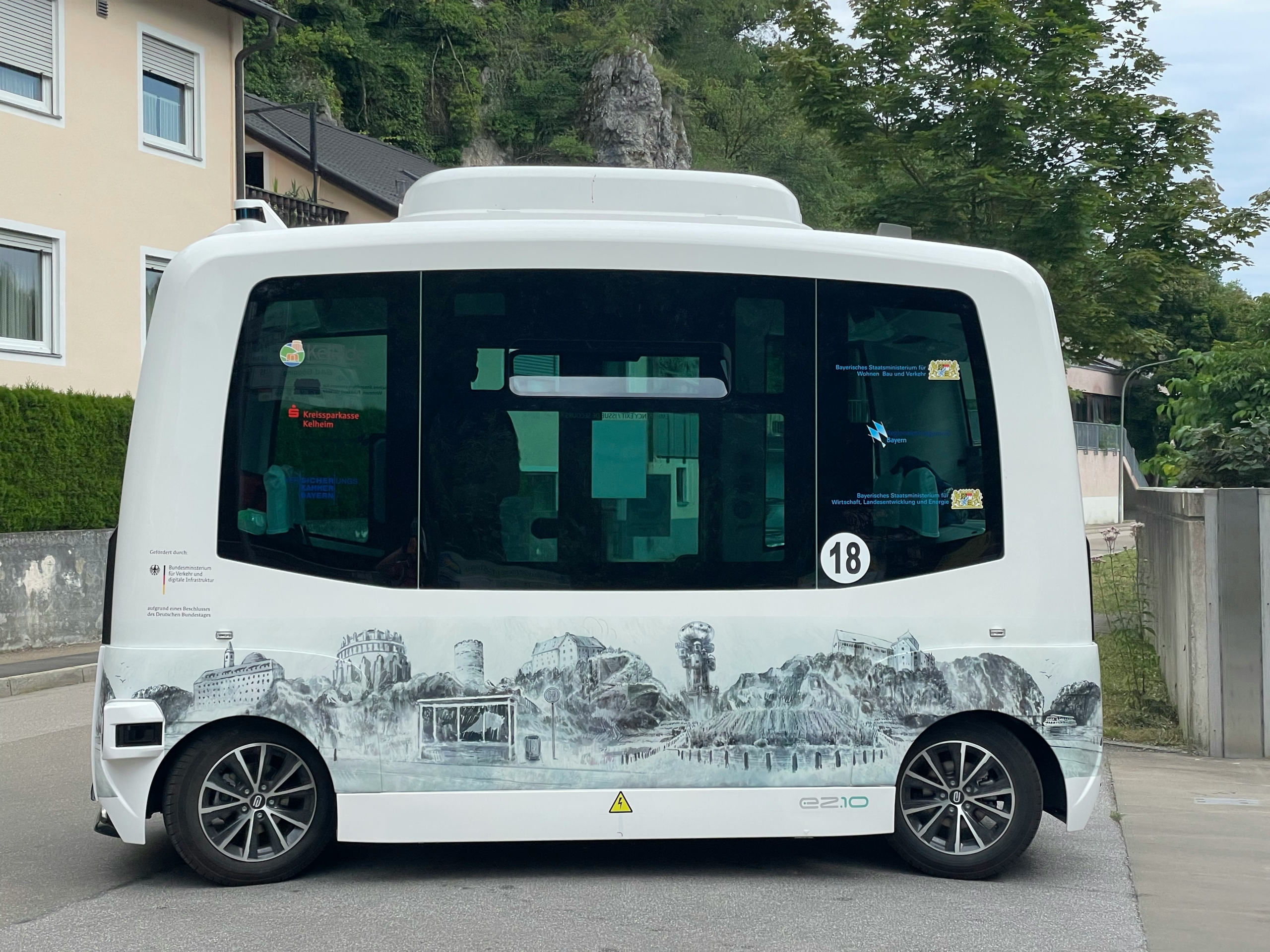
Robert Alvarez hasn’t driven himself to a medical appointment in three years. A stroke took his license, and for a while it meant leaning on a nephew who already works two jobs. This month, Lake Nona’s autonomous shuttle service gave him some of that independence back, and the driver wasn’t a person at all.
Lake Nona, the Orlando community built around a sprawling medical campus, just gave its shuttle program the biggest upgrade it has seen since the vans first started driving themselves in 2019. Beep, the company that runs the community’s free Move Nona shuttles, and Volkswagen’s MOIA America have started carrying invited passengers in new autonomous ID. Buzz vans, according to Hoodline’s report on the launch. A trained human safety monitor still rides along for now, but the vans steer, brake, and read the road using Mobileye’s self-driving software.
The Country’s Longest-Running Robot Shuttle Just Grew Up
Move Nona has quietly run in this community since 2019. Beep calls it “the largest and longest-running single-site autonomous vehicle deployment in the country.” Riders have never paid a fare. Lake Nona and Beep cover the cost themselves.
The new ID. Buzz vans run on three fixed routes with set pickup points, and riders book them through Beep’s app instead of hailing one from the curb. That sounds modest. It isn’t. As Beep and MOIA scale beyond this first handful of vans, some vehicles in the fleet will include wheelchair ramps or lifts, according to Smart Cities Dive’s coverage of the partnership. The two companies want up to 5,000 of these vehicles running nationwide within the next decade.
Who Actually Gets a Lift
Picture the people who stand to gain the most from a free, driverless ride that shows up on schedule:
- Veterans and older adults heading to appointments at Lake Nona’s VA hospital or Nemours Children’s Hospital, without asking a relative to take time off work.
- Teenagers and other residents who can’t legally drive yet, and don’t need a parent behind the wheel just to get across the neighborhood.
- Shift workers at the Medical City campus who can’t always count on a car, or don’t want the expense of owning one just for a short commute.
- Families deciding whether they really need a second car, since one parked in the driveway costs an average of $12,863 a year to own, according to AAA’s 2026 driving cost survey.
That last point matters more than it sounds. A single short ride-hailing trip across a suburban community can run $15 to $20 each way. A free, scheduled shuttle erases that cost entirely, every single day, for anyone willing to work around a fixed route.
Lake Nona Autonomous Shuttle Plans Bet Big on Scale
Beep CEO Kevin Reid has been direct about the ambition behind this rollout. In MOIA’s announcement of the partnership, he said the goal is to redefine microtransit and build:
“a transformative era of autonomous shared transportation” that delivers “flexible, meaningful mobility” and expands “access to opportunity to every corner of a community.”
That’s a big claim for three fixed routes and a handful of vans. But Beep isn’t betting on Lake Nona alone. The company is also merging with Florida’s Freebee network to stitch together car-free options across more cities. May Mobility is running autonomous shuttles to keep rural bus routes alive in Japan, which suggests this approach isn’t a one-neighborhood experiment.
What I’d Watch Next
I’ve tracked enough autonomous shuttle pilots to know the human monitor in the front seat is the real milestone to watch for. Waymo and Zoox pulled their safety drivers years ago, and that’s when ridership actually took off. Beep hasn’t set a date for pulling monitors out of the ID. Buzz vans yet.
Still, a free ride that saves a family a car payment, and saves a veteran a trip he’d otherwise have to ask for, is worth paying attention to now, not just once it’s fully driverless. If your town has a Beep, MOIA, or May Mobility pilot nearby, go find out what route it runs. You might not need that second car much longer.