
How do you check the health of a pipe you can’t dig up, can’t see around, and wasn’t designed to be inspected in the first place? That’s the question engineers have wrestled with for years at the Hanford Site in Washington state, and it’s why a team at Sandia National Laboratories spent more than two years building a Hanford pipe inspection robot small enough to fit inside a soup can.
Sandia announced the robot, named SPIINE, in a news release published November 19. SPIINE stands for Self-Propelled Interior Inspector for Non-destructive-testing Examination, and the team pronounces it “spine.” A peer-reviewed paper on the robot’s design, published in the journal Robotics on October 22, backs up Sandia’s claims with actual hardware test numbers. Between the two documents, there’s a specific, verifiable picture of what this robot can do today, and what it still has to prove.
Decades of Waste, Pipes Nobody Can Dig Up
Hanford dates back to 1943, when the Manhattan Project built the world’s first full-scale plutonium production reactor there. Plutonium made at the site went into the first atomic bomb. Decades of that work left behind radioactive and chemical waste, now held in underground storage tanks connected by a network of pipes that move waste from one tank to another.
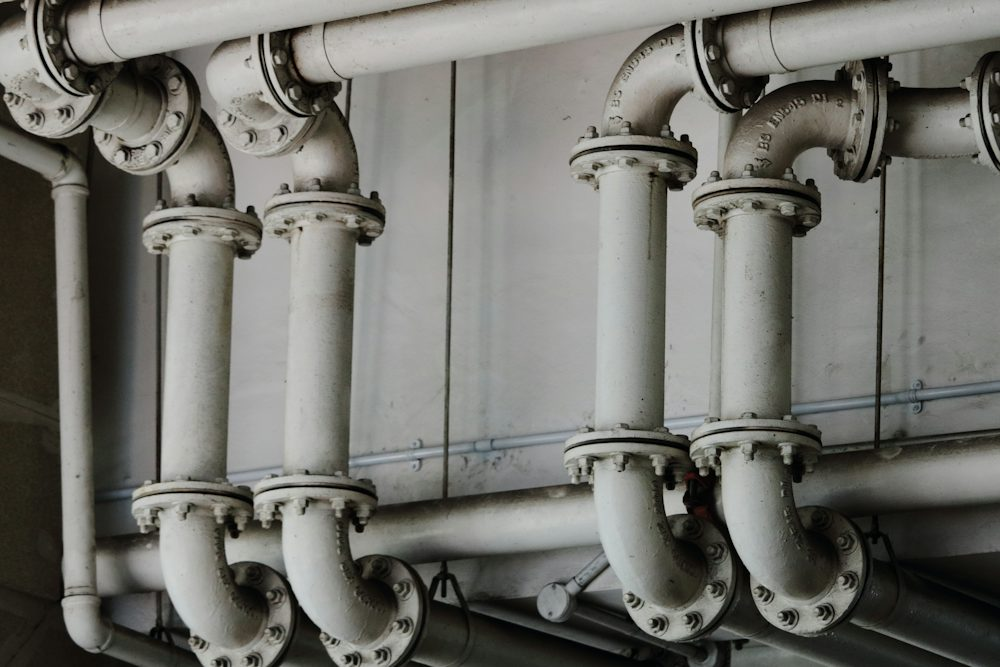
Those pipes create an unusual problem. They run underground for hundreds of feet, often with multiple 90-degree turns, and some measure just 2 inches across. Sandia says digging them up for a visual check isn’t realistic or cost-effective, and it still wouldn’t show whether a pipe is corroding from the inside. Existing inspection tools weren’t built for this job either, as the comparison below shows.
| Inspection Method | Distance It Can Cover | Clears a Tight 90° Turn | Can Tow a Sensor |
|---|---|---|---|
| Push camera (traditional) | About 10 feet per push | No | No |
| Ultrasound probe | Limited by probe size | No, too bulky for tight bends | It is the sensor |
| SPIINE (Sandia prototype) | Over 60 meters (about 200 feet) in lab tests | Yes, from entry angles spanning 360° | Yes, cables up to 5/8 inch wide |
Source: Sandia National Laboratories news release (Nov. 19, 2026) and McArthur et al., Robotics, 2026.
How Sandia’s Engineers Solved the Bend Problem
Mechanical engineer Steve Buerger leads the team behind SPIINE, working with Daniel McArthur, Derya Tansel, Clint Hobart, and Josh Ortiz. Sandia has built micro-robots for years, including some now in the Smithsonian’s collection, and this team leaned on that experience. Roughly, here’s how they got from a blank sheet of paper to a working prototype.
- They set a hard target first: fit inside a 2-inch pipe, with enough room left over for a camera, lights, and six drive motors.
- They tested wheel materials against a steel pipe section and found that silicone rubber gripped far better than 3D-printed plastic, a detail that mattered a lot once they measured pull force.
- They gave the chassis a flexible, multi-axis body instead of a rigid one, so it can bend itself to match a pipe’s curve and roll through a 90-degree elbow starting from any angle.
- They calculated how much a cable drags through multiple bends, since resistance builds up fast, and designed SPIINE so several propulsion units can share that load along one tether.
The published paper backs this up with hardware numbers. SPIINE generates 16.5 newtons of pull force in straight steel pipe, more than eight times its own weight, and it has covered over 60 meters of mixed horizontal and vertical pipe in testing while drawing just 2 to 3.5 watts of power.
What the Hanford Pipe Inspection Robot Has Proven So Far
All of this comes from lab testing, not a sales pitch. According to the journal paper, SPIINE has cleared a tight 90-degree elbow with a bend radius as small as 3 inches, tested from eight different entry orientations spanning a full 360 degrees. It has carried power and video over a tether verified to 110 meters, more than 360 feet. Its camera can resolve features down to about 39 microns per pixel, roughly a fifteenth the width of a human hair, which matters when the goal is spotting a hairline crack rather than just a pipe’s general shape.
Operators drive the robot with a standard video game controller while watching a live feed. It can also tow separate instruments, such as ultrasonic or electromagnetic probes, to measure wall thickness directly instead of relying on video alone.
What We Don’t Know Yet
- SPIINE hasn’t been tested inside Hanford’s actual pipe network. Sandia’s release says the next step is real-world testing there, and the team expects new problems to turn up once it happens.
- No self-cleaning function exists yet. If sludge or condensation coats the camera lens, an operator currently has no remote way to clear it.
- There’s no fail-safe recovery system yet for a robot that gets stuck or disabled somewhere a person can’t reach by hand.
- Nobody has published a timeline or budget for deploying SPIINE across Hanford’s full pipe network, let alone at other Department of Energy waste sites.
- The robot still needs an existing opening to enter a pipe. It doesn’t solve pipe runs that have no access point at all.
Why It Matters to You
Most readers will never set foot near Hanford’s tank farms, but the cleanup there is a federal project funded by taxpayers, and it’s expected to run for decades more. Picture a radiological control technician, call her Priya, a hypothetical example and not a real Hanford employee. Today, checking a suspect pipe might mean paying for an excavation or forcing a bulky probe into a space it barely fits. A tool like SPIINE, if it holds up once it faces real Hanford pipes, could mean fewer workers near contaminated lines and fewer expensive digs that turn up nothing wrong. One of the robot’s engineers, McArthur, said in Sandia’s release that the team sees its work as helping inform inspections and reduce risk to workers, which is a fair summary of the upside here, if the field test goes well.
None of that is guaranteed yet. It depends on a test that hasn’t happened.
Sandia says it already expects some of what Hanford will throw at SPIINE: sludge, caked deposits, and T-joints that force the robot to choose a direction on its own. Whether it handles those as well as it handled the lab is the open question its engineers are planning to answer next. Watch for whether Sandia or the Department of Energy announces an actual date for that first Hanford field trial.
Sources
- Sandia National Laboratories: Crawling to the Rescue (Nov. 19, 2026)
- McArthur, Tansel, Hobart, Ortiz, and Buerger, “Design of a Compliant Six-Wheeled Robot for In-Pipe Inspection with Geometry Constraints,” Robotics (MDPI) (Oct. 22, 2026)
- Marine Technology News: Crawling to the Rescue: Tiny Robots Built to Inspect Nuclear Waste Pipes (Nov. 19, 2026)