
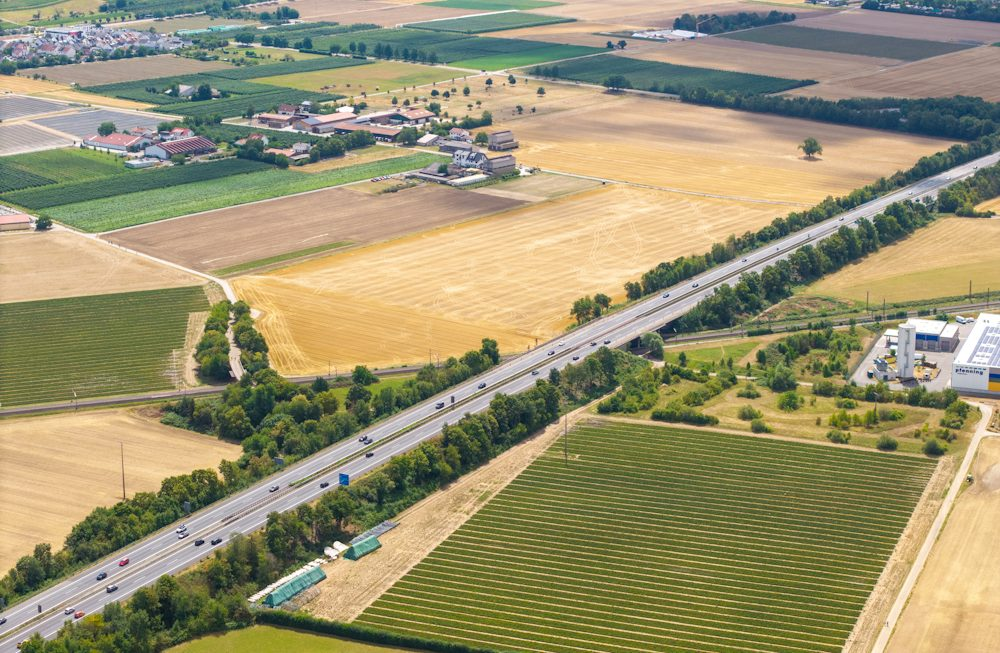
Twenty-nine counties in Georgia have no public transit service at all. Sixty-six percent of the state’s rural counties lack any regional or multi-county transit system, and 90.4 percent of the state’s transit agencies don’t even have route-mapping data riders could use to plan a trip. Those are the numbers the University of Georgia is citing this month as it joins a federal rural autonomous vehicle research project to study whether self-driving vehicles can help close those gaps. Nothing is running on a Georgia road yet. This is the research phase, not a ride you can book.
Inside This Rural Autonomous Vehicle Research Project
The program is called the TRAVELS Center, short for Tribal and Rural Autonomous Vehicles for Efficiency, Livability and Safety. It’s led by the University of Wisconsin-Madison, where civil engineering professor Xiaopeng “Shaw” Li is heading the work, according to UW-Madison’s own announcement. The U.S. Department of Transportation is putting in $15 million, with another $15 million available through matching funds from states, industry partners and the participating universities.
Six universities share the work: UW-Madison, the University of Wisconsin-Milwaukee, the University of Georgia, Oklahoma State University, the University of Washington and Morgan State University, plus Northern Oklahoma College. Of that funding, the University of Georgia’s team gets roughly $3.6 million to focus on rural Georgia specifically, according to Mass Transit’s reporting, with UGA engineering assistant professor Handong Yao leading that piece. “We are thrilled to partner with UW-Madison on this program,” Yao told the outlet, calling the goal “accelerating the deployment of cutting-edge AV technologies in vast rural and tribal areas of the country.”
The center also works with 34 state-level partners: eight state transportation agencies, nine local governments, 12 tribal nations and five nonprofit organizations, per UW-Madison’s announcement. None of them are named publicly yet.
Why Rural Georgia Needs This
Start with who actually lives without good transportation options. Nationally, only 19 percent of Americans live in rural areas, but a quarter of all Americans 65 and older do, according to a separate University of Wisconsin-Milwaukee announcement about the same center. Rural roads also account for 47 percent of all U.S. roadway fatalities, even though far fewer people drive on them day to day.
Georgia’s own numbers, as Mass Transit reports them from Georgia Department of Transportation data and UGA’s own framing, show a state where rural transit demand swings wildly, somewhere between 560,000 and 5.39 million trips a year, while 29 counties have no service to meet any of it. UW-Madison professor David Noyce, who directs the university’s Traffic Operations and Safety Laboratory, put the goal in plain terms: rural automated vehicle work “can’t be a one-way street.” Li, the center’s lead researcher, frames the payoff the same way. Self-driving vehicles could “connect people to job opportunities, and bolster access to necessities,” he says, and help “fill gaps in healthcare access or enable people without personal vehicles to commute to work.”
“Development of rural AV systems can’t be a one-way street,” says David Noyce, director of UW-Madison’s Traffic Operations and Safety Laboratory.
What the Research Will Actually Build
UW-Madison’s announcement lays out a six-year project that began in 2025 and runs through three phases: research, demonstration and deployment, with the early years carrying most of the research load. The technical wish list includes offline maps for stretches with no cell signal, low-cost roadside sensors and drones instead of the expensive infrastructure cities use, and software that can recognize a slow-moving tractor or a gravel shoulder the way it would recognize a parked car in a city.
Two service ideas keep coming up in how researchers describe the eventual goal: autonomous buses running fixed rural routes, and an on-demand model where, as Li put it, “we can directly dispatch autonomous vehicles if we get a call from someone who has a need.” Neither exists as a real option today. Industry partners are expected to get more involved once the project reaches its later development and deployment phases, not now.
Why It Matters to You
If this research pans out years from now, the payoff is specific: a way for someone in one of Georgia’s 29 transit-less counties to get to a dialysis appointment, a grocery store, or a job interview without owning a car or waiting on a neighbor. That is the honest upside. It is just not here yet. Right now this is six university research teams, a federal grant, and a six-year clock that started running last year. No rural Georgia town has a pilot date, a sign-up process, or a vehicle on its roads.
What’s Not Confirmed Yet
- No tribal nation, state agency, local government or nonprofit among the “34 state-level partners” has been named publicly in either university’s announcement.
- Mass Transit’s headline describes UGA as “launching” the research center. UW-Madison’s and UWM’s own announcements both describe UW-Madison as the lead institution and UGA as one of six university partners, so treat “launches” as UGA highlighting its piece of an existing program rather than a brand-new center.
- The Georgia-specific numbers (29 counties, 66 percent, 90.4 percent, the trip-demand range) are Mass Transit’s attribution to Georgia DOT data and UGA’s own framing. We could not locate and open a Georgia DOT document stating these figures directly, so they’re attributed to that outlet’s reporting here.
- No source reviewed mentions specific accommodations for older adults or people with disabilities beyond the general goal of expanding access.
- No timeline exists for when, or whether, any demonstration vehicle will operate on an actual Georgia road.
What’s worth watching for next: whether any of the 12 tribal nations or nine local governments on the partner list get named publicly, and whether a demonstration phase lands in a specific Georgia county before this decade is out. Neither has happened yet.
Sources
- Mass Transit: University of Georgia launches research center to expand AV access in rural, tribal communities (Nov 2, 2026)
- UW-Madison College of Engineering: With UW-Madison leadership, autonomous vehicles could bridge transportation gaps for people living in rural areas (Feb 7, 2025)
- University of Wisconsin-Milwaukee: UWM is a partner on a project to address rural transportation needs with autonomous vehicles (Feb 17, 2025)