
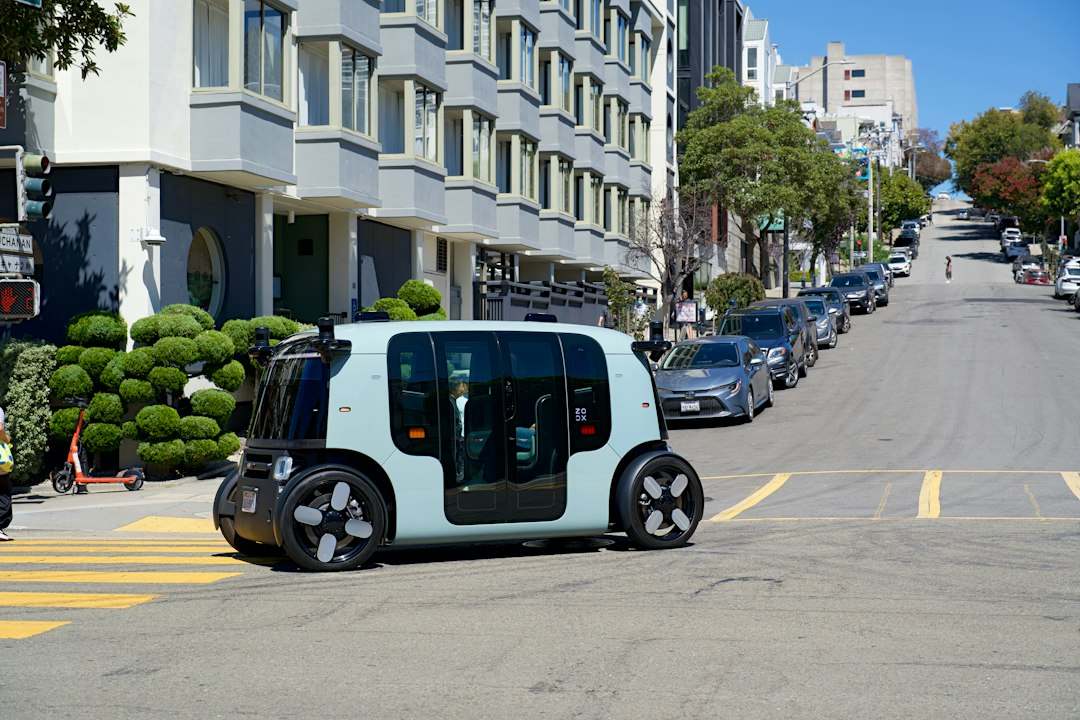
More than 681,000 people in Ontario alone live with some degree of sight loss, according to CNIB, the Canadian charity that has worked on blindness issues for over a century. Many of them know a version of the same problem: a ride-hail driver pulls up, sees a guide dog, and drives off. On October 16, 2026, Waymo unveiled its Toronto robotaxi plan, the company’s first expansion into Canada. It is not a launch. It is the start of a multi-year process, and Waymo says paying riders won’t get a trip until 2028 at the earliest.
Before announcing anything publicly, Waymo flew two CNIB staff members, both of whom are blind, to San Francisco for a ride in one of its current vehicles. What they said afterward is the clearest signal yet of what this expansion is actually about, and it has little to do with sensors or software.
What Waymo’s Toronto Robotaxi Plan Actually Says
Waymo’s own announcement describes a staged rollout, not a launch date for riders. Vehicles start appearing on Toronto streets within days, the company says, but a person sits behind the wheel while Waymo builds detailed maps of local roads. After mapping comes a testing phase, still with a trained specialist driving, followed by a validation period before the system takes over completely. Only then does Waymo plan to open the service to paying customers, and only by 2028 as a target, not a promise.
Toronto-based Element Fleet Management will run day-to-day operations, including maintenance. Waymo says the partnership will create “hundreds of roles over time” in jobs like validation driving and customer service, though it won’t commit to a number or a timeline. The company also leaned on two familiar statistics: more than 400 million fully autonomous kilometers driven, and 95% fewer crashes causing serious injury than human drivers average, in the cities where Waymo currently runs. Both numbers are Waymo’s own, and neither one includes a single mile in Toronto, where the Driver hasn’t operated yet. Waymo mentions its “all-weather” system and Toronto’s “distinct driving conditions,” but it gives no snow or ice data to back that up.
Why Blind and Low-Vision Advocates See More Than a Robotaxi
Larissa Proctor, CNIB’s executive director of advocacy, brought her guide dog, Tulip, on that San Francisco test ride. She’s used to a different outcome.
“Tulip is often not welcomed into transportation options,” Proctor said, describing how she can never assume she’ll get picked up “without somebody telling you that you don’t belong there.”
Keya Osborne, CNIB’s director of disability justice, said the problem goes beyond guide dogs. “I have faced discrimination by not being picked up because I am a Black woman with sight loss,” she said. Both women described the ride in similar terms: a rare chance to travel without needing anyone’s approval first. “I’m in the driver’s seat,” Osborne said. Proctor put it another way: it felt like “the closest you can get to driving as a blind person.”
Waymo named five groups it’s consulting before launch: CNIB, BALANCE for Blind Adults, Community Living Toronto, Connected Canadians, and Epilepsy Ontario. BALANCE for Blind Adults CEO Michelle McQuigge called it “innovation that removes barriers to independence.” The app already includes screen-reader support, a setting that trims how far a rider has to walk, turn-by-turn directions to the car, and a customizable horn or melody so riders can find the vehicle by sound, all developed with Waymo’s Accessibility Network. Service animals ride along with no extra approval needed. None of that is new, exactly. Waymo already runs a purpose-built robotaxi called the Ojai, with wider doors and Braille-labeled controls, in a handful of U.S. cities. Whether it shows up in Toronto hasn’t been decided.
How the Rollout Is Supposed to Work
- Mapping (starting within days): Waymo vehicles, driven by people, build high-definition maps of Toronto streets.
- Supervised testing: Trained autonomous specialists keep driving while the system learns local roads, weather, and traffic habits.
- Validation: Waymo checks its safety case against Toronto-specific conditions before taking the driver out of the loop.
- Commercial launch (goal: 2028): Riders book trips through the Waymo app, assuming Canadian and Ontario regulators sign off on steps the company hasn’t yet detailed.
What’s Still Unknown
- Waymo hasn’t named a single regulatory approval, permit, or review it still needs from Canadian, Ontario, or Toronto authorities.
- Fleet size, service area, and fares for Toronto are all undecided, according to the announcement.
- “Hundreds of roles” is a goal described as happening “over time,” with no headcount or hiring date attached.
- Talks with the five accessibility groups are ongoing, not finished, so the features that actually ship in Toronto could differ from what’s in Waymo’s U.S. app today.
- Waymo’s announcement says nothing about wheelchair access, an issue disability advocates in several U.S. cities have already raised about the company’s current fleet.
- The safety statistics are self-reported by Waymo, not independently audited, and cover its existing markets, not Toronto.
Why It Matters to You
For almost everyone reading this, nothing changes today. Toronto’s robotaxis are still roughly two years from carrying a single paying rider, and Waymo hasn’t said what a trip will cost or where the service will first cover. The near-term benefit is smaller but real: organizations representing blind people, people with intellectual and developmental disabilities, and people with epilepsy have a seat at the table before Waymo writes a line of Toronto-specific code, rather than after riders or regulators start complaining. If that consultation holds up through 2028, people who’ve been turned away from a rideshare or taxi over a guide dog or a visible disability could finally get an option that doesn’t depend on a stranger’s judgment call. If it doesn’t, Toronto will likely run into the same wheelchair-access complaints U.S. cities already have. Either way, the roughly 681,000 Ontarians with sight loss, plus everyone else these five groups represent, will feel the outcome long before the average commuter does.
One more thing worth sitting with: Osborne said she’s been denied rides specifically because of how she looks, not just because of her guide dog. A robotaxi can’t do that. It also can’t yet get her to Toronto; it’s not there, and won’t be for years.
Worth watching between now and 2028: whether Waymo’s five advocacy partners get real influence over vehicle design and service rules, or just a courtesy briefing before launch day. That’s the difference between the independence Proctor and Osborne described and another accessibility plan that reads better than it rides.
Sources
- Waymo: Waymo in Toronto (Oct 16, 2026)
- Waymo Community: CNIB and Inclusive, Safe Mobility (Oct 15, 2026)
- TechnoBezz: Waymo Plans Toronto Ride-Hailing Service and Manual Testing (Oct 16, 2026)
- The AI Insider: Waymo Plans Toronto Robotaxi Launch in 2028 (Oct 16, 2026)