
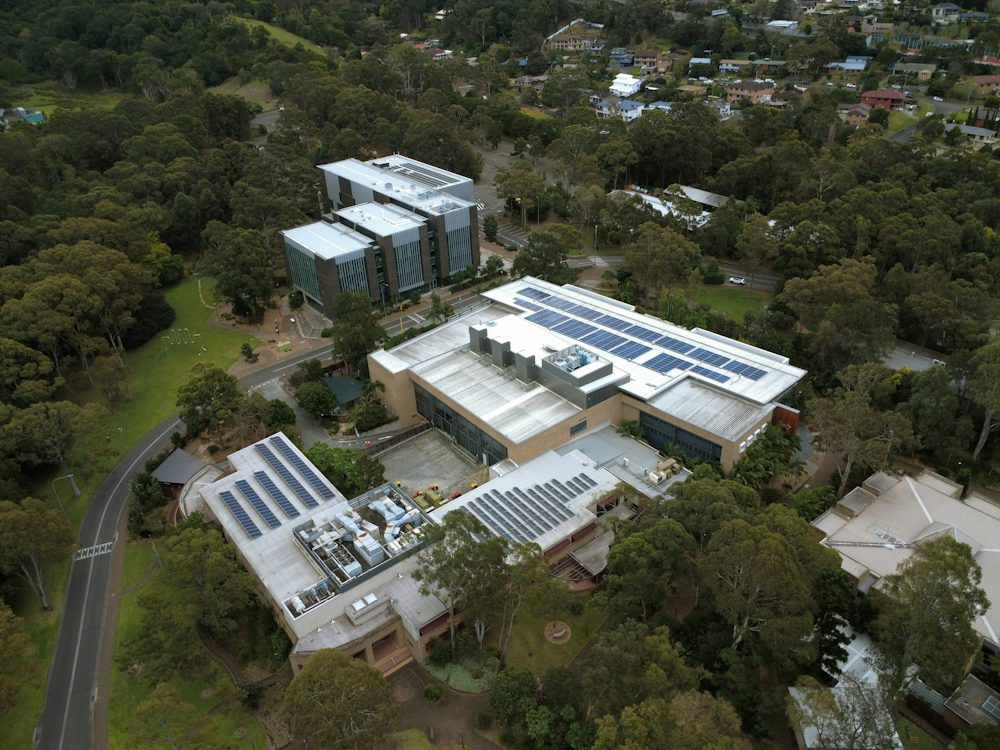
Dominion Energy’s bill for Fairfax County Public Schools is about to jump by just over $12 million this year. That number comes straight from the school district’s own staff. Dominion raised electricity rates for local governments and school divisions by nearly 25 percent in July. Against that backdrop, the Fairfax County School Board voted on November 12 to approve rooftop solar for 10 more schools. The biggest piece is a 1.31-megawatt array at Falls Church High School, projected to save the district roughly $2.1 million over 25 years. Dominion’s own interconnection rules could still eat into that savings estimate.
The Falls Church High School Solar Deal
The new agreement is a 25-year solar power purchase agreement with Sun Tribe Solar. The Charlottesville-based developer already works with Fairfax schools. This round covers six elementary schools, one middle school, and three high schools, and Falls Church High School is the biggest piece of it. Under the deal, Sun Tribe designs, builds, owns, and maintains the panels. The district pays nothing upfront. It simply buys the electricity the panels produce, at a locked-in rate with no annual price escalation, for the life of the contract.
An analysis by the engineering firm Arcadis estimated the savings across all 10 schools combined. It put the total at about $5.27 million in cumulative, nominal electricity cost savings over 25 years, compared with buying power from the grid. Falls Church High School’s own share of that comes to an estimated $2.1 million.
Students had a hand in getting here. Falls Church High’s Get2Green chapter, a student-run environmental club, has spent months lobbying the school board and meeting with FCPS Superintendent Michelle Reid. “Having renewable energy is really important,” Get2Green leader and Falls Church senior Meg Lagera said at the board hearing. “Solar panels save money in energy costs and also decrease carbon emissions. We are passionate about the environment.”
The Dominion Problem
Back in 2022, the school board approved a much smaller pilot: a 600-kilowatt array at Annandale High School. Two months later, Dominion rolled out new rules for mid-size solar projects. Any array between 250 kilowatts and 3 megawatts now needs a “direct transfer trip,” or DTT, system. That’s a dedicated fiber line that disconnects the array from the grid if a nearby section fails. Dominion says the fiber line cuts outage risk and keeps crews safer than the cellular connections it replaces.
Tony Smith, co-founder of the Virginia Distributed Solar Alliance, has run the numbers on what that actually costs. The fiber itself runs about $250,000 a mile. Smith estimates the full DTT package pushes total project costs from roughly $2 per watt to $2.80 per watt, a 40 percent jump. He argues the rule caps how big a school’s economically viable array can get. That cuts potential savings across the district by about a third, he says. Appalachian Power, Virginia’s other major utility, doesn’t require DTT at all.
FCPS already felt this squeeze once. When the board approved panels for nine elementary schools in 2024, it kept every array under 250 kilowatts on purpose. That dodged the DTT requirement, even though school roofs could typically fit 500 to 750 kilowatts’ worth of panels. FCPS projected that smaller deal would save about $190,000 a year, or $4.74 million over 25 years, across all nine schools combined.
Falls Church High School’s new array is more than five times that size threshold. At 1.31 megawatts, it sits squarely inside the range Dominion’s DTT rule covers. That’s exactly why advocates worry the board’s $2.1 million estimate could shrink once the fiber bill comes due.
“We appreciate the board’s commitment to reducing carbon emissions and deploying renewable energy,” Mason District resident and clean-energy advocate Sarah Karush told the board, “but if the interconnection obstacle isn’t solved, the solar project might not be viable.”
Karush, whose child attends Falls Church High, pointed to a second complication: Dominion’s proposed merger with NextEra Energy. The school board sent a letter to Virginia’s State Corporation Commission just a day after her testimony. It urged regulators to reject the merger. It also asked for “lower barriers to school solar” as a condition if the merger goes through anyway.
What We Don’t Know Yet
- Neither the school board nor Sun Tribe has said publicly whether the $2.1 million Falls Church estimate already accounts for DTT costs. That number could still change once engineering work on the array is finalized.
- It isn’t clear whether any of the other nine schools in this round, especially the two other high schools, also exceed the 250-kilowatt DTT threshold.
- Legislation that would split interconnection costs between utilities and solar customers stalled in Virginia’s General Assembly in 2024 on a party-line vote. Advocates expect it to come back in the 2027 session, but nothing is guaranteed.
- There’s no public construction timeline yet for the Falls Church array. FCPS’s past solar projects have typically taken 18 to 24 months from contract approval to completion.
Why It Matters to You
If you’re a Fairfax County taxpayer, this matters already. The operating budget is absorbing a $12 million utility increase this year. Every dollar the district doesn’t spend on electricity is a dollar that can go toward teachers and programs, instead of asking voters for more. If you’re a Falls Church High School family, the panels won’t change your own bill. But a cheaper-to-run school building means less pressure on the budget your kids’ classrooms depend on. None of it is locked in yet. The savings are a 25-year projection, not a signed check, and they depend on Dominion’s rules not taking a bigger bite than the board expects.
Fairfax isn’t the only Virginia district running into this wall. Roanoke City Public Schools is building its own solar program on a different utility’s grid. Its 313-kilowatt array at Preston Park Elementary, financed the same no-upfront-cost way, shows what a smaller project looks like without a DTT fight. Nationally, about 1 in 7 US students now attend a school with solar panels. That share has grown fastest in states where utilities haven’t added the same interconnection costs Virginia has.
Whether Falls Church High School’s panels end up saving the full $2.1 million is still an open question. They might land closer to the smaller number Smith and Karush are warning about instead. That probably won’t be clear until Sun Tribe finishes the engineering work and Dominion signs off on the connection. Keep an eye on what the General Assembly does with interconnection cost-sharing next year. That bill, more than anything the school board does on its own, will decide how much of this savings estimate survives contact with Dominion’s grid.
Sources
- Annandale Today: Large solar project approved for Falls Church HS, but Dominion presents a challenge (Nov. 17, 2026)
- Fairfax County School Board: News Alert from Kyle McDaniel (Nov. 13, 2026)
- FFXnow: Fairfax County School Board jumps regulatory hurdles to OK solar panels for nine schools (July 17, 2024)