
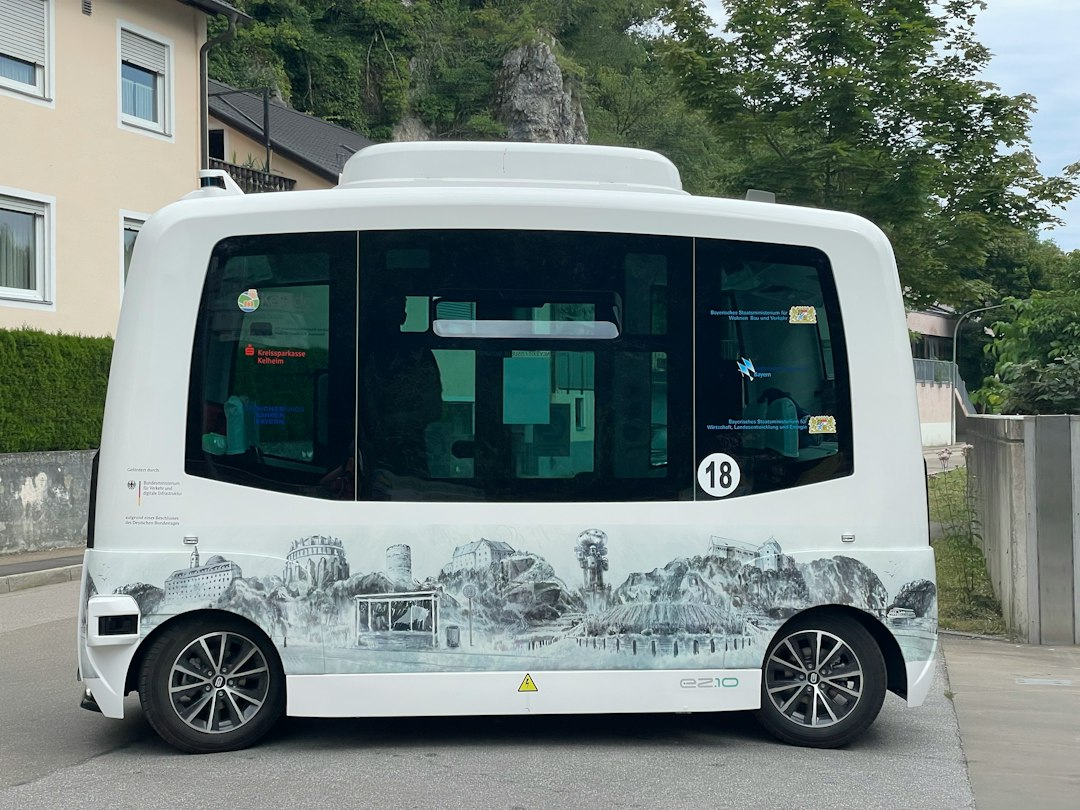
Picture Marcus, a father flying home to Phoenix with a sleepy toddler on his shoulder and two suitcases. He parked in Sky Harbor’s East Economy lot, the cheap option that’s always a hike from the terminal. He expected the usual wait for a crowded shuttle bus. Instead, a driverless airport shuttle pulled up, with no one behind the wheel.
That’s the scene now playing out at Phoenix Sky Harbor International Airport. A new shuttle pilot started picking up real travelers this month, not engineers or reporters.
Inside the Driverless Airport Shuttle Pilot
The airport partnered with a company called Ohmio to run two autonomous shuttles inside the East Economy lot, as Hoodline first reported. The shuttles pick up riders at marked stops and carry them to the PHX Sky Train, which connects to every terminal. Right now they only run on weekdays, from 7 to 11 a.m. and again from 1 to 5 p.m.
Here’s what makes this pilot different from a flashy demo:
- The shuttles have no steering wheel and no human driver.
- A trained attendant still rides along, just in case.
- The whole test runs six months before the city decides what’s next.
- It sticks to one low-speed parking lot, a safe place to learn.
That caution matters. Airports move too many people to gamble on untested technology.
Who Actually Gets Something Out of This
This isn’t a gadget for tech reporters to gawk at. It’s for parents juggling kids and bags, and business travelers racing to a gate. It’s for older adults who’d rather sit than stand on a packed bus, and for travelers with disabilities who find a long walk through economy parking exhausting. Anyone who has sprinted through an airport knows how much a few saved minutes can matter.
Phoenix Mayor Kate Gallego put the real goal into plain words.
Our hope is that you spend as little time on logistics when you’re at Sky Harbor and more time with your family.
That line is the whole point. Sky Harbor moves tens of millions of travelers every year. Even five minutes saved per trip adds up fast at that scale. That’s thousands of hours handed back to people’s lives every month. Time a night-shift nurse would rather spend asleep before her shift. Time a small business owner would rather spend prepping for a client meeting instead of hustling across a parking lot.
Will Riders Actually Climb Aboard?
Not everyone is sold. Arizona State University professor Andrew Maynard asked it best in a recent interview: will people actually use them?
It is a fair question, and the early answer looks promising. Riders who tried it called the experience “kind of crazy” and “kind of fun.” That sounds about right for a first ride. Public comfort with driverless rides has been climbing as more skeptics turn into regular riders. A slow shuttle confined to a parking lot is about as gentle an introduction as this industry can offer. It even keeps an attendant on board, just in case.
A Small Test With Bigger Ambitions
Phoenix isn’t stopping at a parking lot. City officials are also backing fully driverless taxis for public streets and a fully automated Sky Train. It’s the same careful, step-by-step strategy that a self-driving bus in Munich used before expanding into routes that human drivers wouldn’t cover.
So here’s the real question worth asking: if this little shuttle works, would you trade a tiring walk through a parking lot for a quiet ride with no one at the wheel? Phoenix is betting that once you try it, the answer is yes.