
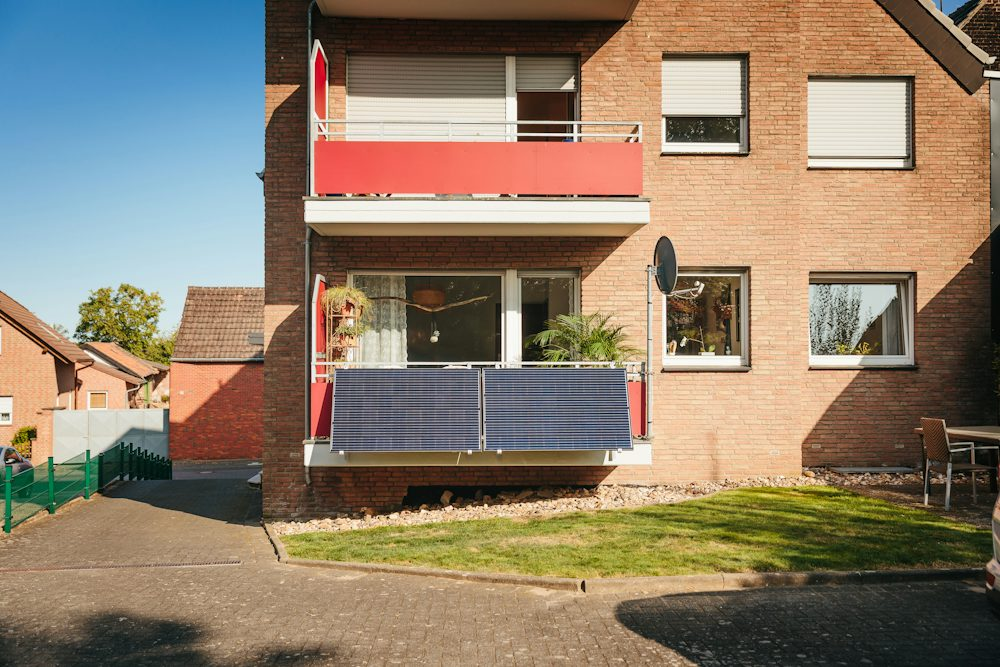
What do you do if you want solar power but you rent your apartment, or your condo board won’t let you touch the roof? A small Colorado plug-in solar panel, the kind that plugs straight into a wall outlet, might finally be an option. Until now, the honest answer in Colorado was: not much. That’s starting to change.
Solar Power World reported on Nov. 10, 2026 that a new Denver-based nonprofit, Solar Access Colorado, launched Nov. 9 with preorders open for small, plug-in solar kits. Solar Builder Mag confirmed the same launch date and quoted founder Adam Harris directly. The timing isn’t random. Colorado’s HB26-1007, a law the legislature passed earlier this year, is set to give these small systems real legal protection starting Jan. 1, 2027, and this nonprofit wants Coloradans ready for that date, not scrambling after it.
Why This Colorado Plug-In Solar Nonprofit Exists
Plug-in solar, also called balcony solar, is exactly what it sounds like: one to a few small panels, usually set on a balcony, patio or fence, that plug straight into a wall outlet and feed power into whatever’s running in the home. No electrician, no permit fight, no rooftop required.
Adam Harris says that gap is the whole reason Solar Access Colorado exists. “Colorado has taken an important step toward expanding access to distributed solar energy,” he told Solar Power World. “We’re launching Solar Access Colorado to help renters, apartment residents and homeowners participate in the clean energy transition with practical, accessible solar solutions.”
The nonprofit isn’t just selling hardware. It says it plans to work with municipalities, housing organizations, property managers and community groups, and to put extra effort into reaching low-income communities and multifamily households, the renters and condo owners who have had the fewest solar options until now.
What Colorado’s New Law Actually Changes, and When
HB26-1007, officially titled “Improve Customer Use of Distributed Energy Resources,” does a few specific things, according to the bill’s own legislative summary. It defines portable-scale solar generation devices in state law for the first time. It stops electric utilities from requiring their approval before someone installs or uses one. And it makes most covenants or HOA rules that block these devices unenforceable, treating a qualifying plug-in system as an energy efficiency measure under Colorado’s common-interest-community law rather than a rooftop installation an HOA can simply veto.
That protection isn’t unconditional. Property owners can still set reasonable rules covering secure mounting, fire prevention and electrical safety, and the law requires installations to follow fire and building codes. Utilities also face a separate deadline: the bill tells Colorado’s Public Utilities Commission to rewrite interconnection rules by Dec. 31, 2026, so regulated utilities, co-ops and municipal utilities all have to allow customer-owned meter collar adapters, the devices that let a plug-in system tie safely into a home’s existing wiring.
Solar Power World’s reporting is specific on one more point worth flagging: the consumer protections for portable solar devices themselves don’t kick in until Jan. 1, 2027. Right now, Solar Access Colorado is selling ahead of that date, not after it.
The Real Numbers: Size, Cost and Limits
Here’s where it helps to look past this month’s launch news to what’s already on record about the devices themselves. CBS News Colorado reported in June that the law allows systems producing up to 1,920 watts, and that a Colorado resident it interviewed expected to pay as little as $500 for one once units became widely available. Namaste Solar, a Colorado installer that lobbied for the bill, separately put the cap at 1.92 kilowatts, for comparison against the roughly 9-kilowatt system that’s typical on an average rooftop job. Neither figure comes from Solar Access Colorado’s own pricing, which the nonprofit hasn’t published yet. Colorado isn’t charting this path alone, either: California passed its own plug-in solar law last year with a similar wattage cap and similar renter protections.
That smaller size is the tradeoff. A plug-in system won’t replace a full rooftop array or erase an electric bill. What it can do is shave real wattage off a home’s draw during sunny hours, and for someone who could never get a rooftop system approved in the first place, that’s not nothing.
Why It Matters to You
- If you rent your home or live in a building governed by an HOA: Colorado’s law is designed so that a landlord or HOA can’t simply refuse you a plug-in solar system once the protections take effect Jan. 1, 2027. Reasonable safety rules can still apply.
- If you’ve priced out rooftop solar and walked away: a plug-in system costs a fraction as much, based on the $500 starting price CBS reported, though it also produces a fraction of the power.
- If you move often: these units travel with you. Take the panel off the balcony, pack it, plug it in again at the next address.
Where the benefit is less direct: Solar Access Colorado’s own kits and pricing aren’t public yet, so nobody outside the nonprofit can say today exactly what a Colorado household saves on its bill with one of these systems.
What We Don’t Know Yet
- Solar Access Colorado hasn’t published prices, specs or a product lineup for its own plug-in kits.
- No one has reported how many Coloradans have preordered, or how fast the nonprofit expects to fulfill orders.
- It isn’t clear yet how individual utilities, including municipal utilities and co-ops, will handle the Dec. 31, 2026 interconnection rule deadline in practice.
- Manufacturers were still working through UL safety certification for larger plug-in units as of earlier reporting this year, which could affect what’s actually available to buy by January.
A law on the books and a nonprofit with open preorders are not the same thing as panels on Colorado balconies. The real test of this effort starts Jan. 1, when the legal protections switch on and Solar Access Colorado has to actually deliver.
Is plug-in solar legal in Colorado right now?
Colorado residents can already buy and use plug-in solar devices today. The new legal protections against HOA and landlord restrictions, along with the updated utility interconnection rules, take effect Jan. 1, 2027, under HB26-1007.
Can my landlord or HOA say no to a plug-in solar panel?
Once the law’s protections take effect, most covenants or rules that unreasonably block a qualifying portable solar device become unenforceable in Colorado. Property owners can still require reasonable safety measures, such as secure mounting and fire-code compliance.
How much does plug-in solar cost and how much power does it make?
CBS News Colorado reported in June that a basic unit could cost as little as $500 and that the law caps these systems at 1,920 watts, well below the roughly 9,000 watts of a typical rooftop installation. Solar Access Colorado hasn’t released its own pricing yet.
Sources
- Solar Power World: Colorado nonprofit launches plug-in solar program ahead of new state law (Nov. 10, 2026)
- Solar Builder Mag: Solar Access Colorado launches as state’s first plug-in solar nonprofit (Nov. 2026)
- Colorado General Assembly: HB26-1007, Improve Customer Use Distributed Energy Resources
- CBS News Colorado: New Colorado law expands access to plug-in solar panels (June 10, 2026)
- Namaste Solar: From Plug-in Solar to Community Solar