
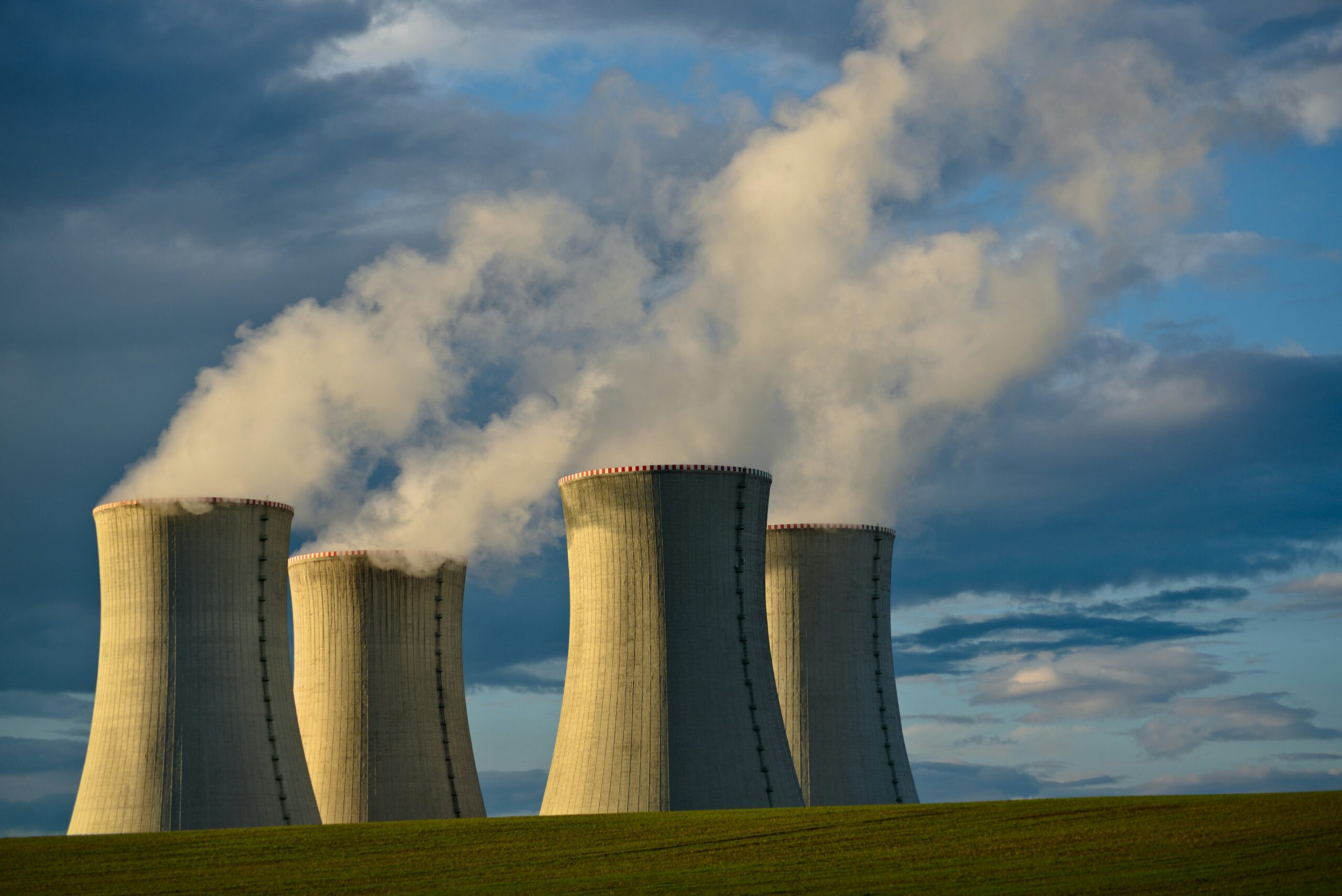
In mid-August 2026, Urenco USA held a groundbreaking at its National Enrichment Facility in Eunice, New Mexico. The company says the expansion will add 2.1 million separative work units (SWU) of annual capacity. US Energy Secretary Chris Wright attended. Urenco’s release is dated August 18, and World Nuclear News covered it on August 19.
What’s being built in Eunice
The plant has run commercially since 2010 and has an annual capacity of 4.3 million SWU. A separate 700,000 SWU addition is already under way. The new 2.1 million SWU project is a different thing. It will use 24 cascades of gas centrifuges, and Urenco says it lifts US capacity by nearly 50%.
Urenco CEO Boris Schucht said: “We built this plant at our customers’ request, and they backed it with long-term contracts.” The company says it developed the plant without public funding and that its total investment at the site will rise to substantially more than $8 billion.
How enrichment works
A SWU measures the work needed to separate uranium isotopes, not a weight of fuel. Natural uranium holds about 0.7% uranium-235. Most commercial reactors need fuel enriched to roughly 3% to 5%. Centrifuge cascades get it there by spinning uranium hexafluoride gas and separating the lighter isotope in stages.
The schedule, in order
- 2010: the Eunice plant starts commercial operation, at 4.3 million SWU a year.
- 2027: the separate 700,000 SWU addition is due for completion.
- January 2028: the US ban on imports of Russian-enriched uranium begins.
- 2032: the first of the new cascades start production.
- Through 2036: more cascades follow.
The US relies on overseas enrichment for much of its supply, and Urenco says the Eunice plant can meet about one-third of the enrichment needs of US commercial reactors. Domestic capacity is one way to replace what the ban removes. But the new cascades arrive late, and utilities that need fuel before 2032 must still buy from other suppliers.
| Item | Figure | Source |
|---|---|---|
| Existing annual capacity | 4.3 million SWU | Urenco |
| Separate addition, due 2027 | 700,000 SWU | Urenco |
| New expansion | 2.1 million SWU, 24 cascades | Urenco |
| First new production | 2032, more through 2036 | Urenco, World Nuclear News |
| Jobs | 300 to 600 at peak construction, 70 long-term | Urenco |
Who Benefits and How
- US utilities running commercial reactors, who would gain another domestic source of enrichment once the cascades start in 2032.
- Workers and the local area: Urenco expects 300 to 600 jobs at peak construction and 70 long-term.
- Household electric customers: no direct effect shown. This story does not point to any change in a household bill.
What the figures leave out
Every figure above comes from Urenco, and we found no independent audit of the capacity, cost or schedule. “Nearly 50%” compares the 2.1 million SWU to the plant’s existing 4.3 million SWU, so it does not say how much of total US demand the expansion covers. With first production six years away, the expansion cannot offset the 2028 import ban on its own. The sources describe it in terms of low-enriched uranium for the existing fleet, and neither says the new cascades will make high-assay low-enriched uranium (HALEU, 5% to 20% uranium-235) for advanced reactors. On costs, the World Nuclear Association says front-end fuel is 30% to 40% of costs for operating plants and 15% to 20% for prospective new plants, without defining “total” on that page. Fuel cost shares vary by plant.
Quick answers
- Separative work unit: the effort needed to separate uranium-235 from uranium-238. Enrichers sell enrichment services in SWU, so it works as a capacity measure rather than a tonnage.
- First new fuel: Urenco says the first new cascades start in 2032, with more installed through 2036.
- Advanced reactor fuel: the sources do not say this plant will make it. Many advanced designs need HALEU, which is a different product. Centrus and others are working on that supply separately.
- Who paid: Urenco says it developed the plant without public funding, backed by customers’ long-term contracts.
Sources
- World Nuclear News: Urenco breaks ground for new enrichment capacity (Aug 19, 2026)
- Urenco: Urenco USA Celebrates Future Expansion with U.S. Sec. Wright (Aug 18, 2026)
- World Nuclear Association: Economics of Nuclear Power (updated Mar 24, 2026)