
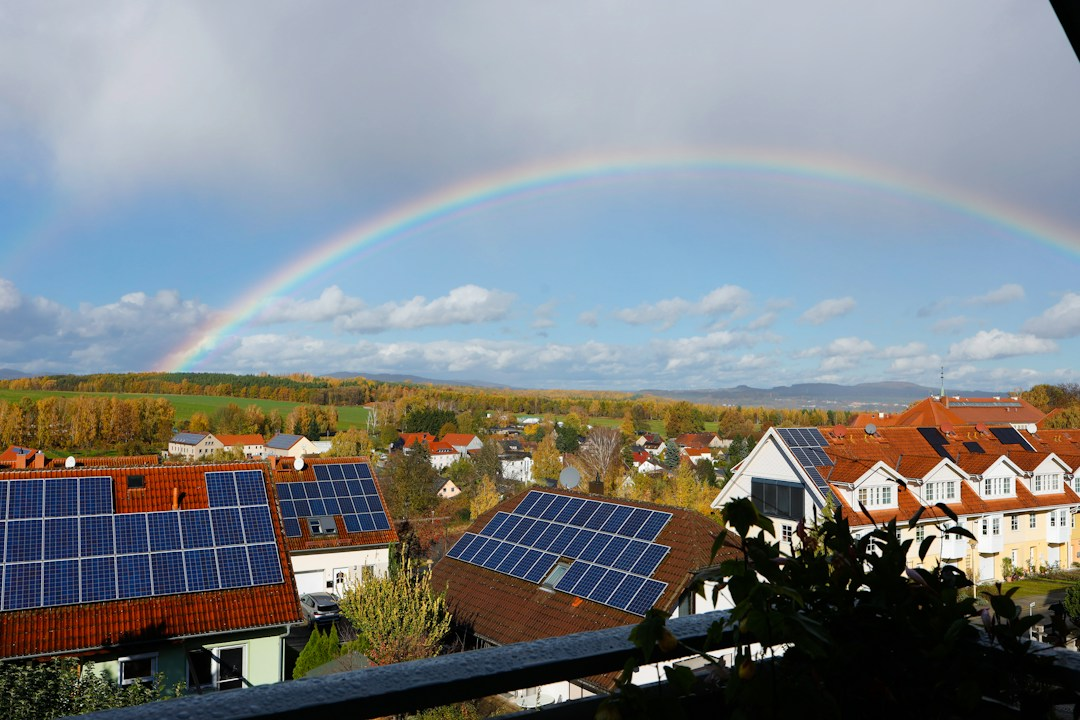
Free solar panels and home batteries cut the estimated electricity bills of low-income British households by about 62%, or £681 a year, according to a randomized controlled trial from the Centre for Net Zero. The study covered 708 households in a program delivered by Octopus Energy under the Warm Home Discount scheme. The Centre for Net Zero lists the paper with a date of September 28, 2026.
Why It Matters to You
If you’re a low-income household in Britain, this is the strongest evidence yet that free panels and a battery can shrink a bill, though the trial covered one program and the free packages aren’t available to everyone by default. Eligibility depends on income and program rules, and the Warm Homes Plan also limits its free packages to low-income households. Check GOV.UK and your energy supplier for current schemes.
What the trial found
Compared with households that didn’t get the equipment, grid draw fell by 38%. Net imports, after counting power exported to the grid, fell by 77%. Imports between 4 pm and 8 pm fell by 66%, and that held in December, when solar output is low. Estimated bills fell by about 62%, with the biggest savings in summer, when estimated bills dropped close to zero, and savings persisted through winter. The battery alone was worth roughly £148 a year, about 13% of the baseline bill.
The authors, Daniel Lopez Garcia, Robert Metcalfe, Andrew Schein, and Yixin Sun, estimate the systems avoid 4.4 tonnes of carbon dioxide equivalent per household over an assumed 15-year life. The Centre for Net Zero worked in partnership with Octopus Energy.
A smaller analysis came first. In February 2025, the Centre for Net Zero reported on 166 completed installations out of 3,000 eligible customers contacted. Homes with solar and batteries drew about 10 kWh a week from the grid, versus about 25 kWh for homes without. That analysis didn’t measure bills, compared two groups rather than the same homes over time, and warned that higher users may have been more likely to accept the offer. Its authors said causality was not established, so the randomized trial is the stronger evidence.
The government plan behind it
The UK government’s Warm Homes Plan, announced January 20, 2026, commits £15 billion of public investment. It aims to upgrade up to 5 million homes and lift up to one million families out of fuel poverty by 2030. Low-income households can get free upgrade packages backed by £5 billion. The government cites an average full cost of £9,000 to £12,000 for a solar and battery package. The plan also aims to triple the number of homes with rooftop solar by 2030 and create 180,000 jobs in energy efficiency and clean heating. The Warm Home Discount is separate: around 6 million households receive £150 off their winter bill.
Read the numbers carefully
The 62% and £681 figures are estimated bill savings from one program with eligible low-income households, so they don’t apply to every home or tariff. The paper notes that only about a quarter of households moved to a solar-specific tariff and about half stayed on a flat tariff, which limits what the batteries can save. The carbon figure rests on the assumed 15-year life. A BusinessGreen headline says bills fell “by two thirds,” which is a rounding of the trial’s 62% estimate; its article text could not be opened.
Two quick questions
Was this a pilot or a full program? A randomized trial embedded in an existing program, not a nationwide rollout. The Warm Homes Plan is the broader government effort.
Is 62% the same as two-thirds? Close, but not the same. The Centre for Net Zero reports about 62%.
Sources
- Centre for Net Zero: The Impact of Residential Solar and Battery Storage on Energy Demand and the Grid (Sep 28, 2026)
- Centre for Net Zero: Evaluating the impact of solar PV and battery installations on vulnerable households (Feb 27, 2025)
- GOV.UK: Families to save in biggest home upgrade plan in British history (Jan 20, 2026)
- Now.Solar: BusinessGreen headline, “Few better uses of public money” (Sep 28, 2026)