
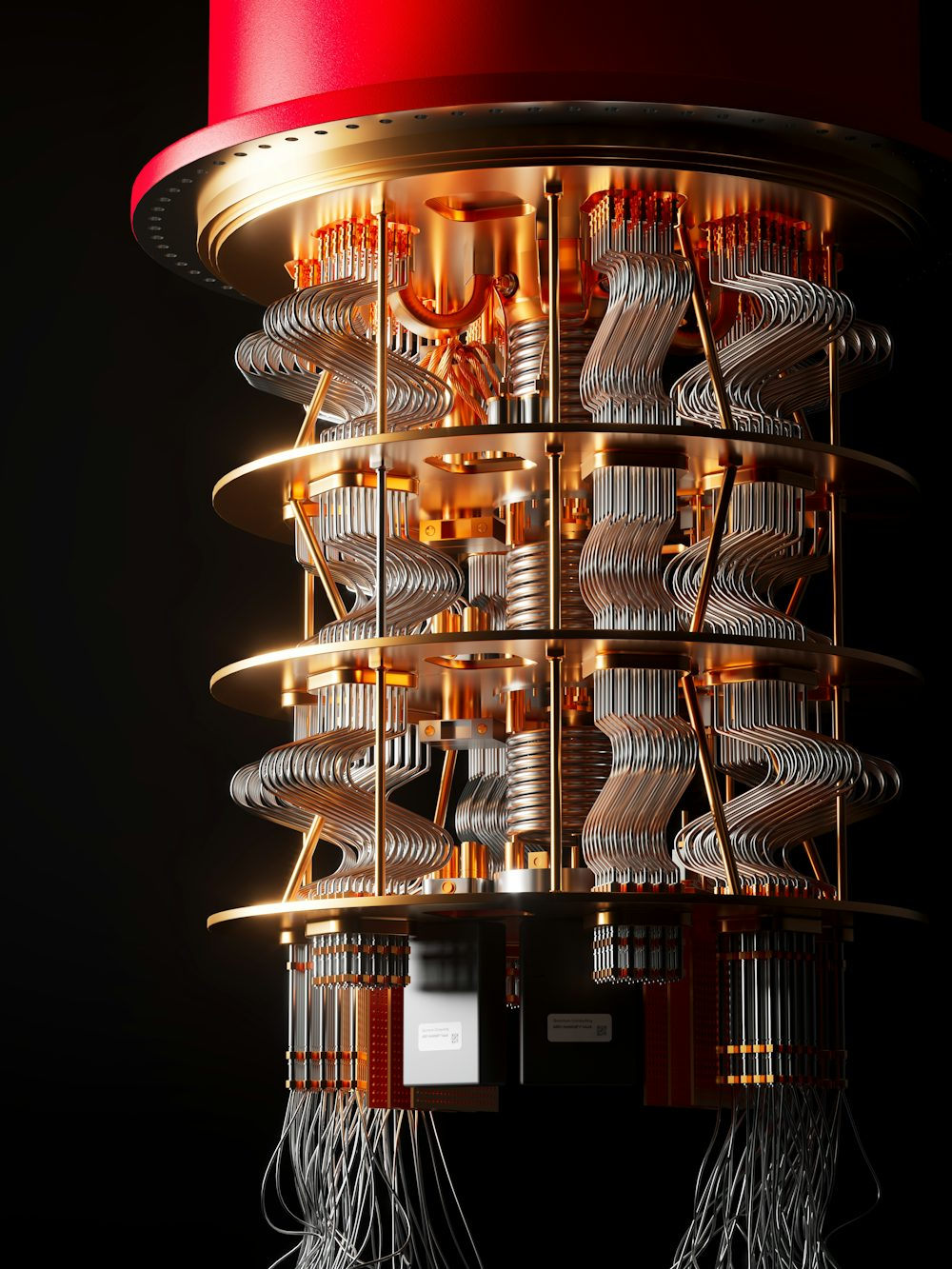
Türkiye wants into the small club of countries with serious quantum computing power, and it just signed the paperwork. Industry and Technology Minister Mehmet Fatih Kacır announced on November 14, 2026, that Türkiye is installing a 54-qubit IQM Radiance R3 quantum computer inside TÜBİTAK, the Scientific and Technological Research Council of Türkiye. The system will be the country’s largest quantum computer once it comes online in 2027. It dwarfs TOBB University’s five-qubit QuanT, the locally built machine that was Türkiye’s first quantum computer when it debuted in November 2024.
“…a major step toward joining the world’s 15 leading countries in quantum computing,” Kacır said of the plan, in Minister Türkiye Today’s translation of his announcement.
Kacır posted the news himself on social media that evening. Bloomberg HT confirmed it the same day, and the English-language outlet Türkiye Today added more detail the next morning. What’s solid here: the hardware choice, the host institution, the 2027 target, and the rough plan for who gets to use it. What’s missing: a price tag. Neither the ministry nor IQM has said what the deal costs.
Who Keeps the Keys
This isn’t a subscription to someone else’s cloud. Kacır was specific about that part. Because the system will run inside TÜBİTAK’s own infrastructure, the hardware, the research data, and any intellectual property that comes out of it all stay under Turkish control. That’s the point, according to the ministry’s own framing of the deal. Türkiye has leaned on quantum computing resources built and hosted elsewhere so far, and officials are treating this purchase as a step away from that dependence. Other observers have made a similar case for why a homegrown system matters now, as trade barriers and export controls tighten around advanced computing hardware more broadly.
How Researchers Will Reach the Machine
Nobody needs a plane ticket to Ankara once this is running. Researchers will apply for project time through TRUBA, Türkiye’s national computing platform, from wherever they’re based. The ministry wants universities, public research institutes, industrial companies, and technology startups using the system, not just physicists working inside TÜBİTAK’s own building.
Kacır named four priority areas: artificial intelligence, cybersecurity, advanced materials, and complex optimization. Bloomberg HT’s coverage of the ministry’s statement added more detail, pointing to drug and materials discovery and efficiency gains in energy, transportation, and logistics as target applications. None of that work can start until the hardware actually exists. Nobody has published an application process yet, or a date for when TRUBA will start accepting proposals for it.
TÜBİTAK’s Quantum Computer, by the Numbers
IQM’s Radiance line is a standard commercial product, not a custom build for Türkiye, and the company publishes benchmark figures for its 54-qubit configuration.
| At a Glance | Detail |
|---|---|
| Qubits | 54, superconducting, square-lattice layout with tunable couplers |
| Median two-qubit gate fidelity | 99.5%, with a reported maximum of 99.85% |
| Quantum volume | 64 |
| Circuit layer operations per second (CLOPS) | 2,550 |
Source: IQM’s published specifications for the Radiance R3 processor, reported by Türkiye Today, Nov. 15, 2026.
Those numbers describe the processor IQM sells in general, not a measurement taken on the specific machine headed for TÜBİTAK. Türkiye Today flagged that distinction directly: the specs are the manufacturer’s own benchmarks, not independently verified results for Türkiye’s installation. Gate fidelity, qubit connectivity, and how long a system runs before errors pile up all shape what a quantum computer can actually do. Qubit count alone doesn’t tell you that.
Türkiye Isn’t IQM’s First Customer
IQM has already placed Radiance systems at two of Europe’s major high-performance computing sites: Germany’s Leibniz Supercomputing Centre and Italy’s CINECA. TÜBİTAK’s version will connect to Türkiye’s existing supercomputing infrastructure the same way, letting classical and quantum processors split a workload between them. A similar pairing is underway in Japan, where the University of Osaka recently wired a quantum chip directly into its OCTOPUS supercomputer, though on a far smaller scale. Chicago took a different access model when IBM switched on a quantum computer there earlier this month, opening it first to a short list of named corporate and university partners rather than a general application system. TÜBİTAK’s TRUBA model, at least on paper, aims wider from the start.
Why It Matters to You
If you’re a researcher, grad student, or small quantum startup in Türkiye, this is worth watching closely. Once TRUBA opens applications, you won’t need a foreign cloud account or a seat at a European lab to get real time on a 54-qubit machine. That’s a genuine jump from a five-qubit teaching computer. For almost everyone else, the benefit is further off and less direct. Quantum-assisted drug discovery and more efficient logistics, the kinds of applications Kacır mentioned, are still research problems today, not products on a shelf. None of this is live yet. There’s no sign-up page, and 2027 is the earliest the hardware itself will even exist.
What We Don’t Know Yet
- Türkiye hasn’t said what the deal with IQM costs, or how it’s being funded.
- The published gate fidelity, quantum volume, and CLOPS figures are IQM’s general benchmarks for the Radiance R3 line, not numbers measured on Türkiye’s own system.
- No outlet has reported a concrete date for when TRUBA will start taking applications for time on the machine.
- Kacır’s announcement didn’t say whether 2027 covers installation alone, or installation plus the calibration period a new quantum computer typically needs before outside researchers can run real projects on it.
The machine won’t run a single calculation for at least another year. The number worth watching between now and then isn’t 54. It’s whether TÜBİTAK publishes a real application process for TRUBA access before the hardware even arrives, or whether researchers end up waiting on both at once.
Sources
- Bloomberg HT: Türkiye’nin en büyük kuantum bilgisayarı TÜBİTAK bünyesinde kuruluyor (Nov. 14, 2026)
- Türkiye Today: Türkiye Bets on 54-Qubit Quantum Computer to Break Into World’s Top 15 (Nov. 15, 2026)