
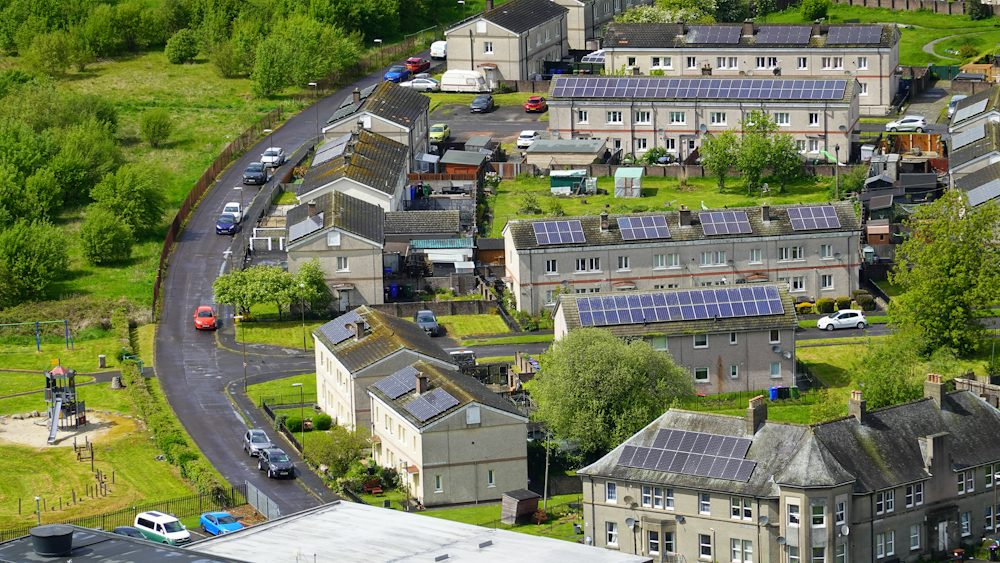
Bainbridge Island, Washington just wrapped up a yearlong experiment: get neighbors to buy solar together instead of going it alone, and see if that actually moves the needle. The early results are bigger than organizers expected. The city’s Solarize Bainbridge Island campaign drew 404 sign-ups for a free solar assessment between March and July, and by the time it closed, islanders had signed 71 contracts worth a combined $2,344,976 in solar investment, according to the city’s own tally and reporting from the Bainbridge Island Review.
That’s the whole story in two numbers: $2.3 million invested this year, and a second round already being planned for 2027.
- 404 islanders signed up for a free home or business solar assessment
- 313 of those sign-ups turned into a completed assessment
- 71 people signed contracts with a vetted local installer
- $2,344,976 in total solar investment, per the program’s own count
- The campaign ran March 1 through July 31, 2026
- City officials and organizers are already planning a 2027 round
How Solarize Bainbridge Island Works
Solarize Bainbridge Island isn’t a rebate or a subsidy. It’s a matchmaking and bulk-pricing service. The City of Bainbridge Island’s Climate Office partnered with Olympia Community Solar, a nonprofit that has run similar “Solarize” campaigns around Puget Sound for six years, according to the Bainbridge Island Review. The city picked a short list of local installers through competitive bidding, screening them for equipment quality and business practices. Anyone who signed up got a free assessment and a proposal at a pre-negotiated, campaign-only rate, so they didn’t have to call five contractors and compare bids on their own.
Ben Silesky, Olympia Community Solar’s program director, described the model to the Review as education paired with group purchasing: a way to connect people with vetted installers and trustworthy information in a low-pressure setting before anyone decides whether to buy. Participants who signed a contract also got access to net metering, which credits homeowners for extra power their panels send back to the grid, plus the option to add battery storage for backup power during an outage. Anyone who wanted financing could apply through Puget Sound Cooperative Credit Union, the program’s partner lender.
A Volunteer Group Did the Legwork
None of this works without someone spreading the word, and that job fell to the Bainbridge Solar Collective, a resident-run group formed specifically to push solar and battery adoption across the island. Co-founder Kevin Thomas and other volunteers ran a monthly newsletter, posted on social media and handed out flyers, reaching islanders who might never have searched “solarize” on their own.
Laura Ryser, the city’s climate and sustainability manager, gave the volunteers credit for turning a city program into something that reached hundreds of households.
“It couldn’t have happened in the way it did without the grassroots effort,” Ryser told the Bainbridge Island Review.
What’s Next, and Who the Program Leaves Out
Enrollment for this year’s campaign has closed, so the free assessment isn’t available right now. The partnership isn’t finished, though. Olympia Community Solar wants a waitlist open before the end of 2026, ahead of a planned 2027 relaunch. Anyone on Bainbridge Island who wants to get on that list, or just ask a question before the next round opens, can email [email protected], call (360) 481-4020, or check the campaign’s official page for updates.
The bigger goal behind the push: Bainbridge Island has committed to getting all of its electricity from carbon-free sources by 2040, according to the city’s Climate Action Plan. A 2024 analysis by the Pacific Northwest National Laboratory, cited in the Review’s reporting, found rooftop solar was the island’s cheapest and most scalable near-term way to get there, which helps explain why the city leaned into this kind of program over other options.
One group this round doesn’t reach: renters. Solarize Bainbridge Island is built for homeowners and business owners who can put panels on a roof they own. Picture an islander we’ll call Priya, a nurse who’s put off going solar for years because she didn’t want to vet five competing contractors on her own. That’s an illustrative example, not a real participant, but it’s the kind of decision this program is built to simplify. It doesn’t make the choice for her. It just removes the homework that often stalls it for years. Renters don’t get that shortcut here; a community solar subscription, where you buy into a shared off-site array instead of installing anything, is usually the closer fit for them.
What the Numbers Don’t Show
- The 71 signed contracts came out of 313 completed assessments, a rate of about 23 percent. Neither the city nor Olympia Community Solar has said why roughly three out of four assessed households didn’t move forward.
- The $2,344,976 figure is total project investment, not homeowner savings. No one involved has published an average discount percentage or payback period for island participants.
- It isn’t clear how many of the 71 contracts included battery storage versus solar panels alone.
- Puget Sound Cooperative Credit Union’s actual financing terms for Solarize participants weren’t detailed in the materials we reviewed.
Why It Matters to You
If you live somewhere without a program like this, the model itself is the real takeaway. A city, a nonprofit and a handful of volunteers can shrink the research and haggling that keeps a lot of homeowners from ever getting a solar quote. Similar group-buy campaigns have already launched in El Paso, Texas and Rochester, New York. Bainbridge Island is proof that you don’t need a big budget to start one, just one city office, one nonprofit partner and people willing to pass out flyers.
For islanders specifically, every signed contract chips away at a Puget Sound Energy grid that still runs partly on fossil fuels, and every battery added gives a household backup power the next time a windstorm knocks out electricity, which happens most winters in the Pacific Northwest. Curious how the volunteers and organizers describe the campaign in their own words? Olympia Community Solar’s Ben Silesky and the Bainbridge Solar Collective’s Mike Cox discussed it on a local podcast, recorded for the Bainbridge Island Senior Center.

Whether this particular campaign reaches your neighborhood or not, the bigger question worth asking is simple: does your city have a climate office, and has anyone there called a nonprofit like Olympia Community Solar to ask what a Solarize campaign would take?
Sources
- Bainbridge Island Review: Campaign generates $2.3 million in BI solar investments this year (Nov. 20, 2026)
- City of Bainbridge Island: Solarize Bainbridge Campaign
- City of Bainbridge Island: Energy and Buildings, Climate Action Plan energy target
- The Cool Down: Washington neighbors band together to negotiate solar prices (Nov. 24, 2026)