
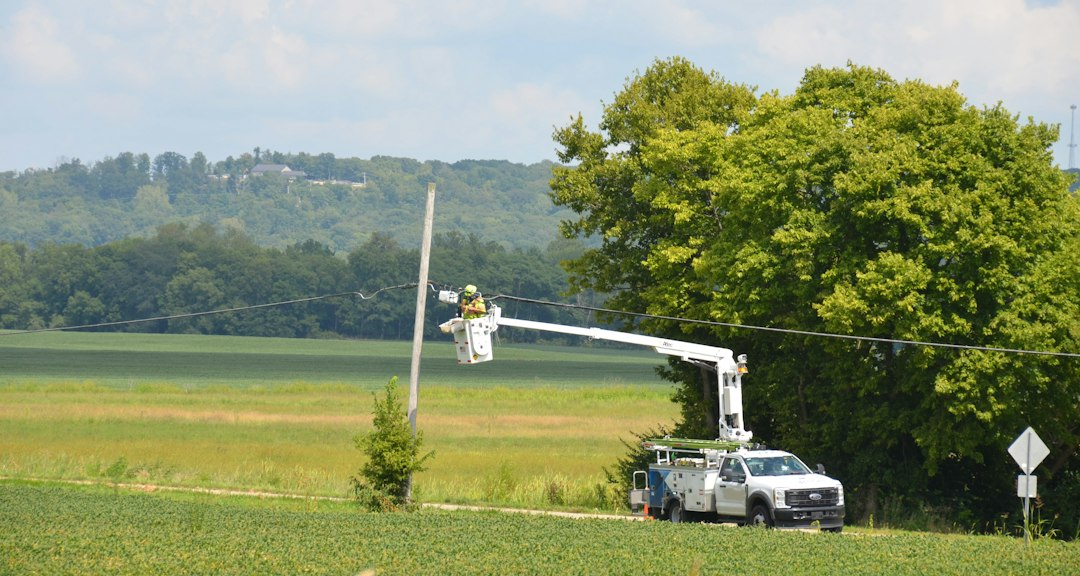
Picture Rosa, a bookkeeper who works from her kitchen table in Three Points, Arizona, about 30 miles southwest of Tucson. Every Thursday, a client’s file is too big for her satellite connection to handle. She packs up her laptop and drives 25 minutes to a coffee shop with real Wi-Fi. That costs her two hours a week, plus a tank of gas, just to do her job. Pima County’s new broadband expansion aims to end that drive, for Rosa and for thousands of her neighbors.
On September 24, county officials broke ground on a 134-mile open-access fiber-optic line. It will eventually stretch from Nogales through rural communities like Three Points and into Tucson, as govtech.com reported.
Inside Pima County’s Broadband Expansion
Engineers call this a middle-mile network, and the name matters. Fiber isn’t running to anyone’s house yet. Crews are laying the big trunk line first, and local internet providers will tap into it later to build the “last mile” connections that reach homes and small businesses. A $30.3 million federal grant, funded through the Infrastructure Investment and Jobs Act, pays for the two-year build. Pima County’s Office of Digital Inclusion is leading the project with the Arizona Commerce Authority and construction partner ex2 Technology.
Arizona Commerce Authority CEO Sandra Watson called it, in county coverage of the groundbreaking, “the final segment of conduit” connecting Nogales to Tucson, closing a gap private providers had little reason to fill alone.
Who Gets the Payoff, and What It’s Worth
Once local providers plug into this backbone, families, students, and small business owners in underserved pockets of the county get a real shot at internet that doesn’t choke on a video call or cap out mid-month. That matters: satellite plans in rural Arizona often run $100 to $150 a month for capped, slower data, against roughly half that for unlimited fiber once it arrives.
For a household with two kids doing homework online and a parent working remotely, that gap can decide whether the family affords internet at all. For a rancher or a home-based business like Rosa’s, it can mean filling online orders without a weekly trip to town.
Pima County Board Chair Jennifer Allen put it simply:
“Access to high-speed internet is not a privilege, it’s a right.”
A few concrete things change once providers connect to the new line:
- Students get a reliable signal for homework and virtual classes, not just when the weather cooperates
- Small business owners process online orders without a town trip
- Telehealth appointments stop depending on a clear-sky satellite signal
- Local providers finally gain a backbone that makes rural buildout worth the cost
West Virginia’s broadband expansion reached 10 rural counties through a similar partnership, and Oregon’s fiber expansion followed the same playbook: public money builds the backbone, then providers finish the job.
Not the Finish Line, But a Real Start
Construction takes two years. A middle-mile line only creates the opportunity for providers to reach homes; it doesn’t guarantee they will. Pima County’s Office of Digital Inclusion is counting on that follow-through. The National Digital Inclusion Alliance recently recognized the county’s track record with a second straight Visionary Digital Inclusion Trailblazer award. ODI Director Michelle Simon put the stakes plainly: “We shouldn’t let a zip code determine who has access.”
If you live in rural Pima County, watch for which providers announce plans to connect to this new line. That’s the step that actually brings fiber to your door. If your community hasn’t started a project like this yet, Pima County’s grant just became a template worth handing to your local officials.