
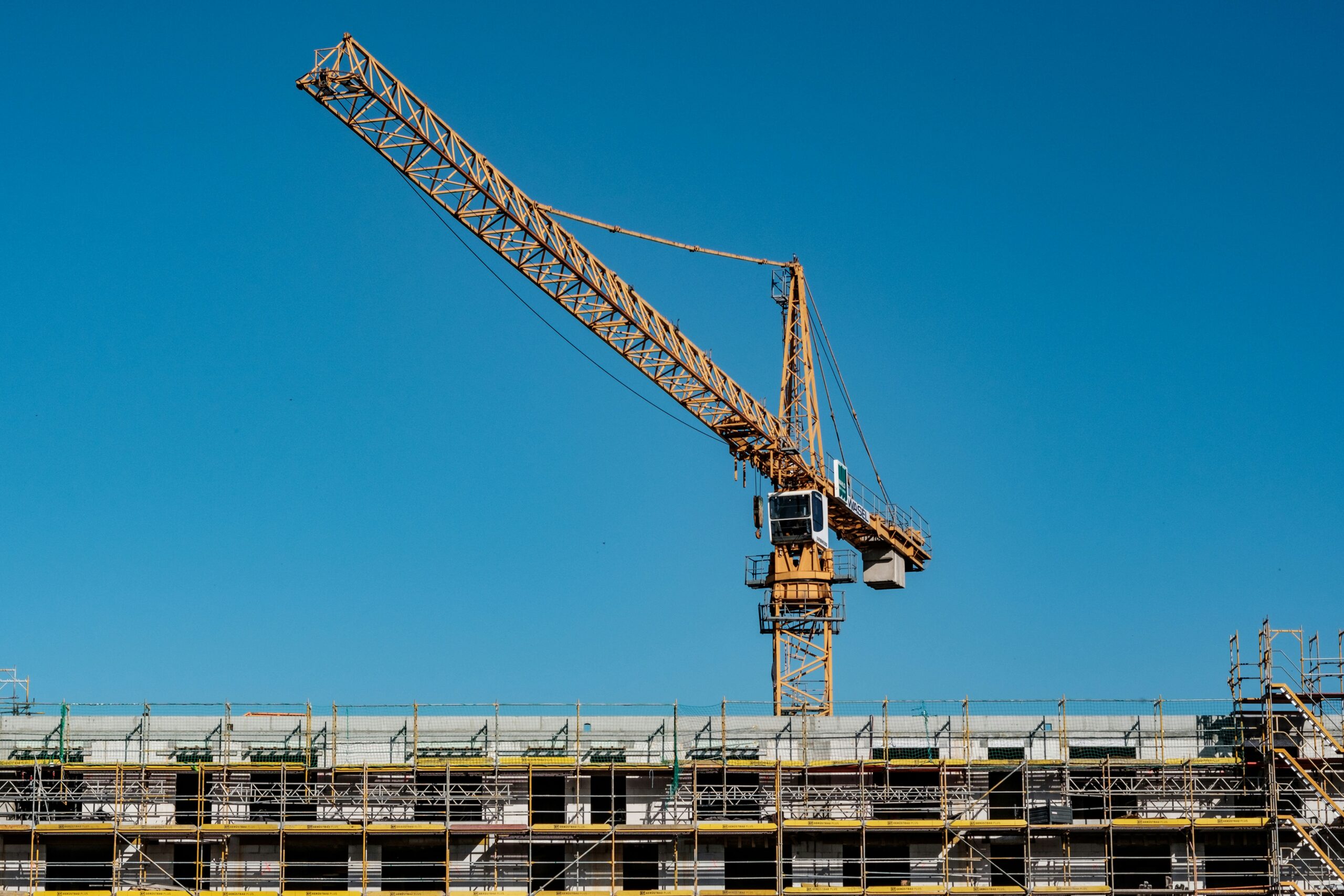
One hundred thirty two tonnes. That’s the weight of the last piece of a new passive safety reactor design a crane lowered into place at a nuclear plant on China’s Fujian coast last month, and it might be the most important delivery that reactor ever receives.
What Actually Went Into Zhangzhou 4
On August 19, crews finished installing the third and final module of a passive reactor cavity water injection tank on unit 4 at the Zhangzhou nuclear plant, a Hualong One (HPR1000) reactor. The tank stands 22 meters tall, built in a fan-shaped, non-uniform cross-section split into three pieces so cranes could lift it in stages. Once the reactor is running, that tank sits overhead, full and waiting.
Older reactors cool an overheating core with motor-driven pumps. Those pumps need electricity, and electricity can fail. That’s exactly what happened at Fukushima in 2011, when floodwater knocked out the backup generators the cooling pumps depended on. Zhangzhou 4 answers that problem with physics instead of machinery. If the reactor cavity ever needs flooding in an emergency, gravity pulls the water down from that tank. No pump has to start. No operator has to flip a switch. No outside power has to arrive in time. That’s passive safety reactor design in its simplest form: physics over machinery, gravity over electricity.
Fewer moving parts means fewer things that can break at the worst possible moment.
What This Buys the People Living Nearby
Picture a small business owner in Xiamen, a city that will draw a big share of its power from this plant once it’s finished. She doesn’t think about reactor engineering. She thinks about whether her walk-in freezer stays cold and whether the evening rush at her restaurant runs on schedule. A passive safety system doesn’t show up on her electric bill as a line item, but it lowers the odds that a bad day at the plant ever becomes a bad month for the whole region: no extended shutdown, no evacuation order, no months of paying for replacement power trucked in from somewhere else.
That kind of resilience also tends to be cheaper to insure and easier to license, and both of those costs eventually show up, one way or another, in what a utility charges to keep the lights on.
Built at Scale, Not Just on a Drawing Board
Zhangzhou isn’t a demonstration project. Units 1 and 2 are already selling power to the grid, having started up in January 2025 and January 2026. Unit 3 broke ground in early 2025, and unit 4 began construction in September 2025. When finished, the site’s six units are expected to generate more than 60 billion kilowatt-hours a year, enough to supply roughly 75% of the electricity used by nearby Xiamen and Zhangzhou.
Passive safety used to be a selling point on a brochure. Now it’s routine construction practice, one 132-tonne module at a time. The same maturity is showing up in nuclear’s fuel supply chain, from new uranium enrichment capacity coming online in the US to advanced fuels like TRISO built for the next generation of reactors. Watch for unit 4 to reach hot testing next, the same milestone that Haiyang 3 just cleared a few hundred miles down the coast.
Source: World Nuclear News: Passive safety module installed at Zhangzhou 4