
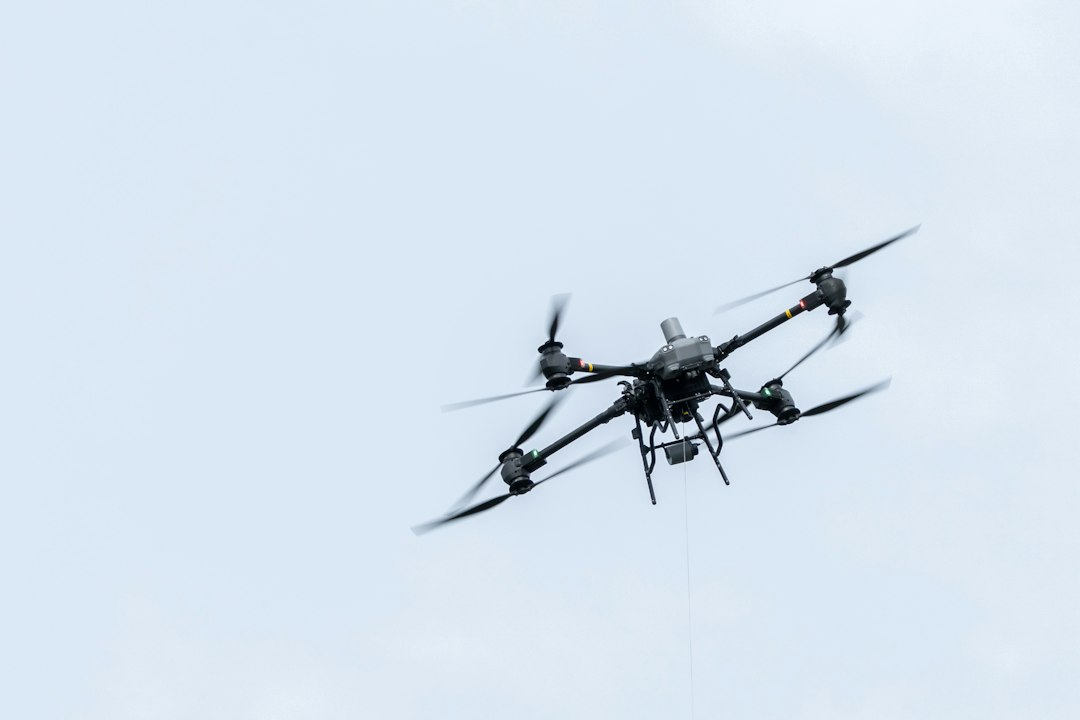
Munson Healthcare’s delivery vans log more than 90,000 miles a year hauling lab samples and prescriptions between clinics in northern Michigan. That’s almost four trips around the globe, just to get a blood sample to a lab on time. Starting this month, a second round of medical drone delivery testing puts some of those miles in the air instead of on the highway.
Traverse Connect, Munson Healthcare, and drone maker Blueflite relaunched the region’s drone program on October 6. Test flights run through October 30, connecting Munson Medical Center with Crystal Lake Health Center, about 2.2 miles away in Traverse City, DroneXL reports. This is Phase 2, a bigger test than Phase 1.
Picture a dental hygienist named Rosa who lives twenty minutes outside Traverse City and manages type 2 diabetes. Her clinic sends her blood work to the main hospital lab every few months. Right now that sample rides in a courier’s car, stuck in the same traffic as everyone else on M-22. A drone skips all of that. It lifts off, flies a straight line, and lands in minutes.
What Medical Drone Delivery Actually Changes for Rural Patients
Phase 1 ran for about two weeks in May 2025. Of 67 test flights, 61 landed successfully, a 91% success rate. Drones carried simulated lab samples under strict visual line-of-sight rules, and onboard sensors kept the cargo at a safe 17.3°C. Phase 2 adds more drones, longer routes, and FAA approval for expanded testing. Blueflite now runs the flights, after the previous operator, DroneUp, left the project earlier this year.
“Reduce the time between test, to diagnosis and finally, to treatment” is how Munson Healthcare’s supply chain vice president, Tracy Cleveland, describes the goal.
Here’s the part that should matter to anyone who has paid a hospital bill or waited on test results. At a standard mileage rate of around 70 cents, those 90,000 courier miles cost Munson something like $63,000 a year. That doesn’t count a single hour of staff time behind the wheel. Shift even a quarter of those trips to drones, and the system frees up real money for patient care.
For patients, the bigger win is speed. A courier run between a rural clinic and a lab can take an hour once you count loading, driving, and parking. A drone covering that same route could do it in minutes. That matters most for urgent tests, like catching an infection early or getting blood sugar results back the same day.
Rural health systems everywhere lean on technology to close gaps like this. Maine’s AI 911 dispatch tool frees up phone lines for real emergencies. OpenEvidence’s free AI medical tool already reaches doctors in more than 100 countries. Drones add physical delivery to that same toolbox, closing the miles that keep rural care slow.
Michigan Isn’t the Only State Testing This
Researchers at the University of Kentucky ran a similar pilot in rural Appalachia, flying masks and gloves directly to patients’ homes. In that pilot, 80% of participants said they’d welcome future drone deliveries. That buy-in matters. Technology only helps when people actually want it. That could be a retired farmer, a young parent working two jobs, or a night-shift nurse who can’t spare two hours for a supply run.
Traverse Connect expects the October flight data to shape drone programs well beyond Michigan. Its leadership calls this a model other states can copy. If Phase 2 holds anywhere close to that 91% success rate, don’t be surprised when the lab courier outside your own rural clinic starts gathering dust. Would you trust a drone with your bloodwork if it meant answers hours sooner?