
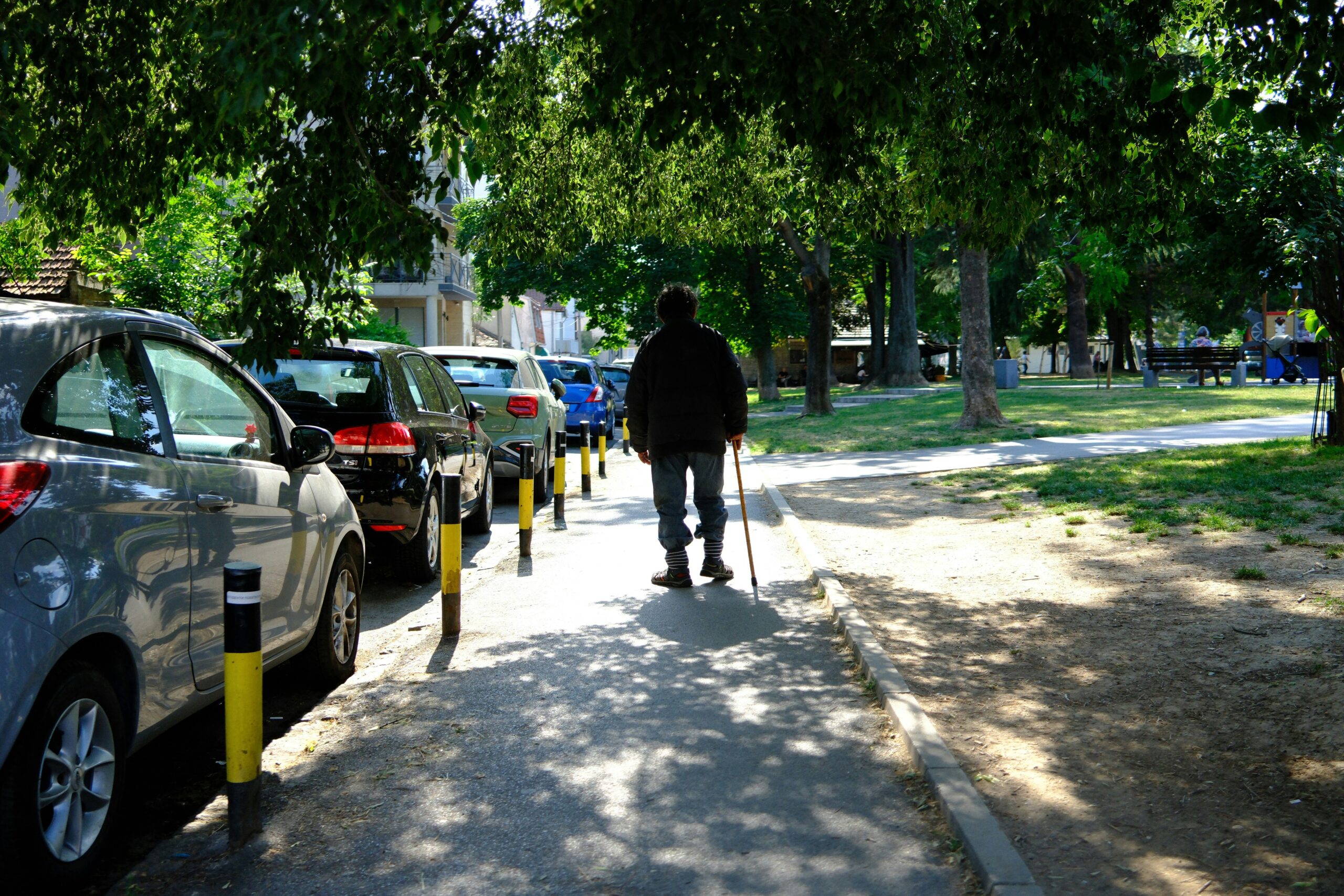
“It’s like a small autonomous vehicle plan,” says Patrick Slade, the Harvard bioengineering professor behind a new navigation tool. He’s describing a phone app, not a car. That’s the point. The new Mobilio navigation app from Harvard engineers calculates a safe walking path the same way a self-driving car calculates a safe driving route, using the phone already in your pocket instead of pricey specialized gear.
Walking down a sidewalk alone shouldn’t take courage. For millions of people who are blind or have low vision, though, every outdoor trip is a small challenge. They track curbs, dodge bike racks, and hope a cane catches what eyes can’t see.
How the Mobilio Navigation App Works
Mobilio turns an ordinary smartphone into a walking guide. It reads the camera feed, GPS, motion sensors, and LiDAR (on phones that have it) to map sidewalks, curbs, and crosswalks in real time. Instead of a robotic voice barking directions, the app plays soft directional beeps that shift as you walk. They nudge you left or right, the way a friend’s hand on your shoulder might.
Lead researcher Raymond Liu built the system with his advisor, Slade. You can read more in Harvard’s official announcement.
Faster Trips, Fewer Bruises
The results speak plainly to daily life. People using Mobilio finished outdoor routes about 13% faster than they did with Google Maps and a cane alone. Indoors, they bumped into furniture and doorframes 41% less often. Fourteen volunteers from the Carroll Center for the Blind in Newton, Massachusetts, tested the app to reach these numbers.
Those aren’t just numbers on a chart. Picture Anh, a college student who is blind and commutes to class every day. Thirteen percent faster can mean catching the bus she’d otherwise miss, or reaching a seminar with time to spare instead of walking in flustered. Forty-one percent fewer collisions means fewer sore shins and fewer spilled grocery bags for her, and less of the quiet stress that comes from never quite trusting her own path.
Independence Without an Extra Price Tag
What makes this app worth watching is what it doesn’t require. Many navigation aids for blind and low-vision users depend on dedicated hardware that can cost hundreds or thousands of dollars. Mobilio runs on a phone most people already own, which matters for anyone managing a fixed income or extra costs tied to disability.
That same instinct, using AI to lower the cost of independence rather than the price of a gadget, shows up elsewhere in accessible tech. Waymo is expanding accessible robotaxi rides to smaller cities, and Legato’s AI hearing glasses help people follow conversations again. AI hearing aids are doing the same thing for hearing care, skipping a costly specialist visit entirely.
Mobilio is still in its research phase. The Harvard team plans wider testing around Boston before pursuing commercialization through the university’s Grid Accelerator program. A public release isn’t imminent, but the direction is clear: getting around confidently may soon depend on nothing more than the phone already in your hand, not expensive equipment, and not a companion.