
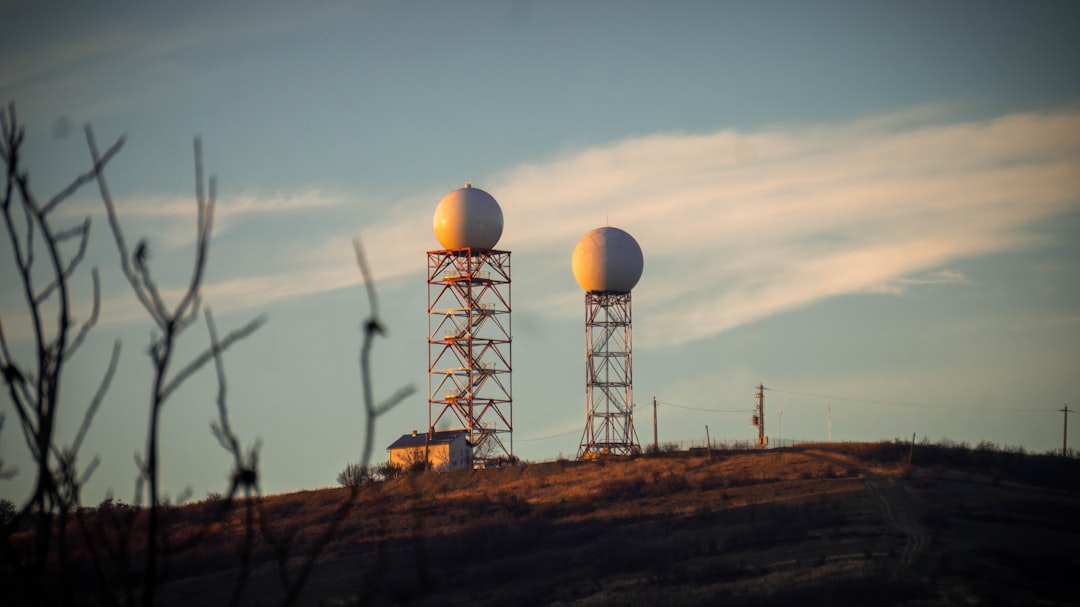
For years, families in Fort Myers and across Southwest Florida lived with a hidden danger. The nearest National Weather Service radar sat 75 miles away. Its beam scanned the sky more than a mile above the ground, too high to catch tornadoes forming close to the earth. Lee County just fixed that. A new Lee County weather radar now watches the skies from ground level. It didn’t cost residents a single tax dollar.
A Radar Gap That Cost Millions
The danger wasn’t theoretical. In January 2022, an EF-2 tornado tore through the Iona area near Fort Myers. It damaged more than 200 properties and caused roughly $10 million in losses. No one saw it coming. The region’s only nearby radar sat too far away and aimed too high to spot the storm. No warning ever reached residents.
Lee County’s public safety director called the county “fairly blind” without local radar coverage, according to a recent Route Fifty report on how local governments are closing weather-detection gaps nationwide. Forecasters worked from offices more than an hour away. They simply couldn’t track what was happening at street level.
How the New Lee County Weather Radar Works
The county partnered with Climavision, a private weather technology company, to install a radar dish on top of its new Emergency Operations Center. The new radar covers roughly 60 miles in every direction. It catches storms at a much lower altitude than federal radar ever could. It’s the company’s first installation in Florida. It’s also one of 30 the company now operates nationwide, part of a growing private network built to plug gaps in a national radar system that still misses roughly one in five Americans.
Here’s the part that matters most for local budgets: Climavision paid for the equipment and construction. Lee County residents got a life-saving upgrade without a new fee, tax, or bond measure. “We place our weather radars strategically in those gap areas,” said Tara Leigh Goode, Climavision’s vice president of partnerships. “There are about 200 across the country.”
Faster Warnings for Families and First Responders
The benefit is simple to understand: more warning time before a storm hits. Emergency managers can now spot rotation and rapidly intensifying storms while they’re still miles away. That gives families precious extra minutes to get to safety. Carla, who lives in the Iona neighborhood and lost part of her roof to the 2022 tornado that struck without warning, says even five extra minutes that day would have meant getting her kids into the hallway instead of scrambling once the windows started shaking. It matters most in a county that sits directly in hurricane alley and saw catastrophic damage from Hurricanes Irma and Ian in recent years.
Districts can reroute school buses sooner. Organizers can clear outdoor events with real lead time instead of guesswork. First responders get a clearer picture of where a storm is actually headed. They no longer have to rely on data from a radar station an hour and a half away.
Lee County isn’t alone. Communities from Texas to Alabama are striking similar deals to fill their own radar blind spots, often at no cost to local taxpayers. It’s proof that smart infrastructure upgrades don’t always require a bigger budget. Sometimes they just need the right partner.
Southwest Florida families won’t notice the new radar sitting quietly atop the Emergency Operations Center. But the next time a storm rolls in off the Gulf, they’ll likely have more time to prepare because of it.