
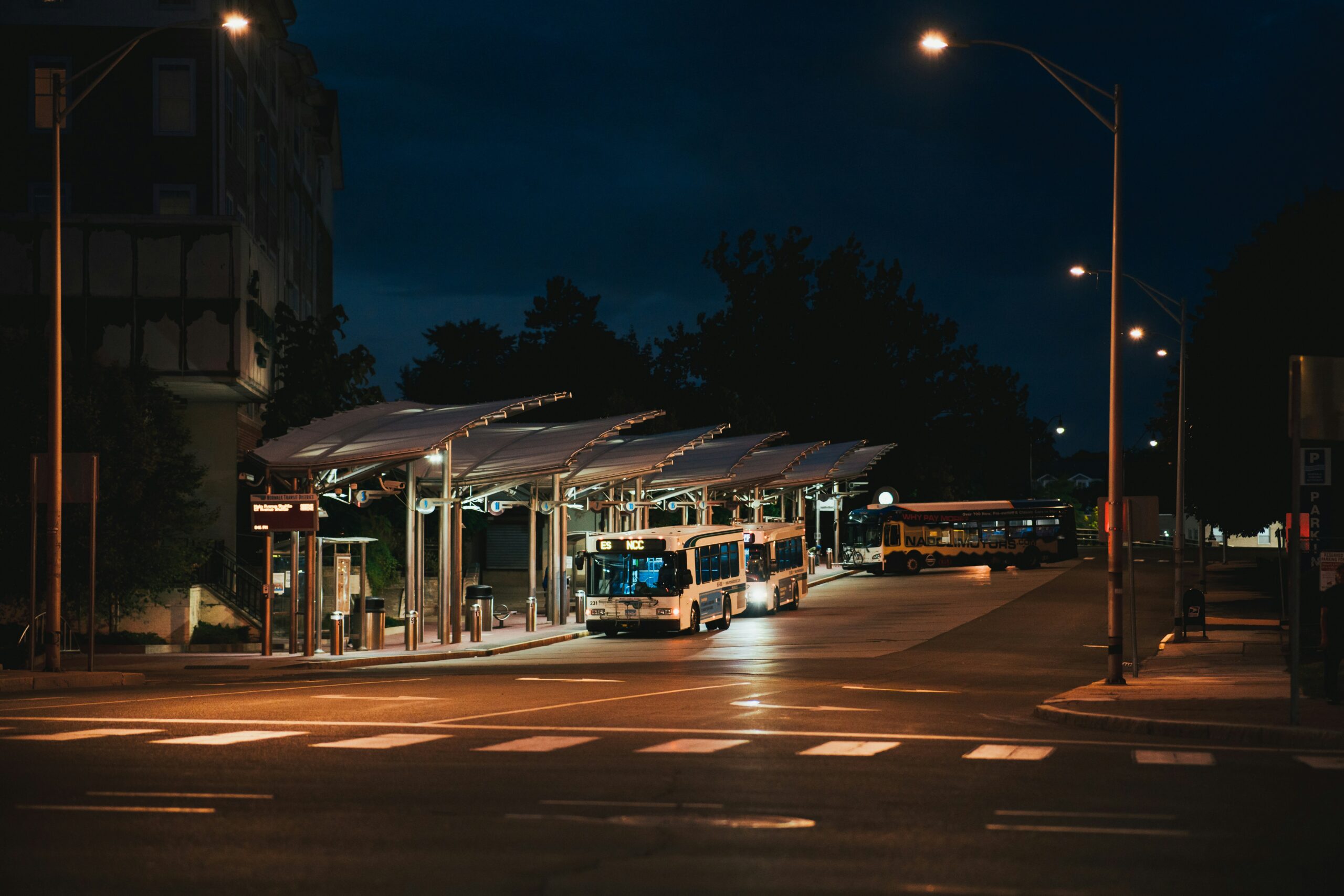
The Regional Transportation Commission of Southern Nevada (RTC) began passenger service on its RED LINE bus rapid transit route on Sunday, August 23, 2026. Construction took nearly two years.
- Fare: Same as other RTC bus routes for now; Smart Cities Dive reports the agency is considering an increase next year
- Availability: Open now, every 12 minutes during daytime hours, seven days a week
- Connects to: Downtown Las Vegas, the medical district, UNLV, Harry Reid International Airport, the Bonneville Transit Center and the South Strip Transit Terminal
- Status: In service, replacing Route 109. Travel-time savings are an estimate, not a measurement.
What launched and how it works
The line replaces Route 109 and runs through the Maryland Parkway corridor. It uses 7.2 miles of dedicated transit lanes and traffic signals that give buses priority. Stations have added seating and shade. Fifteen new high-capacity buses serve the line, and RTC says they are zero-emission hydrogen fuel-cell vehicles. The sources we read do not give exact start and end times for daytime service.
A rebuilt street, not just a bus lane
The project also rebuilt the street. Sidewalks grew from 5 feet to 10 feet in most places, and trees now line both sides of the road and the median. RTC Deputy CEO Andrew Kjellman told Smart Cities Dive that “extreme heat is a really big issue in Southern Nevada,” and the shade is meant to make the corridor cooler to walk. Mass Transit reports shared bus-bike lanes, upgraded lighting, and landscaping.
Cost and who paid
Smart Cities Dive puts the project at $378 million. Mass Transit reports that $149.9 million of that came from the Federal Transit Administration’s Capital Investment Grant program, awarded in 2024. Federal grants, local funding, and sales tax revenue paid for the rest, and we found no breakdown of the remaining amounts or of how the total splits between buses, stations, road work, and landscaping.
| Measure | Figure | Source |
|---|---|---|
| Service start | August 23, 2026 | Mass Transit; Smart Cities Dive |
| Total project cost | $378 million | Smart Cities Dive |
| Federal grant | $149.9 million (FTA Capital Investment Grant) | Mass Transit |
| Frequency | Every 12 minutes, daytime, seven days | Mass Transit; KSNV |
| Expected travel-time savings | About 20% vs Route 109 (estimate) | Mass Transit |
| Ridership on old route during construction | About 9,000 per day | Smart Cities Dive |
| Projected ridership, 2040 | 13,000 per day | Smart Cities Dive |
Why It Matters to You
If you ride the bus along Maryland Parkway, the line is open now and runs every 12 minutes in the daytime, with shaded stations and wider sidewalks meant to make waiting and walking in the heat more bearable. It links the airport, UNLV, the medical district and downtown, at the same fare as other RTC buses for now. RTC expects roughly 20% shorter trips than Route 109, but that’s an estimate, so judge it on your own commute.
Open questions
- The 20% figure is RTC’s estimate. Smart Cities Dive calls it an expected drop, and nobody has published measured travel times since opening.
- About 9,000 daily riders used the existing route during construction, and RTC expects 13,000 daily riders by 2040. The new line has no published ridership yet.
- Route length differs by source. Smart Cities Dive describes a 7.3-mile Maryland Parkway corridor. Mass Transit describes a 12.5-mile route from the South Strip Transit Terminal to the medical district, with 7.2 miles of dedicated lanes.
- The 63,000 residents, 109,000 jobs, and nearly 35,000 daily vehicles are corridor statistics from Smart Cities Dive. They describe the area, not how many people the line serves.
Quick answers
Does the RED LINE really cut commutes by 20%?
Not yet proven. RTC estimates about 20% less travel time than Route 109 because of dedicated lanes and signal priority. We found no measured results after opening.
When does it run and how often?
Buses come every 12 minutes during daytime hours, seven days a week. The sources we read do not give exact start and end times.
What does it cost to ride?
Fares match other RTC bus routes for now, according to Smart Cities Dive. The agency is considering an increase next year.
Sources
- Smart Cities Dive: Las Vegas debuts bus rapid transit line to grow ridership, improve service (Aug 24, 2026)
- Mass Transit: RTC of Southern Nevada’s RED LINE BRT to begin passenger service Aug. 23 (Aug 5, 2026)
- KSNV News 3: New Maryland Parkway rapid bus service launching this month (Aug 3, 2026)