
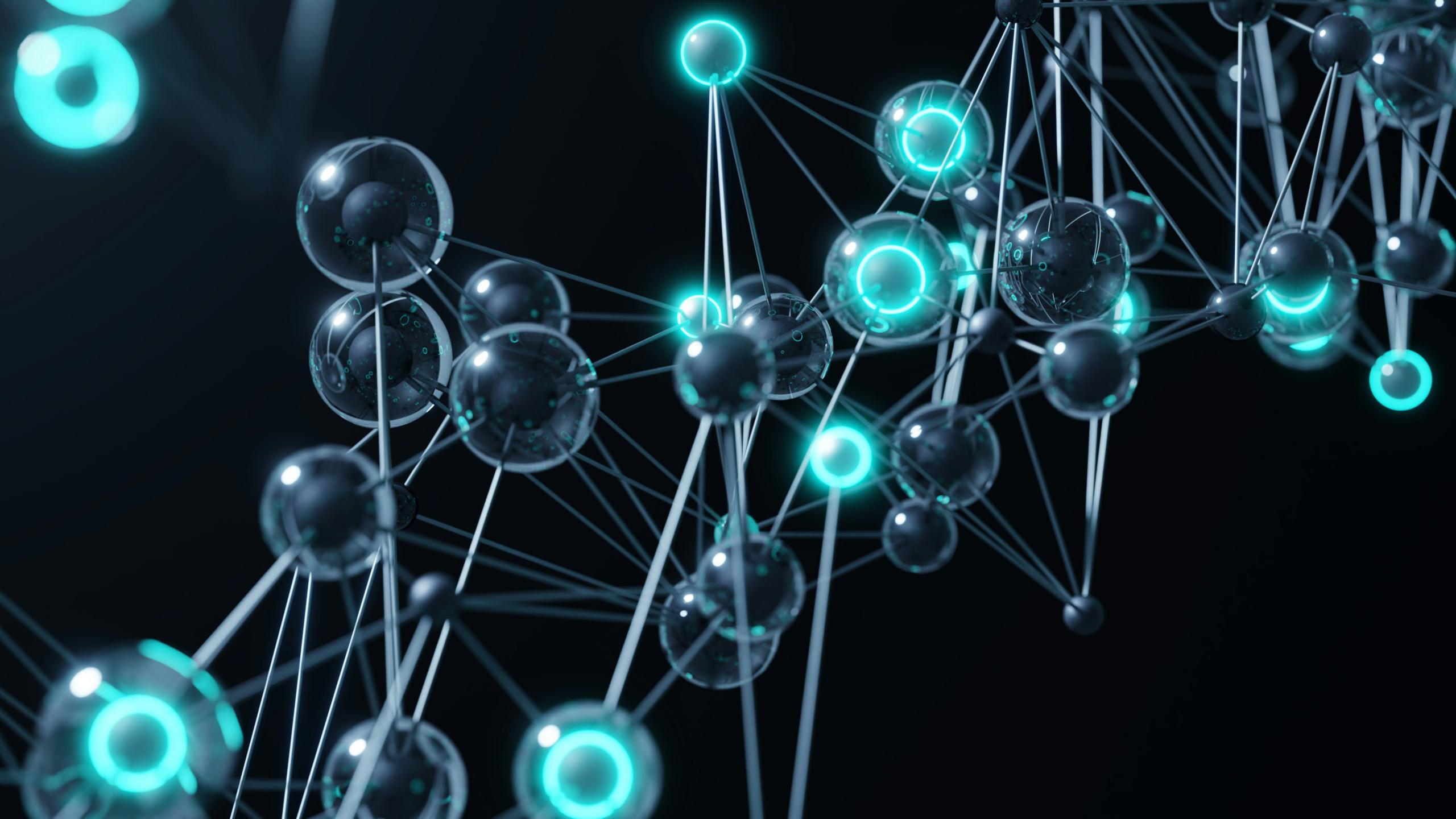
A trapped-ion quantum computer that controls its qubits with microwaves instead of laser beams is now running in Germany. Forschungszentrum Jülich inaugurated JION on September 3, 2026, inside the Jülich Supercomputing Centre. Researchers there built it with the German startup eleQtron. Supporters hope the approach, often summed up as laser-free trapped-ion computing, will make bigger machines easier to build.
One caution up front. Jülich has not published JION’s qubit count, fidelity or power draw, so none are given here.
How microwave control works
Most trapped-ion machines steer each qubit with a laser aimed at a single ion held in a vacuum trap. That works, but it demands careful alignment and a growing optics setup as qubits increase. eleQtron uses a method called Magnetic Gradient Induced Coupling, or MAGIC, developed in Siegen. It combines microwaves with deliberately varied magnetic fields. According to Jülich, that lets researchers control qubits one at a time and couple them directly. JION’s qubits are charged ytterbium atoms, held in a vacuum by electromagnetic fields.
The sources describe microwave control of the qubits. They do not say whether lasers are absent everywhere in the machine, for example for cooling or readout, so “laser-free” is best read as a description of qubit control. JION also does not need temperatures near absolute zero, unlike superconducting processors, though Jülich gives no power figures to compare the two.
Wired into a supercomputing center
JION joins JUNIQ, the Jülich UNified Infrastructure for Quantum computing, which links quantum systems to the center’s classical clusters. Researchers and companies are expected to test hybrid workflows on it, such as chemistry, materials research, logistics and machine learning. Jülich describes those uses as prospects, not demonstrated results. eleQtron CEO Jan Henrik Leisse said that with JION, the company is “integrating our trapped-ion and MAGIC technology into one of Europe’s leading user infrastructures.”
It is a similar instinct to Diraq’s plan to install a silicon-spin quantum computer in a commercial data center. A quantum processor in an isolated physics lab helps few people, and one connected to infrastructure people already use is easier to share. MIT’s simulated arm qubit design targets the qubit itself, while JION bets on simpler control around the qubit.
What looks good, what to watch
| Works well | Be careful |
|---|---|
| Microwaves and varied magnetic fields can control qubits one at a time and couple them directly, per Jülich. | No JION benchmarks are public. Qubit count, gate fidelity and quantum volume were not in the press release or the coverage. |
| Less optics to align per qubit than a laser-steered ion setup. | Xenospectrum notes that microwave-driven two-qubit gates are generally slower than laser-driven ones, and slower gates leave more time for noise. |
| No need for temperatures near absolute zero, unlike superconducting processors. | Jülich gives no power figures to compare the two, and the press release is promotional, with claims from Jülich and the North Rhine-Westphalia government. |
| Connected to JUNIQ, so hybrid workflows with classical clusters can be tried. | Scaling MAGIC is still a goal, and Jülich gives no date for a practical advantage. |
JION is a real, running machine in a serious facility, and its control method is a credible alternative to lasers. How good it is remains unknown. Jülich says JUNIQ lets users compare quantum computers, so benchmarks should appear once outside users get access. The 200-qubit figure in the news belongs to a separate planned semiconductor system, not JION.
The money around it is spelled out by Jülich. EPIQ, about 21 million euros over four and a half years, covers the JION partnership between Jülich and eleQtron. SQALING, up to about 25 million euros, covers chip-based scalable trapped-ion platforms at eleQtron. Q-STAR.NRW, up to about 25 million euros, covers a planned semiconductor quantum computer with up to 200 qubits.
Why It Matters to You
Most readers will never book time on JION, which is a research installation. The hope is that a shared machine needing less specialist optics lets more teams get time on it. Picture Amara, an illustrative example and not a real person, a chemistry postdoc who works with a German group from abroad. That is a hope, not a result, and Jülich gives no timetable for practical advantages.
Quick answers
What is JION, and how does it control its qubits? JION is a trapped-ion quantum computer at the Jülich Supercomputing Centre, built by Jülich and eleQtron and inaugurated on September 3, 2026. It uses microwaves and varied magnetic fields, the MAGIC method. Jülich says this allows individual control and direct coupling of qubits.
How many qubits does JION have? Jülich has not said. The sources give no qubit count or fidelity for JION.
Is JION better than other quantum computers? That is unknown. No benchmarks are public. Jülich says JUNIQ will let users compare different quantum computers.
Sources
- Forschungszentrum Jülich: Launch of the JION quantum computer (Sep 3, 2026)
- HPCwire: Jülich and eleQtron Inaugurate JION Trapped-Ion Quantum Computer (Sep 3, 2026)
- The Quantum Insider: Jülich Launches Trapped-Ion Quantum Computer For Supercomputing Integration (Sep 4, 2026)
- Quantum Computing Report: Forschungszentrum Jülich Operates eleQtron’s JION Trapped-Ion QPU via JUNIQ (Sep 4, 2026)
- Xenospectrum: JION trapped-ion quantum computer (Sep 9, 2026)