
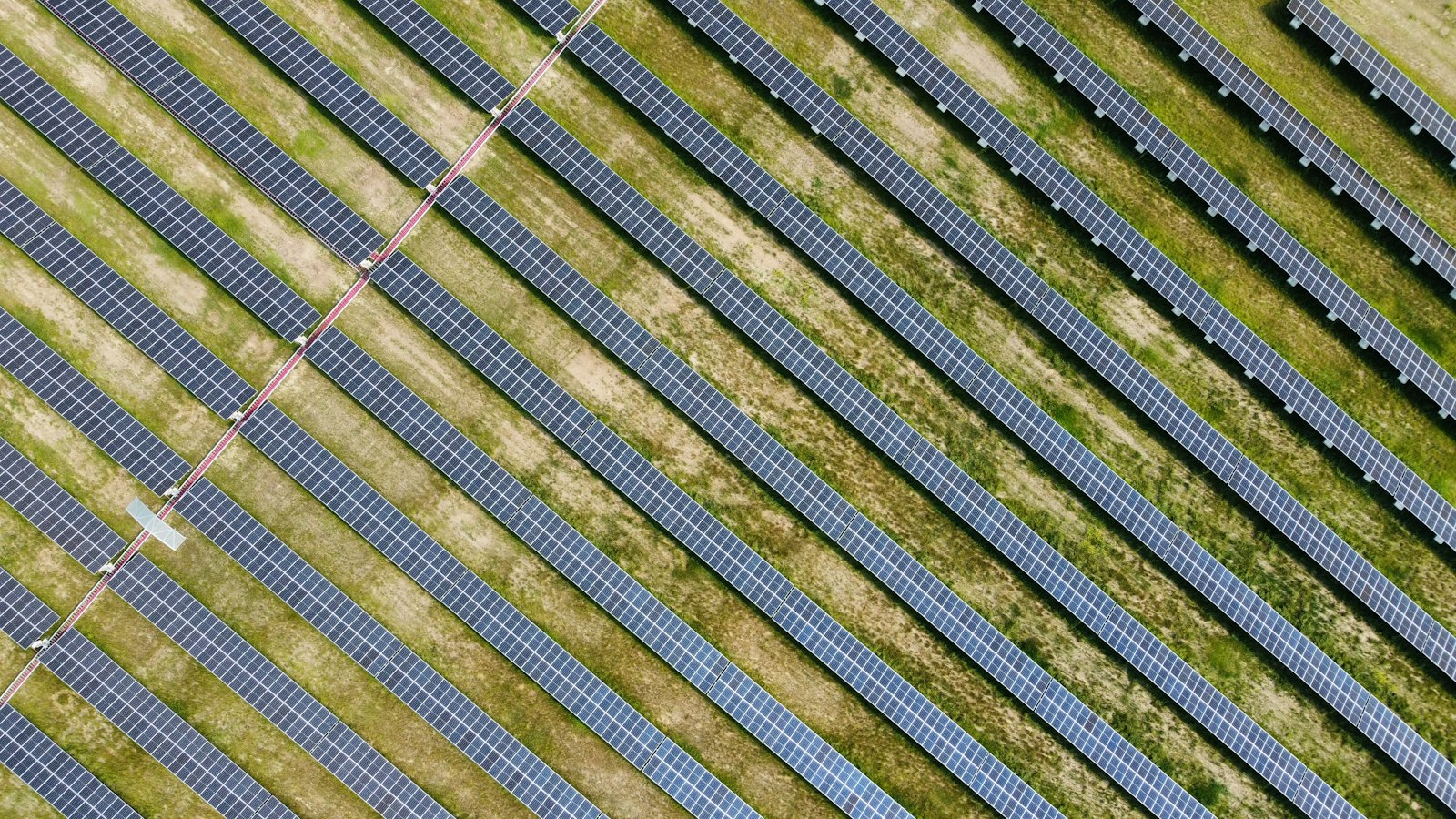
Hooksett, New Hampshire has started construction on a 1.34-megawatt solar array on a former municipal landfill. ReVision Energy announced the project on Sept. 2, 2026. Nothing is generating yet.
| Item | Detail |
|---|---|
| Size | 1.34 MW, 2,288 QCell panels |
| Status | Under construction; power expected late summer 2027 |
| Upfront cost to town | None (power purchase agreement) |
| Financing | Blue Haven Solar, a financing entity of Blue Haven Initiative |
| Expected output | More than 1.65 million kWh a year (ReVision) |
| Projected savings | More than $10 million lifetime, assuming a year-six buyout |
How the deal works
Blue Haven Solar funds the system, and Hooksett buys the electricity under a power purchase agreement (PPA). The array will offset part of the electricity use of both the town and the school district. Hooksett can buy the system starting in year six.
ReVision says the panels are assembled in Georgia and mounted on U.S.-made APA racking. It expects more than 1.65 million kilowatt-hours a year and says that offsets about 720 metric tons of carbon dioxide annually. Ayer Electric, Crown Point Excavation, and Nobis Group are project partners.
ReVision says the town projects more than $10 million in lifetime energy savings with a year-six buyout. Town Administrator Andre Garron described the goal as to “turn previously unusable land into productive assets.” ReVision’s Mark Zankel said, “Converting capped landfills to community solar just makes good financial and environmental sense.” ReVision has completed solar on 11 landfill sites in New Hampshire and Maine and expects three more by 2027.
Two other New Hampshire projects
| Project | Size and status | Terms and projected savings | Source |
|---|---|---|---|
| Hooksett, NH | 1.34 MW, under construction | PPA financed by Blue Haven Solar; more than $10 million lifetime with a year-six buyout | ReVision Energy, Sep 2, 2026 |
| Derry, NH | 2.25 MW, operating since Sept. 2026 | Town buys at 6.5 cents per kWh; about $4 million over 25 years (Encore estimate) | Encore release, Sep 1, 2026 |
| Jaffrey, NH | 1.34 MW, due online early 2027 | About 250 income-qualified households get 25 percent off their supply rate; up to $2 million in projected credits | ReVision Energy, Apr 28, 2026 |
Who Benefits and How
- The town and the school district are the direct beneficiaries: the power offsets their electricity use, with no upfront cost.
- Hooksett residents may feel it indirectly if lower energy costs ease the public budgets. No source gives a per-resident or per-taxpayer figure.
- Nothing is generating until late summer 2027, so no savings exist yet.
- Income-qualified households in Jaffrey are the ones the sources say get a direct bill discount, and that project is due online in early 2027.
What the numbers don’t show
The $10 million figure assumes Hooksett buys the system in year six, and the sources give neither the savings without a buyout nor the electricity price in the PPA. Savings stay unproven until bills arrive after late summer 2027. The 720 metric ton carbon dioxide figure is ReVision’s estimate, and the release doesn’t explain the method. ReVision does not state a “homes powered” figure, a cars-off-the-road comparison, or acreage.
Quick answers
Is the Hooksett array running yet? No. Construction has started, and ReVision expects power generation in late summer 2027.
Who pays for it? Blue Haven Solar funds the system. Hooksett pays no upfront cost and buys the electricity under a PPA, and can purchase the system outright starting in year six.
Can residents subscribe, as in community solar? ReVision’s release describes the power offsetting town and school district electricity use. It doesn’t describe a resident subscription program for Hooksett. The Jaffrey project is the one that serves income-qualified households.
How does this differ from the Derry project? Derry’s array is larger, already operating, and its savings estimate runs over 25 years. Hooksett’s estimate depends on a year-six buyout, so the two numbers rest on different assumptions.
Sources
- ReVision Energy: Hooksett landfill solar announcement (Sep 2, 2026)
- ReVision Energy: Powering the Community, Jaffrey’s Solar Landfill (Apr 28, 2026)
- Encore Renewable Energy: Finished 2.25-megawatt project is projected to save the town $4 million in electricity costs over 25 years (Sep 1, 2026)