
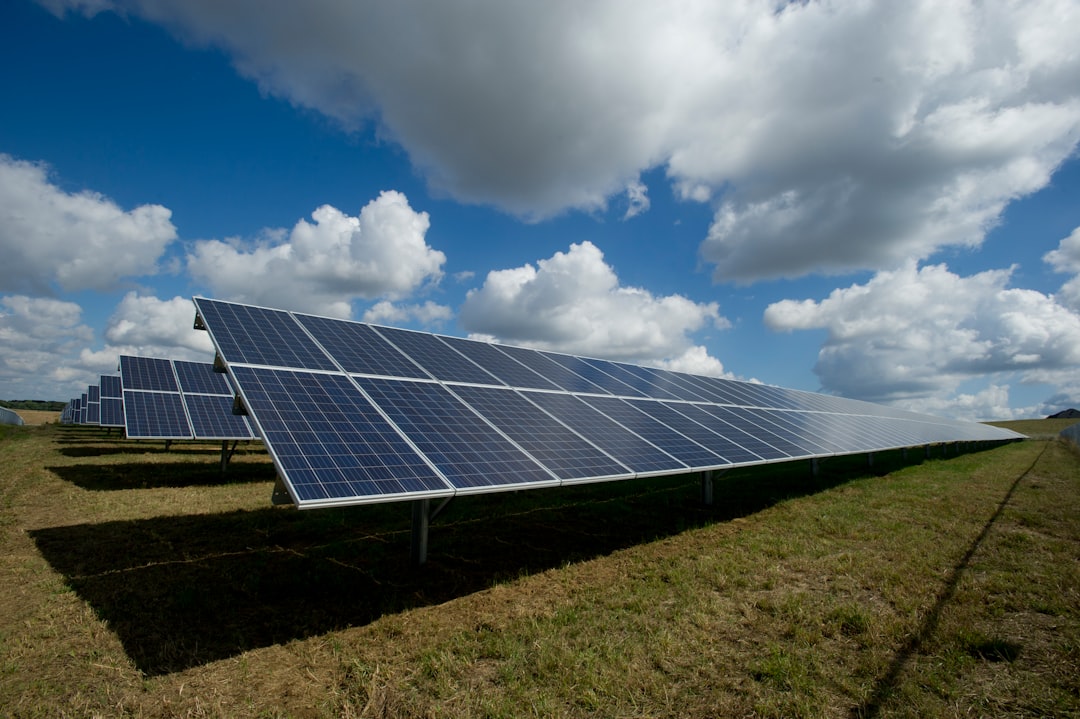
Ten thousand households in Harris County, Texas, are about to see something unusual show up on their power bills: a smaller number. County officials broke ground this month on a rooftop solar array at NRG Center, the anchor project in a new push for Harris County solar savings that could knock up to $1,000 a year off electric costs for families who never thought solar panels were within reach.
How Harris County Solar Savings Will Work
The math behind that number is straightforward. Harris County Commissioners Court set aside $88.3 million earlier this year to install solar panels and battery storage on six to ten large public buildings across the county. NRG Center, the massive convention complex near downtown Houston, has the roof space to make it worthwhile: engineers expect the array there alone to generate enough electricity to power roughly 500 homes. County officials plan to route those savings, plus similar installations at other public sites, back to residents through the Affordable Community Energy program. Enrollment opens in 2027, with a target of about 10,000 households and $10 million in combined savings every year.
Closing a Gap Texas Never Fixed
Texas leads the country in installed renewable energy capacity, but that boom has mostly skipped the people who need lower bills the most. Jesse Dickerman, Harris County’s managing director for energy transitions, put it bluntly in an earlier interview about the county’s related federal solar funding: “Texas has the most installed renewable energy, but somehow low-income people have benefited maybe the least.” Rooftop solar has always favored homeowners with good credit, a sunny roof, and cash for a down payment. Renters, apartment dwellers, and anyone living paycheck to paycheck got left out.
Community-scale projects like this one flip that equation. Nobody needs to buy a panel or sign a financing agreement. The county owns the equipment, handles the maintenance, and passes the savings through to whoever enrolls. It is the same basic idea behind Chicago’s community solar savings on the South Side, where a solar developer’s deal with a local nonprofit is already cutting bills for families who could never install rooftop panels of their own.
Cleaner Air Comes With the Savings
Money is not the only thing at stake. Harris County adopted a Climate Action Plan in 2023 that targets a 40 percent cut in government greenhouse gas emissions by 2030, and public-building solar is one of the plan’s biggest levers. Every kilowatt-hour the NRG Center array generates is a kilowatt-hour the grid does not pull from a gas or coal plant, which means less pollution over a metro area that already battles summer ozone alerts. Houston’s petrochemical corridor already gives nearby neighborhoods some of the worst air quality in the state, so even modest cuts to fossil generation matter most for the people who live closest to it.
The building push is also feeding a small manufacturing boom. SEG Solar recently announced a $200 million solar panel plant in the region expected to employ up to 800 workers, jobs that exist because Texas utilities, cities, and counties keep placing large solar orders. Those factory jobs should outlast any single rooftop project.
What Comes Next
Construction at NRG Center continues through the rest of 2026, with the county targeting enrollment for eligible households in 2027. Harris County has not yet published income thresholds or an application process, so residents curious about qualifying should watch for updates from the county’s energy transitions office in the coming months. If the program signs up all 10,000 households, few local governments anywhere will be sending utility-scale solar savings directly to residents who never had to put a panel on their own roof.
Source: Hoodline