
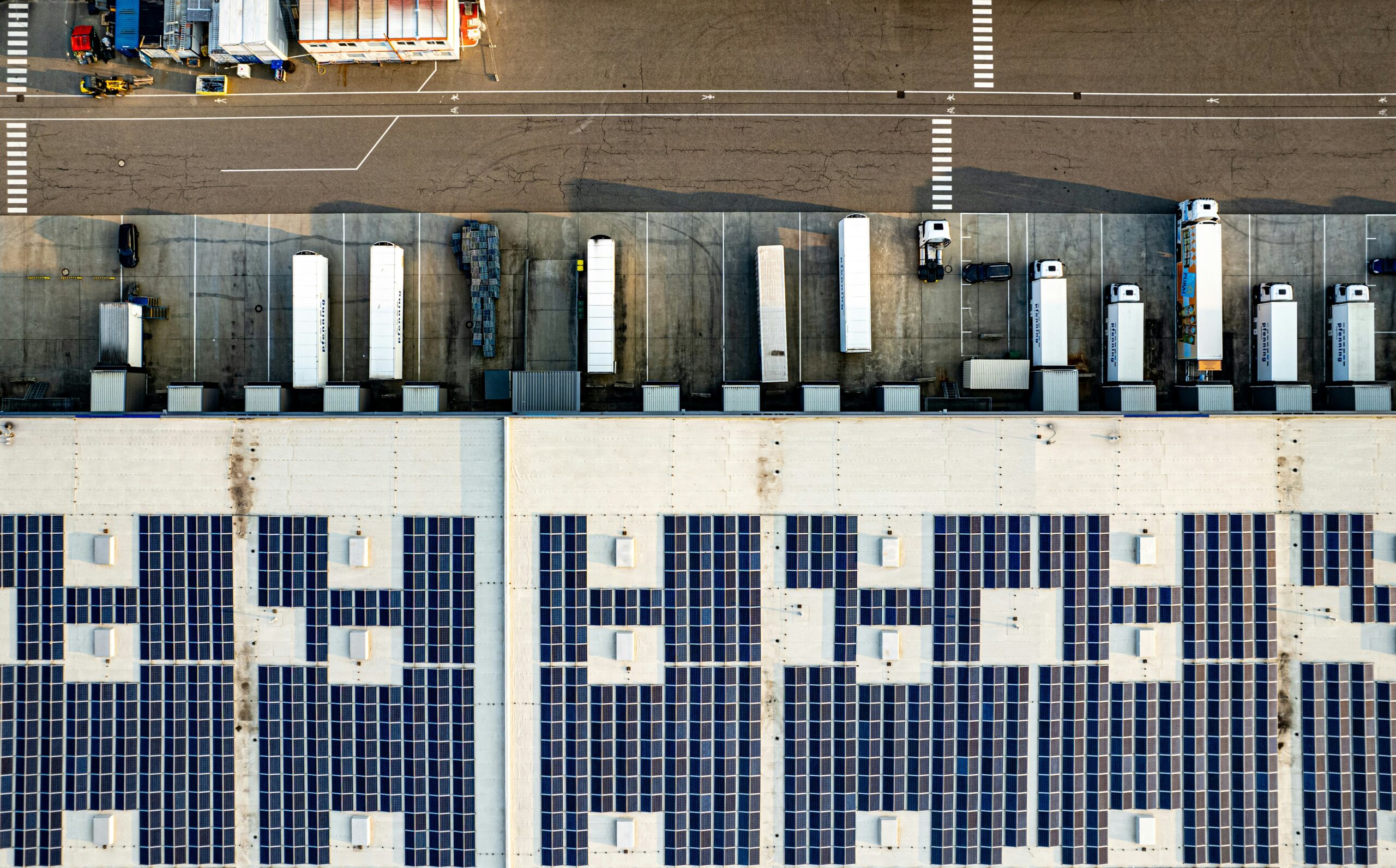
Picture a warehouse in Mills River, North Carolina, on an ordinary Tuesday. Forklifts move between pallets of canned beans and fresh produce. Walk-in coolers hum around the clock to keep food safe before it reaches a family’s table. Every one of those coolers runs on electricity, and until this month, every dollar spent on power came straight out of the budget MANNA FoodBank uses to feed people. A new roof just changed that math, and it is turning into one of this year’s best food bank solar savings stories in the Southeast.
MANNA just finished installing 864 rooftop solar panels across its office and warehouse, designed and built by Asheville-based Pisgah Energy. The food bank serves more than 220,000 people a month across 16 counties and the Qualla Boundary in western North Carolina.
What Actually Went Up on the Roof
The two systems add up to 514 kilowatts of solar capacity. That is 864 panels rated at 595 watts each, tied together through four SolarEdge inverters. Together they should generate more than 643,000 kilowatt-hours a year, made on-site instead of bought from the grid.
A $200,000 grant from BuildUS covered most of the cost. Enstall donated $55,000 of panel racking, and a nonprofit direct-pay incentive filled in the rest. Stacked together, the project should pay for itself in about four and a half years. After that, it is pure savings for decades.
The Food Bank Solar Savings Add Up Fast
Think about a parent working two part-time jobs in Buncombe County who picks up a box of groceries from one of MANNA’s partner pantries every other week. That box exists because MANNA could afford to buy, store, and ship the food inside it. Based on typical commercial electricity rates in the region, 643,000 kilowatt-hours a year works out to roughly $65,000 to $70,000 MANNA no longer has to spend on power. That is not a rounding error for a nonprofit. It is money that can go straight into trucks, refrigeration, and more groceries for families like hers.
MANNA’s CEO, Claire Neal, put it simply in the announcement of the project:
“Every dollar we can use more efficiently is a dollar that can go further in serving our communities.”
The environmental math is just as concrete:
- 514 kilowatts of panels, roughly equal to the yearly electricity use of 64 average homes
- More than 643,000 kilowatt hours produced on-site every year
- About 403 metric tons of carbon dioxide avoided annually, the equivalent of over 1 million miles of gasoline driving never done
- An estimated $65,000 to $70,000 a year freed up for food, not utility bills
Why This Reaches Further Than One Warehouse
Rising costs have pushed more families toward food assistance, and a nonprofit on thin margins feels every bill spike too. Pisgah Energy president Evan Becka called the project support for the health and wellbeing of families who depend on MANNA’s network of more than 300 community partners.
MANNA is not alone in this. A county over, a small food pantry in Marshall installed its own solar and battery system, built to keep running when storms knock out power. Western North Carolina’s nonprofits are quietly turning rooftops into a hedge against both high bills and bad weather.
If you’ve ever dropped off a donation at a food pantry near you, it’s worth asking a simple question next time: does this place know its own roof could be feeding more people too? For MANNA, the answer just became yes, to the tune of tens of thousands of dollars a year, for as long as the sun keeps rising over Mills River.