
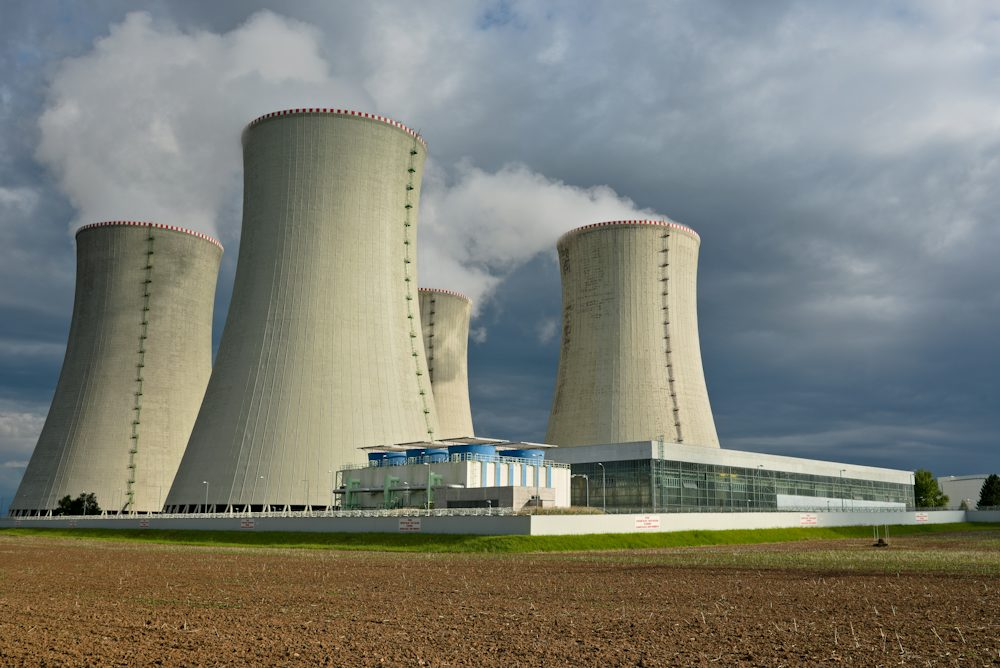
Twelve. That’s the ceiling on how many reactors could eventually sit on one plot of federal land outside Richland, Washington, once an engineering firm finishes the drawings. On November 6, 2026, Fluor Corporation said it would handle nuclear-island engineering and design for the Cascade nuclear project, X-energy’s second commercial Xe-100 plant and the first one tied to Amazon’s push for round-the-clock nuclear power. Interesting Engineering independently confirmed the contract three days later. Nothing has been poured or welded yet. What’s verified is a design contract, a scalable site plan, and a company that’s now building two Xe-100 projects in two states at once.
Four reactors come first. X-energy and Amazon want twelve.
Who’s Actually Building the Cascade Nuclear Project
No single company is building this plant. Four organizations each hold a different piece, according to World Nuclear News’s report on the Fluor contract:
- X-energy designed the Xe-100 reactor itself, a high-temperature, gas-cooled design that runs on TRISO fuel.
- Fluor, newly selected, provides engineering, design development, supply chain and estimating work for the nuclear island, the part of the plant that actually contains the reactor.
- Cascade Nuclear Partners, a joint venture of Kiewit Nuclear Solutions, Black & Veatch and Aecon, handles the conventional side of the plant and integrates everything together.
- Amazon is financing the project as part of a 2024 deal with X-energy aimed at 5 gigawatts of new nuclear capacity by 2039, with Cascade as one of the first projects toward that goal.
Fluor’s Pierre Bechelany, the company’s energy solutions business group president, called the deal “an important step forward in the deployment of next-generation nuclear energy,” according to Interesting Engineering’s reporting on the announcement. X-energy’s global chief operating officer, Dragan Popovic, said in the same coverage that the project depends on the partners “working as one team.”
This Isn’t the Texas Project You May Have Read About
If you’ve followed X-energy’s news this month, there’s an easy mix-up here. This is not the Dow-backed Long Mott plant in Calhoun County, Texas, the one that just cleared a major NRC safety review and landed a construction permit of its own in early November. Cascade is a separate, second project, in a different state, for a different customer. Fluor’s work on Cascade is its second commercial nuclear-island contract with X-energy; the first came in April for the Long Mott site. Washington and Texas are now running in parallel, both betting on the same reactor design reaching construction at roughly the same time.
Why Richland, Washington, of All Places
The proposed site sits on federal land next to the Columbia Generating Station, Energy Northwest’s existing boiling-water reactor in Benton County, the only commercial nuclear plant currently running in the Pacific Northwest. It’s not empty ground. Washington State Standard reporting from earlier this year describes the site as the location of a half-built 1980s reactor shell that was never finished, left with roads and utility hookups already in place from that era. Reusing a site like that, rather than starting from a cornfield, is one more reason the timeline here could move faster than a brand-new location would allow.
The numbers are specific, even if the schedule isn’t. Four Xe-100 units would produce 320 megawatts of electricity. Energy Northwest has said it plans to seek a license covering up to 12 modules, which would put the site’s full build-out near 960 megawatts, three times today’s plan, on paper, before a single module exists. Utilities would be able to buy up to half of the plant’s output once it’s running, according to Interesting Engineering, with Amazon positioned to take the rest for its own data centers.
The Tri-Cities region, which includes Richland, has a nuclear workforce history that predates this deal by eight decades. The area grew up around Hanford’s Manhattan Project-era plutonium production, and local officials have been blunt about what that history means now. “The key focus for us is keeping our workforce employed,” Sean O’Brien of the Energy Forward Alliance told the Washington State Standard earlier this year, describing the region’s stake in nuclear projects generally, not Cascade specifically.
What’s Not Locked In Yet
- Neither Fluor nor X-energy has disclosed what this contract is worth. Fluor said only that it would book the value in its third-quarter results.
- No construction start date or in-service date has been announced for Cascade. A January 2026 report put construction “within the next five years,” not yet confirmed since.
- This is a design and engineering contract, not a construction permit. Cascade still needs to file with and clear the Nuclear Regulatory Commission, a process that took Long Mott about 18 months once submitted.
- Coverage of the deal doesn’t agree on who’s formally behind the project. Interesting Engineering’s report describes Cascade as an Amazon-X-energy project and doesn’t mention Energy Northwest by name; World Nuclear News and earlier Washington state reporting both credit Energy Northwest as the utility doing the site’s environmental, safety and legal reviews.
- No jobs figure specific to the Fluor contract has been published, for either the Tri-Cities area or Fluor’s own engineering staff.
Who Benefits and How
This is a corporate infrastructure deal, not a consumer product, so most people won’t feel it directly, and not soon. The clearest beneficiary right now is Amazon, which gets a step closer to the steady, carbon-free power its data centers are chasing, the same motivation behind its broader 2024 agreement with X-energy. Utility customers in the Pacific Northwest are the second group with something at stake: if Cascade gets built at four units or scales toward twelve, regional utilities get a shot at buying up to half its output, a potential hedge against relying only on hydro, gas and wind as electricity demand climbs.
The Tri-Cities region is the one place where the benefit could show up as something more than a press release, eventually. A region that already trains nuclear workers for Hanford cleanup and the Columbia Generating Station has an obvious use for construction and operating jobs tied to a second plant next door. None of that is promised yet. It depends on a design contract turning into a filed application, and an application turning into a permit the NRC hasn’t started reviewing.
Watch for two things from here. First, whether Energy Northwest actually files a construction permit application with the NRC, the step that would turn Cascade from a design exercise into a regulatory case the public can track, the way Long Mott’s case can be tracked today. Second, whether X-energy keeps running two first-of-a-kind Xe-100 projects on parallel tracks without one of them slipping to cover for the other. A reactor company juggling two states at once is either proof the design is ready to scale, or a schedule risk waiting to show up in next year’s headlines.
Sources
- World Nuclear News: X-energy selects Fluor for second Xe-100 project (Nov. 6, 2026)
- Interesting Engineering: X-Energy taps engineering firm to build 320 MW nuclear power plant (Nov. 9, 2026)
- Tri-Cities Area Journal of Business / Washington State Standard: Nuclear power ventures heat up around Washington state (Jan. 9, 2026, background on the Cascade site)