
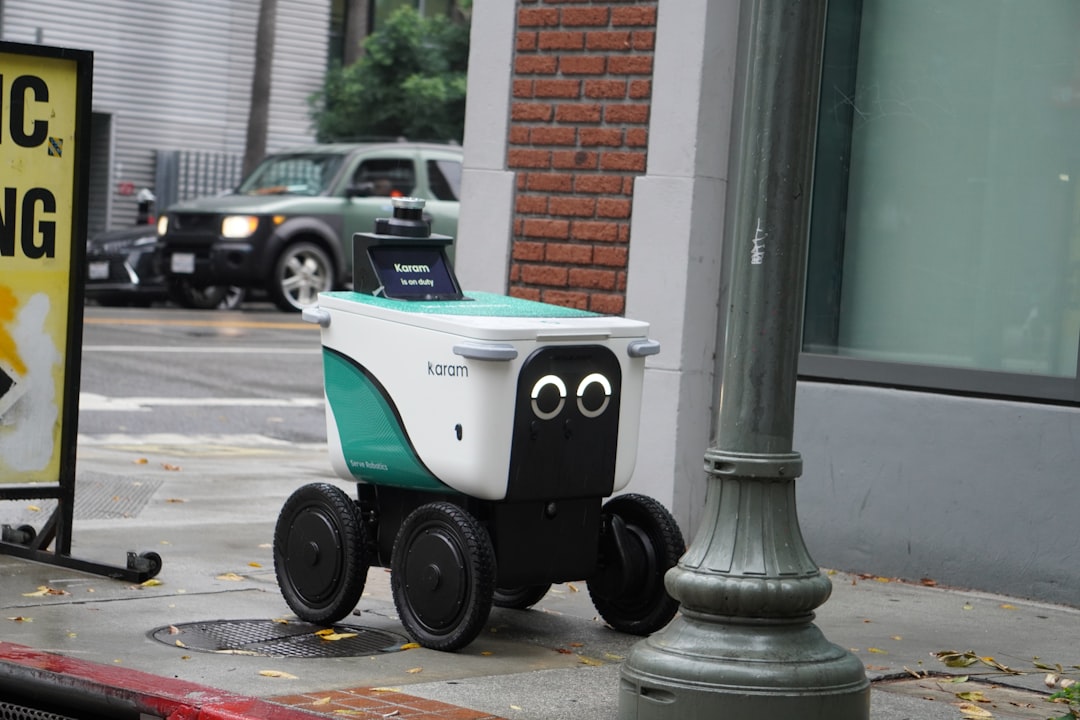
Order dinner in Chicago or Los Angeles this month, and a small wheeled robot might roll up your sidewalk instead of a car pulling to the curb. Serve Robotics just expanded its fleet of autonomous delivery robots onto the Grubhub app and into two new cities, and the move puts faster, cheaper delivery within reach of people who never had it before.
The company announced the expansion on August 17. Its sidewalk robots now carry Grubhub orders from more than 100 restaurants in Chicago and nearly 200 in Los Angeles, plus a Wonder food hall in Alexandria, Virginia. Serve also launched service in Washington, D.C. and San Jose, and it opened its first neighborhood micro-depot in Miami to speed up new launches.
Who Benefits From Autonomous Delivery Robots
This isn’t just a tech milestone. It changes daily life for three groups. Hungry customers get their food faster, since a robot doesn’t circle the block hunting for parking. Small restaurant owners gain a delivery option that used to be out of reach: delivery apps typically take 20 to 30 percent of an order’s revenue in fees, a cut steep enough to keep some small kitchens from offering delivery at all. Serve’s new countertop device needs only a power outlet to get a restaurant set up, no tablets, no special software, no IT headache, which means a restaurant that couldn’t absorb that cut before now has a real shot at offering delivery without eating further into a thin margin. And neighborhoods gain a few less delivery cars idling at the curb during dinner rush.
That last point matters more than it sounds. Serve now runs over 2,000 robots across eight U.S. cities, reaching roughly 3 million people and 4,000-plus restaurants. Every one of those deliveries happens on a sidewalk, on battery power, at walking speed. Multiply that across a busy Friday night, and a meaningful slice of short car trips simply disappears from the road.
Fewer Car Trips, Safer Streets
Short car trips for food delivery add up to real risk: idling engines, double-parked cars, drivers glancing at a phone for the next address. Swap even a fraction of those trips for a slow-moving robot that stops for pedestrians and never runs a yellow light, and streets around busy restaurant corridors get a little calmer. Families walking to dinner, kids biking home from school, and older residents crossing at the corner all share that street with one less rushed driver.
Restaurant owners feel a different kind of relief. Before this expansion, plenty of small, independent kitchens couldn’t afford the hardware or staff training that robot delivery once required. Serve’s plug-and-play system removes that barrier, so a corner restaurant in a working-class neighborhood can now offer the same fast delivery as a national chain down the street, without giving up nearly a third of the order to do it.
The Bigger Pattern
Autonomous delivery robots are part of a wider shift already reaching everyday Americans. Robotaxis are doing the same thing for passenger trips. Waymo, for instance, is bringing driverless rides to San Diego this fall, giving people who can’t or don’t want to drive another way to get around town. Delivery robots and robotaxis both point at the same outcome: getting people and packages where they need to go, more safely and more affordably, without adding another car to the street.
None of this fixes every delivery-fee headache overnight. But cheaper, easier access to robot delivery for small restaurants, faster food for busy families, and fewer delivery cars competing for the same curb space are concrete wins for ordinary people, not just an investor headline.