
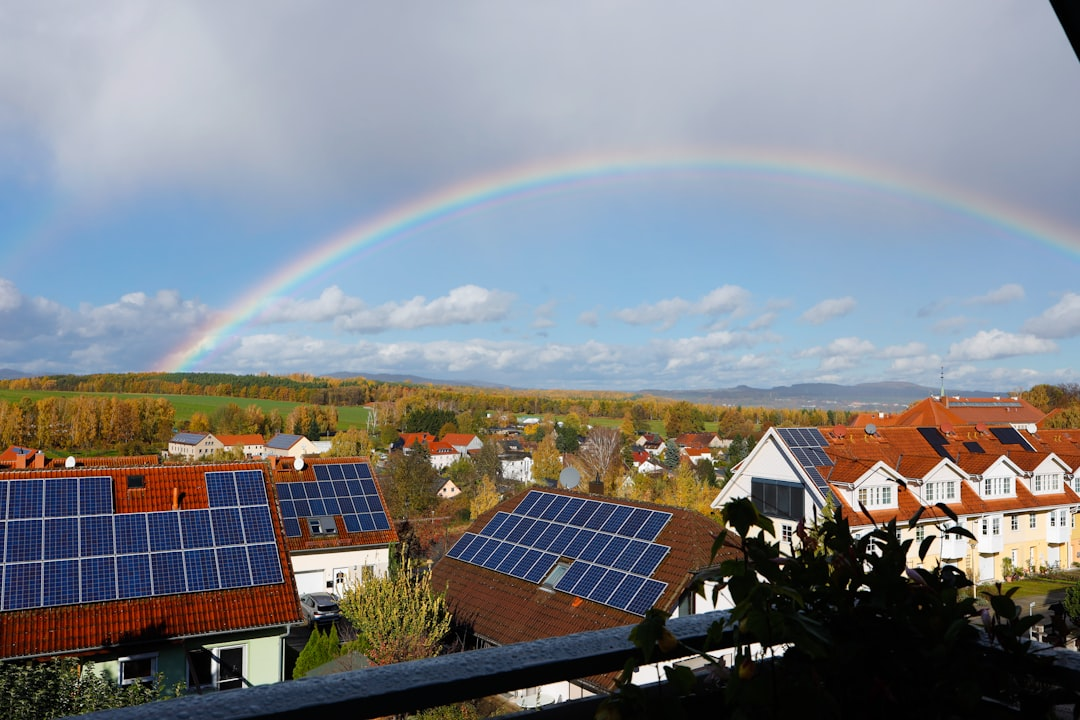
“Our medicine was saved. Our food was saved. It was a godsend.”
That’s Bruce Schauer, an Ann Arbor, Michigan resident, describing a recent power outage. The grid went down. His lights stayed on. So did his refrigerator, thanks to a rooftop solar panel and a home battery.
That’s the promise behind the Ann Arbor solar battery program, and this week it took a real step forward. The city just confirmed plans to expand it citywide, growing from a small pilot into something most households could eventually join.
How the Ann Arbor Solar Battery Program Works
Ann Arbor built its own utility, called the Sustainable Energy Utility, or A2SEU. It runs alongside the existing power company instead of replacing it. The city owns the equipment. Residents just pay for the service, like a phone bill instead of a purchase.
- No upfront cost. The city covers the solar panels and battery installation.
- A subscription, not a purchase: about $75 a month April through September, $25 the rest of the year.
- Free insulation or roof repairs bundled in where a home needs them first.
- A four-year guaranteed rate that shields customers from the utility’s proposed rate hikes.
Local companies, including Michigan Solar Solutions and Oak Electric Service, are doing the installs, which means local jobs too.
What It Actually Saves You
The subscription runs about $600 a year. The city estimates households will save $700 to $1,000 on their power bills. One early participant expects to net close to $400 a year. The pilot started in the Bryant neighborhood, where about a quarter of residents spend more than a third of their income on utilities. For them, a few hundred dollars back is real breathing room.
Renters benefit too, which matters since most solar incentives never reach them. Landlord Monica Carter put it simply: no upfront cost for her or her tenants. That solves a problem that’s dogged residential solar for years: the people who need lower bills most are usually locked out of getting them.
Why the Expansion Is the Real Story
Nearly 80 percent of Ann Arbor voters approved this model in 2024, and more than 1,500 residents have already asked to sign up. The pilot covered about 150 homes. The next phase reaches up to 1,000, with the city aiming for several thousand installations a year after that.
There’s an environmental payoff too. Michigan’s grid still leans on gas and coal. Every home that shifts to local solar and battery power pulls a little less from that mix. A neighborhood with its own battery backup, similar to the community microgrids now keeping the lights on in outage-prone parts of California, also holds up better when storms strain the wider grid. Illinois is chasing a similar payoff with a recent battery storage deal built to cut home energy costs, and a Washington, D.C. advocacy group has even argued their city should copy Ann Arbor’s model outright.
I’ve watched plenty of clean energy pilots launch with fanfare and stall at a few hundred homes. This one has an actual timeline: 1,000 homes next year, not someday.
If you rent your home, or you priced out solar once and walked away over the upfront cost, keep an eye on whether your own city considers something like this. The real test isn’t whether the panels and batteries work. It’s whether more cities are willing to become their own power company to make clean energy affordable for everyone, not just the homeowners who can front the cash.