
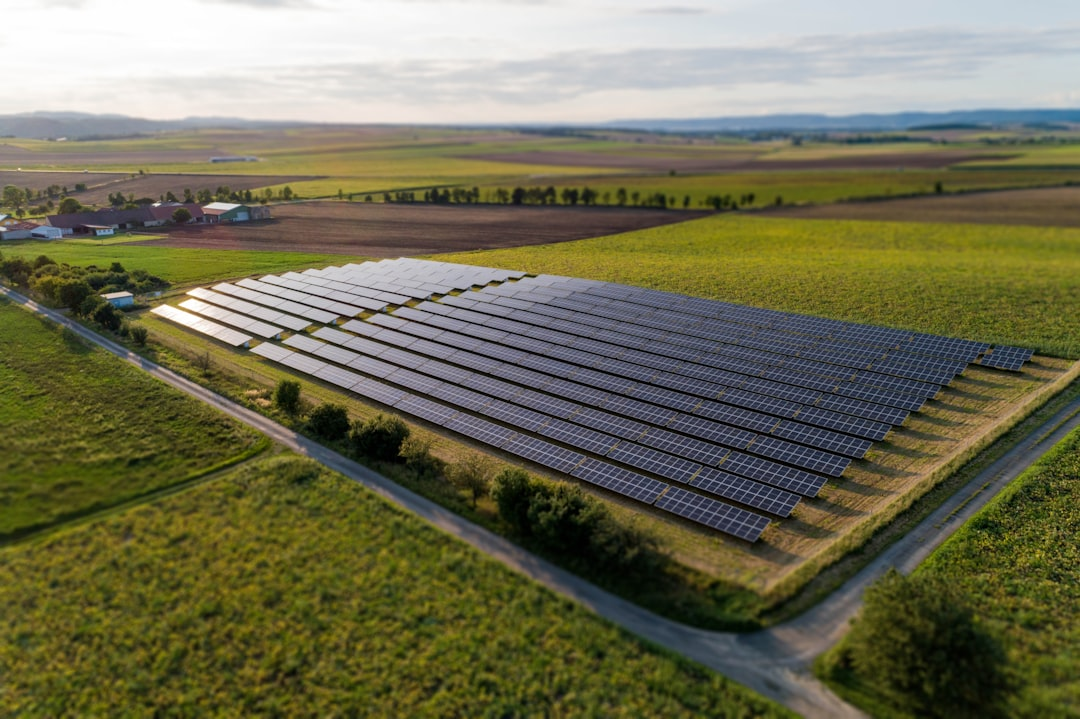
On September 16, 2026, Summit Ridge Energy, Trajectory Energy Partners and ComEd marked the first year of a community solar project on Rockford’s west side. The site, built as Rock Cut Solar, was rededicated as Mark Raeder Legacy I. It honors Mark Raeder, a Summit Ridge co-founder who championed the project and led development of more than 100 projects across Illinois. He lived from 1979 to 2025. The companies call it the first “Community Driven Community Solar” project in Winnebago County, and they report about $163,000 in combined savings for subscribers during its first year.
A 6.2 megawatt array on the west side
The project covers 35 acres with about 20,000 panels and 6.2 megawatts of capacity. The companies say it is one of the largest community solar projects on the ComEd system. Construction ran from August 2024 to April 2025, and the site entered service in August 2025, so the September 2026 event marks about one year of operation. The Rock Cut Solar partnership includes Rockford Area Habitat for Humanity and Get Connected 815. Union crews logged more than 33,000 hours, from IBEW Local 364, Operating Engineers Local 150 and Carpenters Local 792.
Who subscribes and what they save
Community solar lets customers get bill credits from a shared array without installing panels. Nearly 690 residential customers in Winnebago County subscribe. More than a third are lower-income households that receive a 50% discount on their monthly electricity bill, according to the companies. The other subscribers save up to 20%. OSF Saint Anthony Medical Center, a nonprofit hospital, is the commercial subscriber.
The companies’ press release breaks the first-year savings into two pieces: about $98,000 for the residential customers combined, and more than $65,000 for OSF Saint Anthony Medical Center. Together that is the roughly $163,000 headline, which the release itself calls an estimate.
The policy behind it, and what one year can tell you
The project falls under Illinois Shines, the state incentive program created under the 2016 Future Energy Jobs Act and the 2021 Climate and Equitable Jobs Act. State Senator Steve Stadelman, who attended, said it was gratifying to see legislation the General Assembly passed turn into a real project. ComEd says it has more than 300 community solar projects connected and expects to pass 400 by the end of 2026.
The savings numbers need a careful read. They come from the project’s developers and utility, not an independent review. The release gives no per-household figure. If $98,000 were split evenly across 690 households, each would save about $142, but that is our arithmetic, and actual savings differ by subscription size and discount level. Low-income subscribers get a 50% discount on their monthly bill and others save “up to” 20%, yet the release doesn’t say how the discount is calculated or what share of a bill it covers. It also leaves out contract terms, fees and how long subscribers stay locked in, and it doesn’t say how output compared with the projection. One year is a short record. The companies did not publish an estimate of how many homes the array could supply.
Why It Matters to You
If you live in Winnebago County and can’t put panels on your own roof, a project like this offers bill credits from a shared array, and lower-income households get a 50% discount, according to the companies. This one is already operating, but it may be fully subscribed, so ask the developer about current openings. Anyone elsewhere in ComEd territory could look at the other community solar projects on the system, which the utility says number more than 300.
Quick answers
Can renters subscribe?
Community solar is designed for customers who cannot install their own panels. The release reports about 690 residential subscribers in Winnebago County but does not give a breakdown of renters and owners. Ask the developer about current openings, because the project may be fully subscribed.
How do lower-income households get the 50% discount?
The release says more than a third of customers are lower income and receive 50% off their monthly bill. It does not describe the qualification process. Contact the subscriber manager for terms.
Is the farm really in its first year?
It entered service in August 2025, so the September 2026 event marks about one year of operation.