
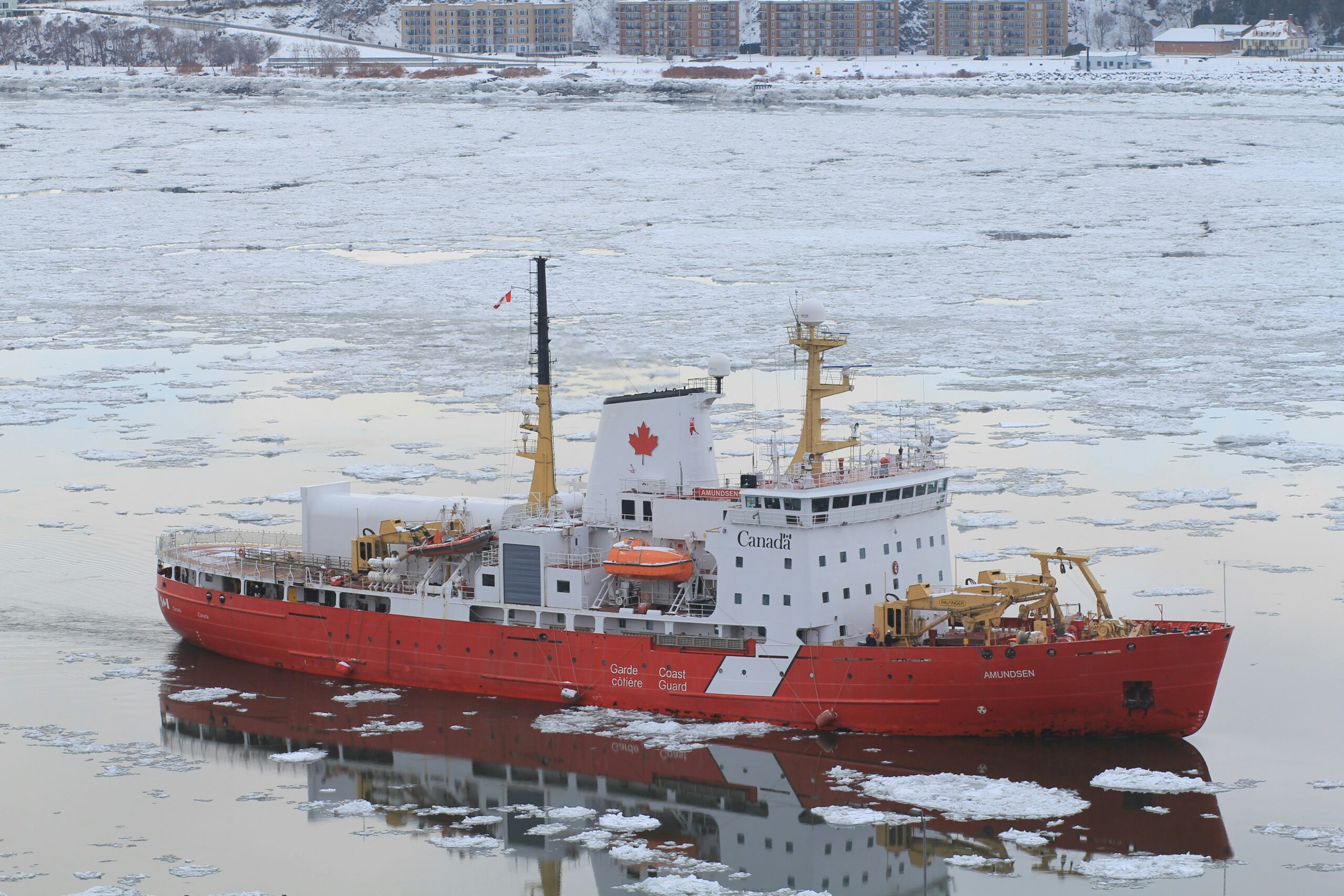
A shopkeeper in a remote Pacific island community might pay four times what someone on the mainland pays for electricity, all because every gallon of diesel that keeps the lights on has to arrive by boat. A reactor just installed in the hull of a Russian icebreaker offers a clue about how that might someday change.
Inside the Icebreaker Leningrad’s New Reactor
Workers at Baltic Shipyard lowered two RITM-200 reactors into the hull of the icebreaker Leningrad this week, according to World Nuclear News. Each reactor weighs 147 tonnes, stands 7.3 meters tall, and produces 175 megawatts of thermal power, enough to push a 173-meter ship through three meters of Arctic ice.
Most pressurized water reactors keep their steam generators outside the reactor vessel, connected by a maze of external pipes. Every pipe is a place coolant can leak. The RITM-200 builds the steam generators directly into the reactor vessel instead. That single change cuts leak risk, shrinks the reactor’s overall size and weight, and makes the whole unit easier to install and pull out again for maintenance.
Smaller, safer, and easier to service is exactly what nuclear technology needs if it’s ever going to reach places a normal power plant can’t.
Why This Points to a Bigger Opportunity
Engineers built the RITM-200 to keep running through 45-degree rolls in Arctic seas, refuel just once every seven years, and last 40 years in service. A ship carrying two of them can operate for years without returning to port for fuel. That kind of endurance hints at where this design could go next. A reactor tough enough for polar ice is tough enough for remote mines, island grids, or military bases far from any fuel supply chain, exactly the places where diesel currently costs the most and arrives the least reliably.
Here’s the part that matters most for where this technology goes next. Afrikantov OKBM, the reactor’s designer, has already completed 15 of these units, with 13 more in production. That’s not a prototype. That’s a production line, and building reactors in batches instead of custom-engineering each one is exactly what the nuclear industry has been chasing with small modular designs. Rosatom is also building a larger RITM-400 version for the icebreaker Rossiya, targeting service by 2030.
What to Watch Next
The Leningrad still needs its hull and onboard systems finished before it joins Russia’s fleet of five operating icebreakers. The hardest engineering problem, fitting a safe, compact power source into a hull built to survive the Arctic, is already solved. Similar trade-offs are showing up in the compact Kaleidos microreactor now being tested at Idaho National Laboratory, and in the safety wins Haiyang 3 recently cleared. Watch for a Western equivalent design to target the same remote, off-grid customers this reactor was really built to prove out.