
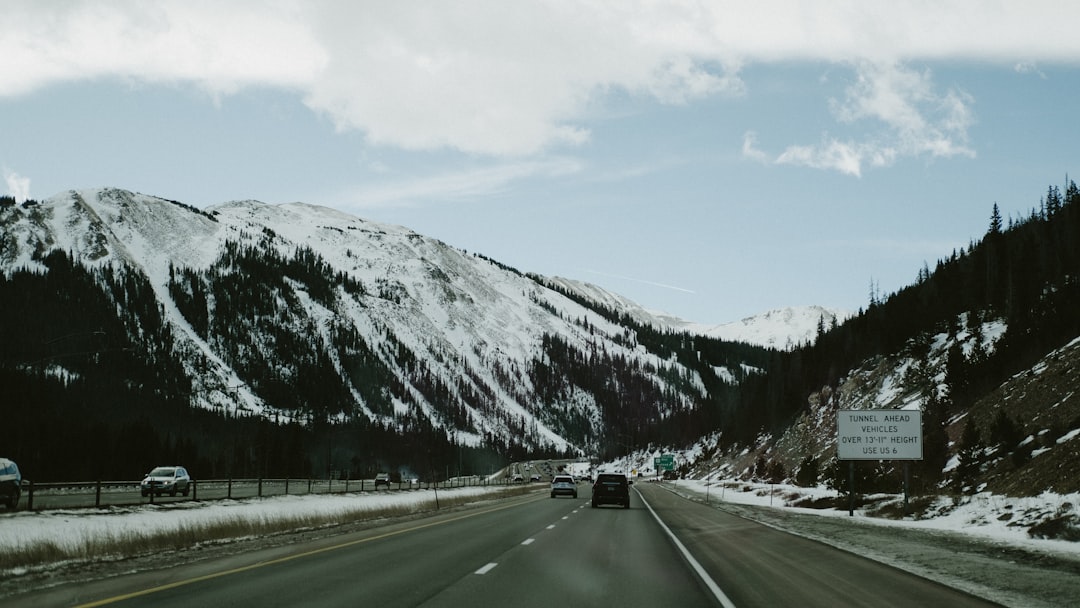
Picture driving through a Colorado mountain pass on Interstate 70 during a February whiteout, rock walls pressing in on both sides, brake lights suddenly flaring somewhere ahead in the snow. That kind of blind curve has caused pileups for decades. Utah, Colorado and Wyoming just landed a $20 million federal grant to make sure drivers see trouble before they are in it, linking their highways together in a program called Connecting the West.
The three states have joined 1,200 miles of interstate, including I-70, I-80, I-25 and I-15, into a single vehicle-to-everything network. Roadside units mounted along the routes now talk directly to equipped vehicles, warning drivers about ice, stalled cars, sudden weather and wildlife in the road, seconds before a driver would otherwise spot it.
Connecting the West Turns Highways Into Sensors
Utah’s Department of Transportation leads the effort, and it has not been shy about scale. Crews installed 480 new roadside units, so 91 percent of the state’s traffic signals now broadcast real-time conditions. More than 700 vehicles, from state fleet trucks to transit buses, carry onboard equipment that sends and receives those alerts. General Motors is even testing the system in an equipped Chevrolet Traverse, a hint that the same warnings could someday reach ordinary consumer cars instead of just government fleets.
Colorado aimed its rollout at the most dangerous stretch of the corridor: the mountain miles of I-70 through the Rockies, where avalanche closures, black ice and sudden storms strand commuters and truckers every winter. Wyoming rounds out the network along I-80, a stretch notorious for high winds that flip trucks and trigger multi-car pileups.
Snowplows and Buses Do the Scouting
Here is the clever part. The vehicles broadcasting road conditions are not just sensors bolted to poles along the highway. Snowplows already out clearing a pass and transit buses running their normal routes double as rolling scouts, sharing what they encounter with everyone else on the network in real time. A commuter ten minutes behind a snowplow gets a warning about the ice patch it just crossed, no app download or manual reporting required.
Watching Out for People, Not Just Cars
The program protects people outside vehicles too. Twenty intersections now carry lidar-equipped systems built to detect pedestrians and cyclists, then flag their presence to approaching drivers before a turn puts them in danger. Blaine Leonard, a UDOT transportation technology engineer, put the safety pitch simply: he calls the system a “digital seatbelt” for the highway, not just another convenience feature.
The first phase is complete, and the three states are now watching how the network performs, tracking whether real crash and near-miss data back up what the agencies expect. If the results hold, rural commuters, ski-season tourists and long-haul truckers crossing the Mountain West could get a safer drive without installing anything themselves. That is the kind of upgrade that saves lives quietly, one avoided pileup at a time.
Colorado has been busy modernizing government tech lately. The state’s mobile driver’s license already speeds travelers through TSA checkpoints, and now its highways are getting the same digital-first treatment. The approach echoes what automakers have tried on their own: Volvo’s connected safety alerts already warn drivers of hazards ahead, but a state-run network reaches every driver on the road, not only those who bought the right car.
Source: Government Technology