
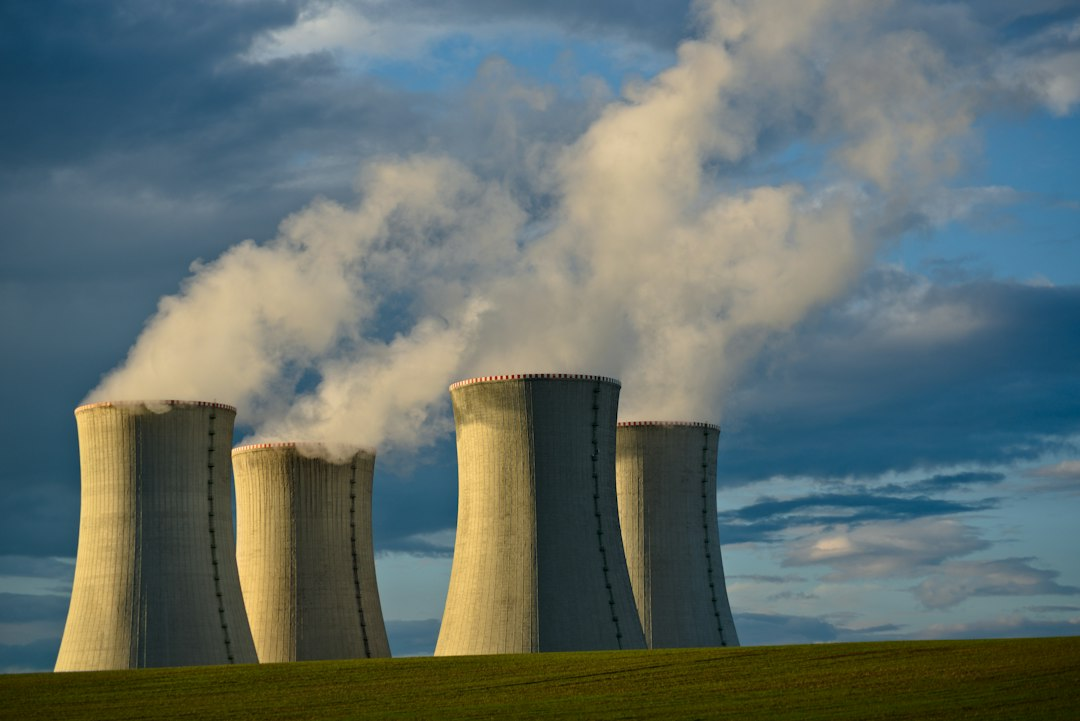
Two steel cylinders now stand inside a reactor hall in Siberia. Each one is 16 meters tall and weighs 95 tons, about as much as two blue whales. Rosatom just lowered them into place at BREST-OD-300, a lead-cooled fast reactor rising in Seversk, Russia. The parts are called separator-superheaters, and their job sounds almost boring: dry steam before it reaches the turbine. The reactor they feed is not boring at all. It’s built to run on nuclear waste instead of burying it for 100,000 years.
What Rosatom Just Bolted Into the Turbine Hall
Separator-superheaters sit between a reactor’s steam path and its low-pressure turbine. They strip moisture out of the steam and reheat it, which stops water droplets from eroding the turbine blades. That protection also squeezes more usable electricity out of every pound of steam. It’s a small-sounding fix with a real payoff. The two units installed this week are part of the larger turbine hall buildout, with the turbine and generator still to come. Rosatom is targeting first criticality in 2026, though construction here started back in 2021, and these demonstration projects rarely hit their first deadline, according to World Nuclear News’s report on the installation.
Why a Lead-Cooled Reactor That Recycles Waste Matters to You
Picture Dao, a warehouse supervisor in Reno who just leased an EV and now checks the power bill the way other people check sports scores. Dao has never heard of Seversk, Russia. But the economics behind reactors like this one eventually land on bills like that one.
Here’s the math nobody puts on a billboard. Today’s reactors use up only about 1% of the uranium they’re loaded with. The other 99% becomes “spent” fuel that sits in storage for tens of thousands of years. Fast reactors like BREST-OD-300 are designed to squeeze roughly 60 times more energy out of the same uranium, according to Power magazine’s reporting on fast reactor economics. That means less mining, less long-term waste, and a fuel supply that stretches for centuries instead of decades, which matters if you’ve seen how tight the global uranium supply chain already looks.
Then there’s the bill taxpayers already carry. The U.S. government has paid out roughly $9 billion in damages to utility companies because it never finished a permanent home for spent nuclear fuel. The Department of Energy’s own inspector general puts the remaining liability at $37.6 to $44.5 billion. A reactor that treats old fuel as a resource instead of a liability won’t erase that bill overnight. It does point toward a cheaper answer than digging a hole and hoping nobody opens it for 10,000 years.
“Practically autonomous and independent of external supplies of energy resources” is how Rosatom’s own leadership describes the goal for the full BREST complex, which fabricates its own fuel on-site and plans to reprocess what comes out the other end.
That on-site, closed-loop design is the part I think gets underrated in most coverage of this project. A separate chemical advance, which I wrote about a few weeks ago, attacks the same basic problem from another direction: making reprocessing cheap enough that utilities actually choose to do it.
| Reactor type | Energy from the same uranium | Waste isolation needed |
|---|---|---|
| Today’s light-water reactors | Baseline (about 1% of uranium used) | 100,000+ years |
| Fast reactors like BREST-OD-300 | Up to about 60 times more | Potentially a few hundred years for what’s left |
The Honest Caveats
This is Russian state technology, built by Rosatom under sanctions that keep most of its parts out of Western supply chains. Nobody in the U.S. or Europe is going to copy this exact design. Construction has also slipped past its original target more than once, so treat “2026” the way you’d treat any big infrastructure deadline: hopeful, not guaranteed.
Still, BREST-OD-300 is one of the only lead-cooled fast reactors on Earth actually being poured in concrete instead of sketched on a whiteboard. Western companies chasing similar goals, including TerraPower’s sodium-cooled Natrium project, are watching closely. Nobody has run a commercial-scale closed fuel cycle long enough yet to know what breaks first.
Over 200 fuel bundles still need to be manufactured before BREST-OD-300 can load its core. Watch Seversk over the next year or two. If this reactor goes critical anywhere close to schedule, it will be the strongest proof yet that recycling nuclear fuel is an engineering project, not just a slide in someone’s pitch deck.